In the last week of December 2025, CMA CGM’s 17,859 TEU Benjamin Franklin completed a northbound transit of the Suez Canal, the first mega-ship to use the waterway since the Houthi crisis shut down Red Sea routing in late 2023. The Suez Canal Authority has been publishing recovering volume numbers for months, with October 2025 hitting 229 vessel transits, the highest since the crisis began, but the Benjamin Franklin transit is the first time a top three carrier has put a genuinely large asset through the canal on a commercial string rather than a one off repositioning. If you’re budgeting chemical freight into 2026, this changes the shape of the curve, but not in the direction most importers are expecting.
Here’s the thing. Maersk, MSC, Hapag-Lloyd, ONE, and Hyundai Merchant Marine are still keeping the bulk of their Asia-Europe capacity on the Cape of Good Hope routing. CMA CGM has moved selectively. COSCO has been running mixed. The Red Sea is partially open, but the insurance market, the naval escort picture, and the carrier level risk tolerance are all still in flux. For chemical importers moving IMDG class 3, 6, and 8 cargo between Chinese and European markets, or drawing specialty chemicals into Australia from European producers, this post unpacks what the partial reopening does to freight rates, transit times, insurance premiums, and your dangerous goods routing decisions through 2026.
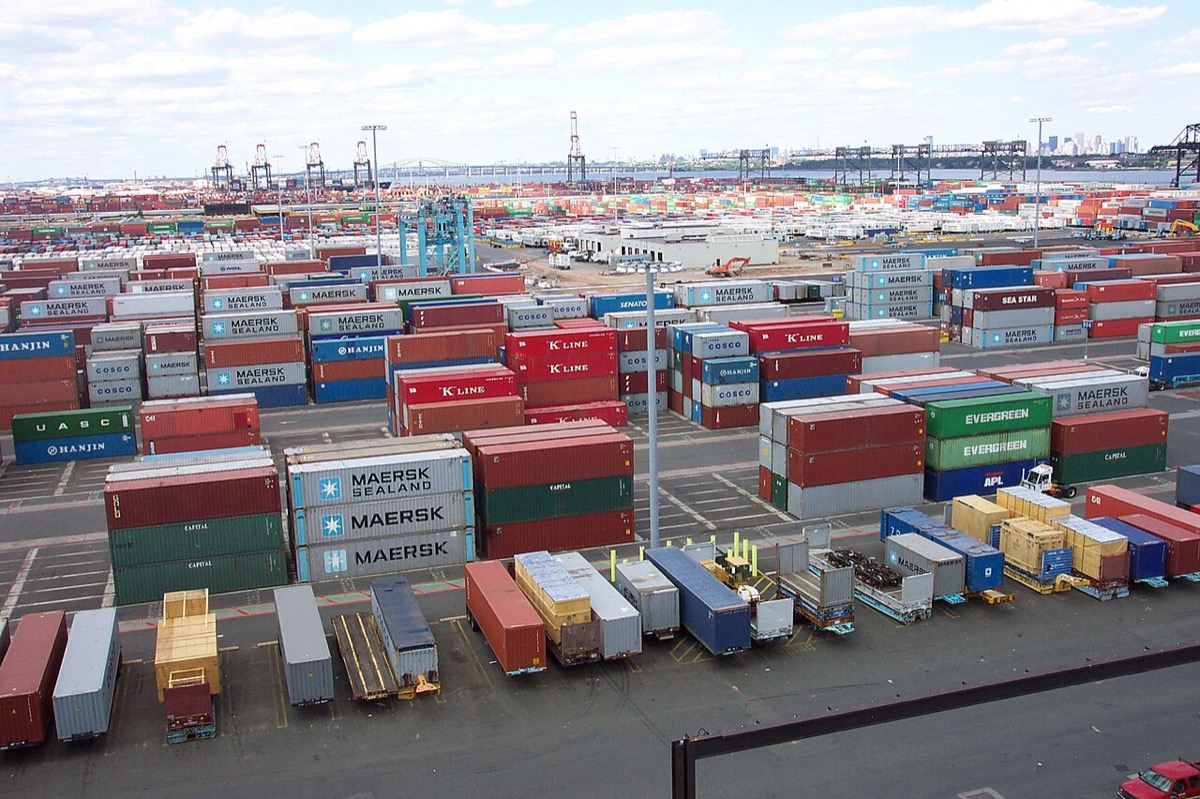
What the Benjamin Franklin Transit Actually Signals
The Benjamin Franklin is one of CMA CGM’s larger Marco Polo class assets. Pushing it through the Suez northbound is a commercial statement, not a goodwill exercise. CMA CGM’s internal rationale appears to be threefold. Fuel consumption on the Suez routing is roughly 25 to 30 per cent lower than the Cape routing for an Asia-North Europe string, which at late 2025 bunker prices is worth somewhere between USD 380,000 and USD 520,000 per voyage on a vessel that size. Transit time saving is 10 to 14 days round trip, which means the same vessel can complete more rotations per year. And Suez Canal Authority transit dues, while not cheap, are predictable and negotiable at the carrier level, where Cape routing is exposed to weather variance and bunker fuel spot pricing.
What the transit does not signal is a blanket all clear. The Houthi ceasefire arrangements that emerged through Q3 and Q4 of 2025 are holding, but they’re holding unevenly. There’s been no attack on a commercial vessel since mid September 2025, which is the longest quiet stretch since November 2023, but the Joint Maritime Information Center is still classifying Red Sea transit as elevated threat. War risk insurance premiums on Red Sea transits have come down from the peak, but they’re still running at 0.35 to 0.5 per cent of hull value, compared with 0.03 to 0.08 per cent for normal transits. On a mid sized container vessel, that’s an incremental USD 120,000 to 180,000 per transit in war risk cover.
For chemical cargo specifically, the picture is tighter. IMDG class 3 flammable liquids, class 6 toxic substances, and class 8 corrosives have historically commanded a war risk premium of their own on top of the vessel war risk, because carriers classify them as higher consequence if a ship is lost. On the Red Sea routing through 2024 and most of 2025, class 3 and 6 cargo was either refused outright on Red Sea strings or priced at surcharges of USD 850 to 1,400 per TEU on top of base freight. That surcharge has started to come down but it hasn’t disappeared.
The Suez Canal Authority’s Traffic Recovery by the Numbers
The Suez Canal Authority published monthly transit counts through 2025 that tell a clear recovery story. January 2025 ran at 90 to 100 vessel transits per month, bottoming the crisis. By March it was 130. June hit 170. September cleared 200 for the first time post crisis. October 2025 logged 229 transits, the highest since November 2023. November provisional data released in early December suggests roughly 240 transits, with December on pace for 255 to 270 depending on the Benjamin Franklin class effect pulling in additional carriers.
Pre crisis, the canal was running at 400 to 450 transits per month. So October’s 229 is still only about 52 per cent of pre crisis volumes. The recovery is real but it’s partial, and the mix of what’s transiting has shifted. A higher share of current transits is tankers (crude and product) and bulk carriers. Container traffic through the canal is still well below its 2022 baseline, which means the Asia-Europe container strings are the laggard in the recovery and that’s where most chemical importers’ cargo sits.
| Month | Vessel transits | Per cent of pre-crisis | Container share | Notes |
|---|---|---|---|---|
| January 2025 | 94 | 21% | 14% | Crisis trough |
| March 2025 | 131 | 29% | 18% | Tanker recovery first |
| June 2025 | 172 | 38% | 22% | Bulk carrier volumes up |
| September 2025 | 204 | 46% | 28% | First ceasefire effects |
| October 2025 | 229 | 52% | 31% | Highest post-crisis |
| November 2025 (prov) | 240 | 54% | 33% | Mid sized boxships return |
| December 2025 (est) | 260 | 58% | 36% | Benjamin Franklin class event |
The read for a chemical importer is that container capacity through Suez is coming back but not at a speed that floods the market. Through 2026, the base case is that container transit share grinds up from roughly 36 per cent today toward the 55 to 65 per cent range by Q4 2026, assuming no fresh Houthi incident. That’s a recovery but it’s not a capacity surge. Which matters for your rate expectations.

What This Does to Your 2026 Freight Rate Budget
The freight rate implication of a partial Suez reopening is more nuanced than the headline suggests. Cape of Good Hope routing is longer, which means more vessel days are absorbed per rotation, which means effective fleet capacity on Asia-Europe is artificially compressed. Once that capacity flows back through Suez, you free up somewhere between 8 and 14 per cent of effective capacity on the trade lane. In a balanced market, that would push rates down. But 2026 is not a balanced market.
Global fleet supply grew roughly 16 per cent over 2024 and 2025 combined, and another 9 million TEU of new builds are scheduled to deliver in 2026. That’s a fleet growth story that was already going to drive rates toward the floor in 2026 even if the Red Sea had stayed closed. Add the Suez capacity reintroduction on top, and the supply side overshoot in 2026 becomes significant. For Asia-North Europe on a standard 40 foot container, we think spot rates will move from roughly USD 2,100 to 2,400 in late 2025 down to USD 1,500 to 1,800 through Q2 and Q3 of 2026. Asia-Mediterranean will track similarly. Asia-US West Coast is a different story that’s driven mostly by fleet dynamics rather than Suez.
For chemical cargo, the dangerous goods surcharge picture is the one to watch. As Red Sea routing normalises, the IMDG class 3 and 6 surcharge premium should compress back toward pre crisis levels, which were in the USD 200 to 400 per TEU range rather than the USD 850 to 1,400 range carriers were charging in 2024. That compression alone is worth considerable landed cost, particularly for importers moving specialty solvents, coating intermediates, and water treatment chemicals in volume. Landed cost on a typical 20 foot ISO tank of industrial solvent from Rotterdam to Melbourne via a Suez routed Asia transshipment, we estimate moves from USD 4,850 per tonne equivalent in Q4 2025 toward USD 3,950 per tonne equivalent by Q3 2026, assuming the recovery curve holds.
How to Route Dangerous Goods Through 2026
The practical routing question for chemical importers through 2026 is not a binary Suez versus Cape decision. It’s a mixed portfolio decision that depends on IMDG class, origin, destination, and carrier. Three routing archetypes to think through.
For IMDG class 3 flammable liquids (UN 1170 ethanol, UN 1219 isopropanol, UN 1993 flammable liquid NOS) sourced out of Chinese producers bound for European buyers, the 2026 routing call is to start shifting bookings onto Suez routed strings as CMA CGM, COSCO, and eventually MSC restore capacity. The fuel and transit time saving flows through, the war risk surcharge has compressed, and the insurance side of the cost stack is cleaner than it was.
For IMDG class 6 toxic substances (UN 1829 sulfur trioxide, UN 2810 toxic liquid organic NOS) and class 8 corrosives (UN 1830 sulfuric acid, UN 1789 hydrochloric acid), be slower to move off Cape routing until the war risk insurance market has repriced properly. Class 6 and 8 cargo carries a higher consequence profile and underwriters are still pricing in a Red Sea incident tail risk. Budget on running this cargo on Cape routing through at least Q1 and Q2 of 2026, and only shift as your carrier relationships confirm the surcharge compression is sticky.
For bulk chemical tanker cargo (methanol, MEG, caustic soda, sulfuric acid), the routing decision is driven less by carrier choice and more by origin and destination pairing. Middle East origin tankers bound for India and East Asia never fully left the Red Sea. European origin bulk tanker cargo bound for Asia has been split roughly 40/60 between Suez and Cape through late 2025 and that ratio will tilt further toward Suez through 2026 as operator confidence firms up.
What to Do This Week
Four actions for the first week of December. First, pull your 2026 contract negotiation timeline and move your carrier RFP window forward by four to six weeks if you can. Most chemical importers run their RFPs in February and March for April contract starts. Moving that into mid January 2026 means you’re negotiating while the Suez capacity return is still being priced in, rather than after carriers have fully absorbed the capacity upside.
Second, separate your IMDG class 3 book from your class 6 and 8 book in your freight procurement. Under the old Red Sea closed regime, most importers treated dangerous goods as one basket and paid a blanket surcharge. Under the 2026 mixed routing regime, class 3 cargo is going to price materially better than class 6 and 8, and if you’re negotiating them as a single basket you’re giving the carrier the benefit of that spread. Ask for class specific surcharge breakdowns in every quote.
Third, rebuild your landed cost models against a 2026 base case of Suez routed Asia-Europe capacity growing through the year, Cape routed capacity declining, and spot rates compressing 20 to 30 per cent against late 2025 levels. Don’t anchor your 2026 budget to 2025 rate levels. Fourth, if you carry high value IMDG cargo (speciality solvents, high purity acids, pharmaceutical intermediates), maintain a Cape routed fallback contract through at least Q2 2026 so you’re not fully exposed if the Houthi ceasefire breaks down. The cost of maintaining the fallback is roughly USD 40 to 80 per TEU in minimum volume commitments, and it’s cheap insurance.
The Benjamin Franklin transit isn’t the end of the Red Sea crisis. It’s the start of the carrier level recalibration that will define 2026 freight economics. If you treat it as a single event, you’ll miss the bigger story, which is that Asia-Europe chemical freight is about to become materially cheaper than it’s been in three years, and the importers who move early on contract structure will capture most of the benefit before it gets competed away.