Container spot rates out of Shanghai to the US West Coast peaked at $4,716 per FEU in mid-2025, according to Drewry’s World Container Index. By early September, the index had turned. By mid-November, Shanghai to USWC spot had fallen to a range of $1,950 to $2,650 per FEU depending on carrier, vessel class and service tier. That is a drop of close to 55 percent in under five months.
If you are a US chemical importer sourcing from China, this is the contracting window of the year. And if you are still watching the Drewry WCI for the dip to find its floor, you are about to get caught on the wrong side of the next General Rate Increase.
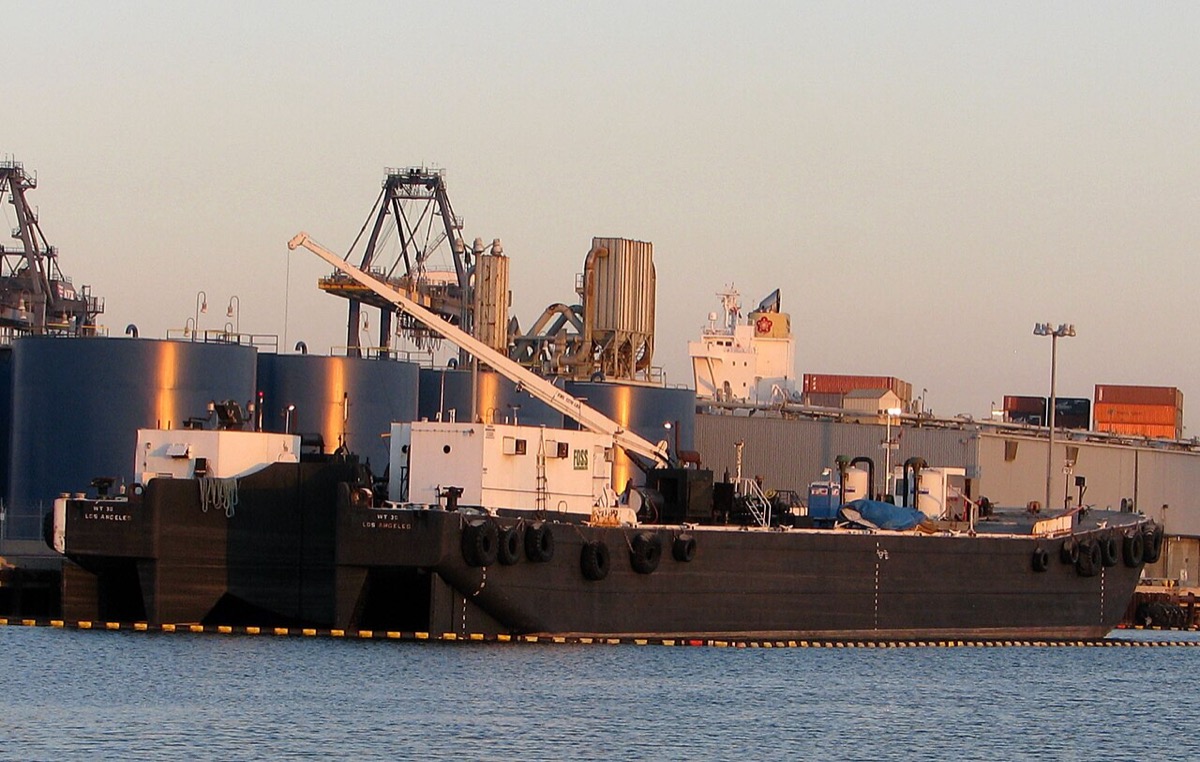
Here is the setup. The global container fleet expanded by roughly ten percent during 2024, taking total capacity above 31 million TEUs. That expansion is structural, not cyclical. The newbuild pipeline booked during the 2021-2022 rate spike is delivering into a market that has already normalised. Carriers have excess steel floating on water, and the only lever they have to protect headline rates is to blank sailings aggressively.
What the Rate Collapse Actually Looks Like
The Drewry WCI headline numbers tell the story at an index level. At the individual lane level, the moves have been sharper. Shanghai-Los Angeles has come off roughly 45 percent from the July peak. Shanghai-New York, where the Panama Canal route premium held in longer, has come off about 38 percent. Shanghai-Houston, which matters for Gulf Coast chemical importers, has come off around 42 percent.
The volatility has been brutal for anyone trying to run a spot-heavy procurement strategy. Here is the monthly timeline through the back half of 2025 on Shanghai to USWC.
| Month | Shanghai-USWC Spot per FEU | Week-on-Week Volatility | Blank Sailings Announced |
|---|---|---|---|
| May 2025 | $4,400 | +3% | 4 |
| June 2025 | $4,600 | +2% | 3 |
| July 2025 | $4,716 peak | Flat | 5 |
| August 2025 | $4,280 | Negative 4% | 8 |
| September 2025 | $3,450 | Negative 7% | 14 |
| October 2025 | $2,850 | Negative 6% | 22 |
| November 2025 | $2,300 | Negative 3% | 28 |
The blank sailings column is the real story. In November 2025, carriers across the Asia-to-USWC trade lane announced 28 blank sailings. That is more than one blank per day on a trade lane that normally runs eight to twelve services a week. Capacity is being pulled out of the market at pace, and that sets up the next GRI attempt.
Why Carriers Will Try a GRI Into Chinese New Year
Chinese New Year 2026 falls on 17 February. The Lunar New Year pattern is the most predictable rate event on the Pacific. Chinese factories run hot through January shipping pre-holiday inventory. Carriers traditionally push a GRI on 1 January, a second on 15 January, and sometimes a third on 1 February, stacking increases into a window when shippers cannot credibly threaten to delay cargo.
With the fleet 10 percent larger and rates down 55 percent from peak, the incentive for carriers to push hard on Q1 GRIs is as strong as it has been in years. Maersk, Hapag-Lloyd, CMA CGM, MSC and COSCO are all publicly discussing capacity discipline into 2026. The only lever that works for them is coordinated blank sailings plus GRIs. Expect both.
The importer who signs a twelve-month contract at today’s spot rate, with rate protection language covering the Q1 GRIs, saves money. The importer who stays on spot through January loses the trade. Every cycle has this pattern, and every cycle a meaningful share of importers get surprised by it.
The Chemical-Specific Wrinkles
Chemical importers have a few wrinkles that pure box shippers do not deal with. ISO tank rates move on a different cycle than dry box rates because the tank fleet is smaller, newbuild lead times are longer, and the DG handling infrastructure is more constrained. Flexitank rates move in parallel with dry box rates but with a premium that fluctuates with DG surcharges.
Here is what the landed cost maths looks like for a Gulf Coast chemical importer moving 150 FEU-equivalents a year of industrial chemicals from Shanghai to Houston, comparing a spot strategy against a locked contract at current rates.
| Strategy | Average Rate per FEU | Annual Freight Spend | GRI Exposure | Blank Sailing Exposure |
|---|---|---|---|---|
| Full spot through 2026 | $2,800 estimated blended | $420,000 | Full pass-through | Full rebooking cost |
| Locked contract signed October | $2,150 with Q1 GRI protection | $322,500 | Capped at 8% | Priority allocation |
| Hybrid, 70% contract 30% spot | $2,350 blended | $352,500 | Partial pass-through | Partial priority |
The locked-contract strategy saves $97,500 against the spot alternative on 150 FEUs. On a 500-FEU annual programme, the saving clears $325,000. Those are real dollars, and they compound because the saved cash allows the importer to hold safety stock through the Q1 disruption window without an inventory financing hit.
ISO tank rates have followed a similar curve but on a compressed scale. Shanghai to Houston on a twenty-foot ISO tank peaked around $3,900 in July and sat near $2,650 in early November. Tank operators like Stolt, Bulkhaul and Hoyer have smaller DG capacity to flex, so tank blank sailings are less of a tool. That makes tank contract negotiation a different game, but the same principle applies: Q4 is the window.
The Blank Sailing Mechanic Explained
If you have not had to handle a blanked booking before, here is the mechanic. Your forwarder books a container on a named vessel voyage. Two to seven days before sailing, the carrier announces the voyage is blanked. Your box gets rolled to the next vessel, which is often two weeks later because carriers space blanks through alternating weeks. Your demurrage clock on the loading end restarts. Your US-side warehouse receiving window slides two weeks. Your customer order fulfilment slides with it.
The financial hit on a blanked booking is rarely less than $3,000 per FEU once you count storage, port charges, additional trucking to and from the temporary yard, and lost working capital on the inventory sitting idle. On a 40-FEU blank event, that is $120,000 of unplanned cost, most of which is not recoverable from the carrier under standard bill-of-lading terms.
Carriers blank aggressively when rates are under pressure because the alternative, sailing half-empty ships, is worse for their per-TEU cost basis. From their perspective, pushing blanks onto the shipper base is rational. From your perspective, it is the single biggest reason to move volume onto contract as early in Q4 as possible.
The Contract Negotiation Checklist for Q4
Contract negotiation season on the Pacific trade lane runs from October through February. If you get on the phone with Hapag-Lloyd, Maersk, CMA CGM, COSCO or MSC in October, you will be talking to account managers with empty 2026 allocation sheets who need volume commitments. If you get on the phone in February, you will be talking to account managers whose sheets are full and who are quoting premium rates to late negotiators.
Run your 2025 actual volume by trade lane and by container type before you start conversations. Carriers price allocation against committed volume, and a vague number gives them latitude to underallocate. Bring the number in FEUs and ISO tank twenties separately, by port pair.
Negotiate rate protection language, not just a base rate. The base rate at $2,150 per FEU is only worth what the GRI protection lets you keep. Strong contract language caps GRIs at 8 percent per event and allows you to exit the contract on a material GRI without penalty. Weaker language passes through GRIs uncapped and gives the carrier a unilateral right to revise.
Negotiate blank sailing compensation. Carriers will resist this because it sets a precedent, but on a twelve-month contract worth $300,000 or more in freight spend, you have leverage to get language that caps rebooking to the next available vessel within seven days at the contract rate, not the spot rate at the time of the blank.
Split allocation across at least two carriers if your volume supports it. A sole-carrier contract looks cheaper on paper, but single-carrier exposure on the Pacific is a risk that showed up hard during the 2024 Red Sea crisis and again during the 2025 Baltimore bridge aftermath. Two-carrier allocation costs maybe 3 to 5 percent more on blended rate, and it gives you operational optionality that is worth far more than that premium.
Lock your ISO tank allocation separately. Tank operators run on different contract cycles and different commercial models than box carriers. Stolt, Bulkhaul and Hoyer all want annual commitments from chemical importers, and the quality of the allocation you get in 2026 is a function of how early you commit in Q4 2025.
Audit your incoterms. Importers on DAP or DDU terms are exposed to carrier surcharge changes that an importer on FOB is not. If you have been running DAP because the Chinese supplier handled the logistics, Q4 is the window to review whether moving to FOB and contracting directly with carriers is a better structure going forward.
Chinese New Year Runs Into the GRI
Layer the Chinese New Year production shutdown onto the GRI timing and you get the annual squeeze. Chinese factories typically ramp down from around 25 January into the 17 February holiday. Before they ramp down, there is a production push. That push drives cargo volume exactly into the carriers’ GRI window.
Shippers who have their Q1 production sourced by mid-December and containers booked onto a contract with rate protection ride through that window at contract rates. Shippers who are still calling their forwarders for spot rates in the third week of January pay the GRI, ride a blank sailing, or both. Every Lunar New Year, this plays out the same way.
Your Next Move This Week
Pull your 2025 actuals by trade lane, container type and port pair from your forwarder’s reports and get them onto one page. If your forwarder cannot produce that in 48 hours, that is a forwarder problem you should also deal with in Q4.
Set up three conversations next week: one with your incumbent carrier, one with a tier-one alternative, and one with an NVOCC who can aggregate volume. Ask all three for 2026 contract rates with GRI caps and blank sailing compensation language. The rates you get back will tell you where the market is pricing Q1.
Sourzi negotiates Q4 contract rates for US chemical importers moving volume from Shanghai, Ningbo-Zhoushan, Qingdao and Tianjin into LA/Long Beach, Houston and Savannah. If your 2026 allocation is not locked by mid-November, you are negotiating into a worse market. We should talk this week.