The Uyghur Forced Labor Prevention Act came into force yesterday, 21 June 2022, and CBP’s operational guidance released on 13 June didn’t leave much room for soft enforcement. Every import from the Xinjiang Uyghur Autonomous Region is now subject to a rebuttable presumption that it was produced with forced labour. Goods mined, produced, or manufactured wholly or in part in Xinjiang, or produced anywhere in the world by an entity on the UFLPA Entity List, do not enter the United States unless the importer clears the presumption with “clear and convincing evidence.”
That language sounds like compliance wording. On the ground, it means your shipment sits in a CBP warehouse in Long Beach, Oakland, New York, or Houston until you produce documents you probably don’t have yet. In the first 24 hours of enforcement, detentions have already hit polysilicon-adjacent shipments, cotton-derived chemical intermediates, and at least two tomato paste lots. That’s just the goods on the public Strategy list. The broader sweep is going to reach into chemical and raw material categories that most importers haven’t mapped yet.
If you’re bringing in any Chinese chemical product where feedstocks, intermediates, or upstream raw materials could have touched Xinjiang, the next 90 days will tell you whether your supply chain documentation is CBP-grade or whether you’re about to learn in the most expensive way possible.
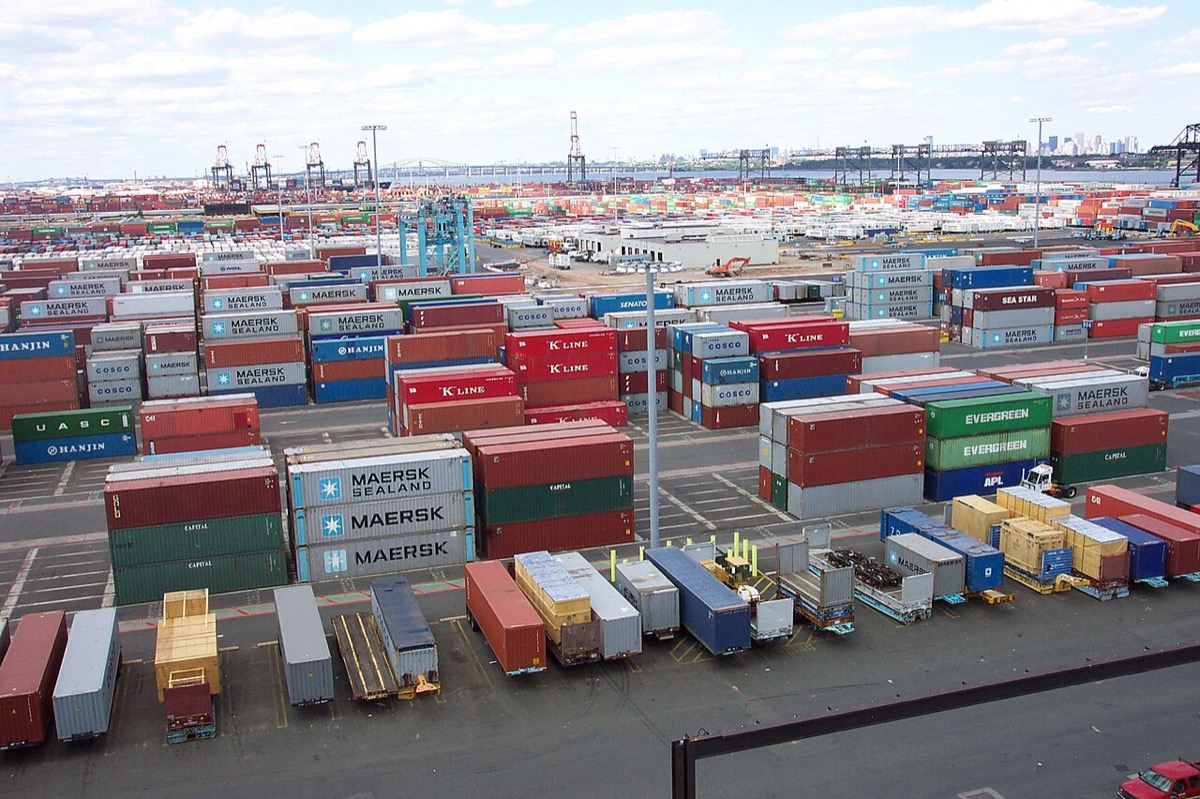
Why the Rebuttable Presumption Is a Higher Bar Than the WRO Regime
Before UFLPA, forced labour enforcement on Chinese goods ran through Withhold Release Orders issued under 19 USC 1307. A WRO targeted a specific producer or commodity, and the importer could usually resolve detention by showing the goods didn’t come from the named entity. It was documentary, but it was finite.
UFLPA inverts the burden. Every import with a Xinjiang nexus is presumed to involve forced labour unless the importer proves otherwise with “clear and convincing evidence,” which is a higher standard of proof than the “preponderance” standard typical in civil proceedings. CBP’s operational guidance defines clear and convincing evidence as requiring a complete supply chain trace, plus transactional records, plus due diligence documentation demonstrating the importer didn’t recruit labour through government-imposed schemes. Meeting that standard for a raw material that’s moved through three or four processors before reaching your supplier is genuinely hard.
The UFLPA Entity List published on 17 June names 20 specific Chinese entities in the first tranche, but the presumption extends beyond them. Any goods that touched Xinjiang at any processing stage fall under the presumption regardless of whether the final exporter appears on the list. That’s the critical design feature most importers have missed. It’s not about whether your supplier is on a list. It’s about whether any upstream input traces back to Xinjiang.
The CBP Priority Enforcement List and What’s Already Getting Detained
CBP’s Strategy document released by the Forced Labor Enforcement Task Force identified four high-priority sectors for initial enforcement: apparel, cotton and cotton products, silica-based products including polysilicon, and tomatoes and downstream products. Those are the public priorities. The operational reality on day one is broader.
Polysilicon has been the most visible early target. Around 40 to 45% of global solar-grade polysilicon capacity sits in Xinjiang, concentrated around Daqo, GCL-Poly, TBEA, and East Hope. CBP had already been building polysilicon enforcement capability through 2021 and early 2022, and the first detentions under UFLPA have gone straight at PV module imports and polysilicon feedstock shipments. If you’re importing any silicone or silicon-chain intermediates sourced from China, check whether your supplier’s upstream feedstock trace passes through Xinjiang.
Cotton-derived chemicals are the second wave. About 85% of China’s cotton is grown in Xinjiang. That matters for more than apparel. Cellulose acetate, nitrocellulose, carboxymethyl cellulose (CMC), and viscose-rayon precursors all have potential cotton-based feedstock paths. If your CMC or nitrocellulose supplier in Jiangsu or Shandong uses Xinjiang cotton linters as a raw input, your shipment is exposed regardless of where the final processing happens.

| Commodity Category | Xinjiang Nexus Risk | Day-One CBP Priority | Typical Chain-of-Custody Gap |
|---|---|---|---|
| Polysilicon, silane, silicon metal | High (40-45% of capacity) | Explicit priority | Mill-to-product trace |
| Cotton-derived chemicals (CMC, cellulose, viscose) | High (85% of China cotton) | Implicit priority | Raw fibre origin |
| Tomato paste and lycopene derivatives | High | Explicit priority | Field-to-processor trace |
| Caustic soda, chlor-alkali | Moderate (Xinjiang PVC cluster) | Not initial priority, monitored | Brine source, integrated chain |
| PVC (ethylene + calcium carbide route) | Moderate to high | Monitored | Calcium carbide origin (Xinjiang coal) |
| Titanium dioxide | Low to moderate | Not initial priority | Ore source, processor location |
| Aluminium, magnesium, zinc | Moderate (Xinjiang smelter cluster) | Monitored | Smelter location |
| Polyethylene, polypropylene | Low (limited Xinjiang capacity) | Not priority | Feedstock naphtha/ethane origin |
PVC is the category most importers have underestimated. A significant slice of Chinese PVC is produced through the calcium carbide route, and calcium carbide production in China is heavily concentrated in Xinjiang where coal is cheap. Even if your PVC supplier is in Jiangsu or Shandong, the calcium carbide feedstock trace can lead back to Xinjiang. That’s not a theoretical risk. CBP’s enforcement guidance specifically calls out multi-stage commodity supply chains as within the scope of the rebuttable presumption.
What Clear and Convincing Evidence Actually Looks Like on a Shipment
CBP’s guidance is clear about what they want to see, even if the documents are hard to produce. You’re going to need, at minimum, a documented supply chain map from raw material extraction through final export, transactional records at every stage (contracts, invoices, payment records), evidence of due diligence on labour conditions at each supplier and sub-supplier, and in many cases independent third-party audits confirming no Xinjiang linkage.
The practical challenge is that most chemical supply chains weren’t documented to this standard. Your supplier in Zhejiang buys caustic soda from a trader. The trader buys from two producers. One of the producers operates integrated chlor-alkali in Shandong with transparent raw material trace; the other operates in a cluster where the brine source isn’t clearly documented. Your supplier doesn’t know which of the two units your product came from on a specific lot. Neither does the trader. CBP asks for a mill-to-product trace, and nobody can produce it.
The fix is structural, not transactional. You need to build supply chain transparency into your procurement from the raw material backward, not from the finished product forward. For any Chinese chemical product entering the United States after June 2022, your supplier contracts should now include origin disclosure at every upstream tier, audit rights at sub-supplier facilities, and written attestation that no Xinjiang-nexus inputs are present in the product or its feedstocks.

Bureau Veritas, SGS, and Intertek have all rolled out UFLPA-specific supply chain audit products. The audits aren’t cheap. Budget USD 15,000 to 45,000 per supplier for a full upstream trace depending on the complexity of the chain. That’s a real cost but it’s a fraction of the cost of a single detained shipment sitting in a CBP warehouse for 90 days while you try to assemble evidence you don’t have.
The Detention Clock and What It Costs You
Once CBP detains a shipment under UFLPA, the clock starts running on multiple cost categories simultaneously.
CBP has 30 days from the notice of detention to either release or exclude the shipment, but that 30 days can extend if CBP requests additional information and the importer doesn’t respond within the required window. In practice, first-wave UFLPA detentions are running 45 to 90 days before resolution because importers need time to gather evidence that was never assembled in the first place.
While your cargo sits, you pay. Demurrage at the port for failure to pick up starts accruing after the free period (typically 5 to 7 days at US ports). Detention on the containers themselves kicks in around the same time. Storage fees at the CBP-designated examination station run $80 to $150 per day per container. If the shipment is refrigerated or temperature-controlled, monitoring and power costs pile on top.
Here’s the landed cost exposure on a 40-foot container of CMC (carboxymethyl cellulose) detained for 60 days pending chain-of-custody evidence:
| Cost Component | Amount |
|---|---|
| Container demurrage (55 days past free period at $175/day) | $9,625 |
| Container detention (55 days at $125/day) | $6,875 |
| Port storage at CES (60 days at $110/day) | $6,600 |
| Third-party forensic supply chain audit (urgent, rush fee) | $18,000 to $35,000 |
| Legal counsel for CBP submission | $12,000 to $25,000 |
| Financing cost on cargo (60 extra days, $45,000 cargo value, 9% annual) | $665 |
| Substitute supply emergency premium (if replacing the PO) | $200 to $400/MT over contract |
| Direct detention cost estimate (single FEU) | ~$54,000 to $83,000 |
That’s before you consider the cost of missing a delivery commitment to your downstream customer, which in a contract with a liquidated damages clause can be several multiples of the direct detention cost.
If the presumption isn’t successfully rebutted, the shipment is excluded. You don’t get it. Your only recourse is re-export to a non-US destination, abandonment, or destruction. The product value is effectively zero as far as your US business is concerned.
The Entity List Problem and the Expansion Everyone Should Expect
The initial UFLPA Entity List names 20 producers. That’s not the end state. The Forced Labor Enforcement Task Force is required to update the list quarterly, and DHS has signalled that chemical producers, intermediate processors, and integrated polysilicon and aluminium plants are active candidates for expansion.
What we’d watch for in the next two quarters: expansion into integrated chemical complexes in Xinjiang that produce PVC, caustic soda, cyanide derivatives, and magnesium. Addition of traders and intermediate distributors with documented Xinjiang sourcing. Possible listing of specific polysilicon producers that weren’t in the initial list but have been the subject of prior WROs or human rights reporting.
If a supplier you buy from, or any of their upstream suppliers, is added to the Entity List in a future update, every shipment you import that can’t be cleanly traced to non-listed sources becomes exposed to the rebuttable presumption. Your documentation standard needs to be built for that future state, not for the 20-entity current list.
What to Do This Week on Your Active China Chemical Book
Map your exposure in the next five business days. Pull a list of every Chinese chemical product you import in any volume. For each one, work out the upstream feedstock trace to the extent your supplier can tell you. Mark everything with a Xinjiang connection, direct or inferred, as a high-priority review item.
Ask every Chinese supplier for a formal Xinjiang nexus declaration in writing. Ask them to attest that no raw materials, intermediates, or labour in the production of your specific products pass through Xinjiang or involve any entity on the current or prospective UFLPA Entity List. If they can’t or won’t provide that attestation, treat the product line as detention-exposed and start qualifying alternative sources now.
For your polysilicon, cotton-derived chemical, PVC, and integrated chlor-alkali positions, commission a third-party supply chain trace audit through SGS, Bureau Veritas, or Intertek. Don’t wait for a detention to trigger this. The audits take 4 to 8 weeks to complete and you need the documentation in hand before your shipments hit a US port.
Update your sales contracts with US customers to reflect UFLPA detention risk. Build in delivery window flexibility, clear allocation of detention costs, and the right to substitute product if a specific supplier becomes excluded. Your downstream customer isn’t going to accept “CBP detained it” as a force majeure unless your contract says they have to.
UFLPA enforcement started yesterday. The detention picture by the end of July will tell every chemical importer exactly how aggressive CBP is going to be and which commodity categories are the real targets. If your documentation isn’t ready by then, you’re betting that your specific shipments don’t get pulled. That’s not a bet you want to make with a 60-day detention clock and $75,000 of direct exposure per container.