The QIMA Q1 2026 Supply Chain Barometer landed this week with a number that reframed every sourcing conversation I’ve had this quarter. US inspection and audit demand in China fell 18% year on year. China’s April PMI printed at 49.0, below the 50 expansion line. New export orders inside that PMI came in at 44.7. Those numbers, taken together, describe a chemical manufacturing base that is contracting faster than its customers are auditing it. That gap is where the risk lives.
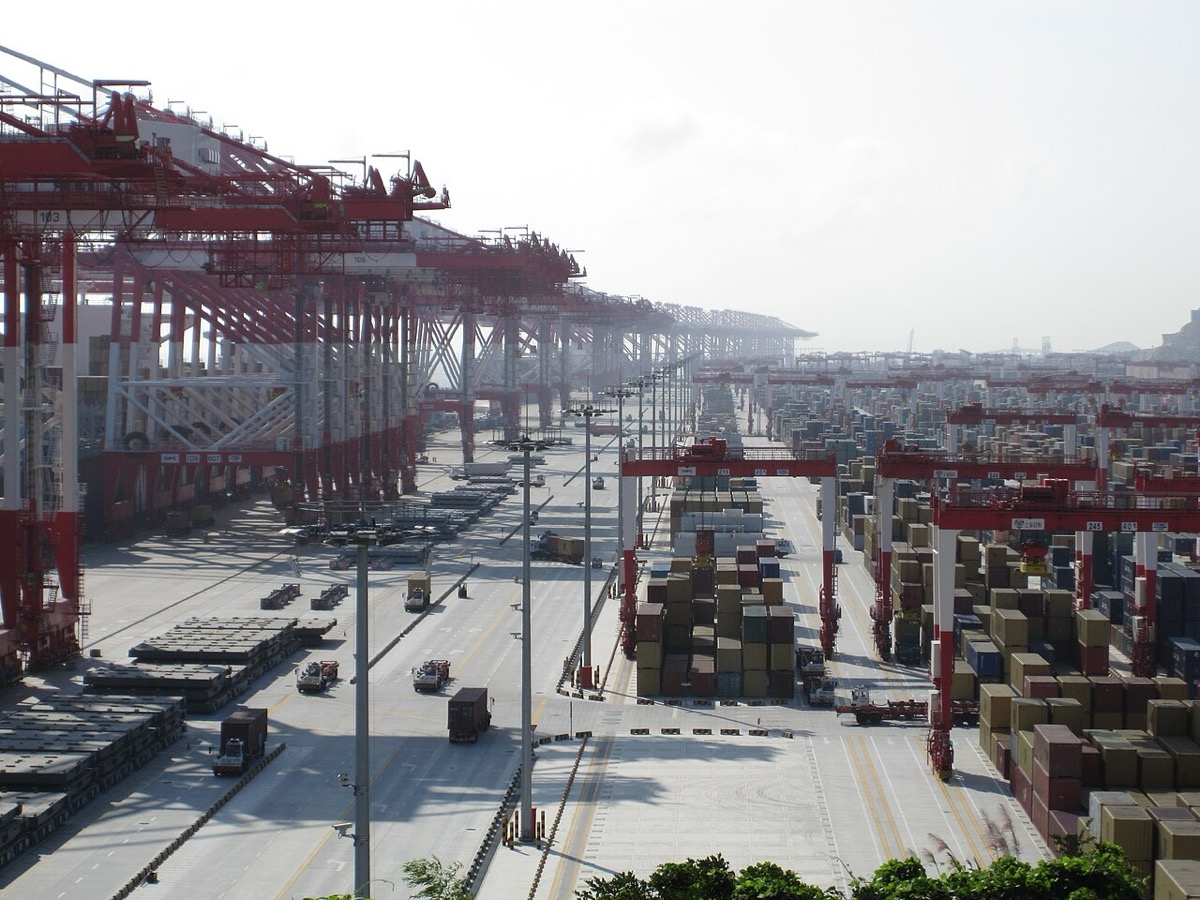
Across Guangdong, Zhejiang, and Jiangsu, the three provinces that produce the majority of China-origin speciality chemical intermediates for US and Australian buyers, smaller second- and third-tier factories have been consolidating or shutting down since Q4 last year. The pattern is well documented at this point. A 40-worker plant making a custom surfactant in Shaoxing either gets absorbed by a 400-worker plant in nearby Hangzhou or closes entirely, and your 24-month-old qualified supplier is no longer a legal entity by the time you issue your next PO.
Why This Is Happening Right Now
Three forces are pushing the consolidation. First, the stacked US tariff regime has taken demand out of the market for lower-margin intermediate producers who used to run on 4-6% EBITDA. That margin does not survive a 55-60% effective tariff on the customer side when the customer pushes back on price. Second, Chinese domestic demand for commodity chemistry is soft, with construction and property-related chemistry (polyurethanes, coatings resins, flooring intermediates) running at multi-year low utilisation. Third, Beijing has been tightening enforcement of provincial environmental and safety rules on smaller operators, which adds compliance cost that only bigger producers can absorb.
The net effect is that your Tier 2 and Tier 3 Chinese supplier base is being quietly restructured. That can be a good thing, bigger consolidated producers are usually more reliable on quality and documentation, but only if you actually know which side of the consolidation your supplier ended up on. The ones who drift into our inboxes asking for help are the ones who got blindsided.
The Factory Verification Audit Your Procurement Team Probably Isn’t Running
A proper factory verification audit is not a phone call and a WeChat confirmation. It is a four-part exercise covering legal existence, physical production capability, quality system documentation, and financial solvency. The big three inspection firms. SGS, Bureau Veritas, and Intertek, plus QIMA will run a full version for roughly $2,200 to $3,800 per factory depending on scope. A scaled-down version for continuity verification runs around $800 to $1,400.
Here is what an audit should actually cover:
| Audit domain | What gets verified | Typical failure mode | Cost range USD |
|---|---|---|---|
| Legal entity | Business licence, tax registration, export licence, ownership chain | Supplier is a trading house, not a factory | $300-500 |
| Physical production | On-site walk, equipment inventory, production line capacity check | Production was outsourced to undisclosed sub-supplier | $600-900 |
| Quality system | ISO certificates, SOPs, batch records, QC lab calibration | Batch records reconstructed after the fact | $500-800 |
| Financial health | Bank reference, recent revenue, employee count, utility bills | Factory is 60+ days behind on wages or utilities | $400-700 |
| Regulatory docs | TSCA inventory status, REACH registration, SDS currency | SDS is 4+ years old or references retired suppliers | $400-600 |
The line that costs US importers the most when it is missed is “production was outsourced to undisclosed sub-supplier”. You qualify Factory A in Zhejiang. Factory A accepts your PO, then contracts out 40% of the order to Factory B in a neighbouring county because Factory A’s reactor is down for maintenance. Factory B is not qualified. Factory B’s batch ends up in your drum, and when the US customer’s QC pulls a certificate of analysis that doesn’t match the declared production record, you have a TSCA problem, a customer trust problem, and possibly a product recall exposure.
Red Flags From the Last Six Months
Patterns the inspection firms are reporting on chemical factory audits this year:
Reduced workforce. Factories that employed 180 workers in mid-2024 now operating with 110-130. That is not always a red flag, but combined with unchanged stated production capacity it suggests either automation (verifiable) or outsourcing (not).
Outdated ISO 9001 and ISO 14001 certificates. Certificates within 3 months of expiry without a scheduled surveillance audit. Expired certificates without a renewal submission.
Changed banking details. Supplier asks you to wire to a new account, often a different bank or a Hong Kong-based account. Sometimes legitimate. Always requires independent verification by direct phone call to the factory’s legal representative, not the sales contact.
Slow communication. Email response times stretching from same-day to 3-4 days. WeChat messages read but not responded to. These are classic signs of financial stress or impending closure, and they almost always precede the formal shutdown by 4-8 weeks.
SDS and TSCA documentation gaps. If your supplier cannot produce a current SDS in English that matches their batch production, or cannot confirm TSCA inventory status on the exact CAS number shipping to you, that is not a paperwork problem. It is a production-chain-integrity problem.
The TSCA Documentation Piece Nobody Wants to Talk About
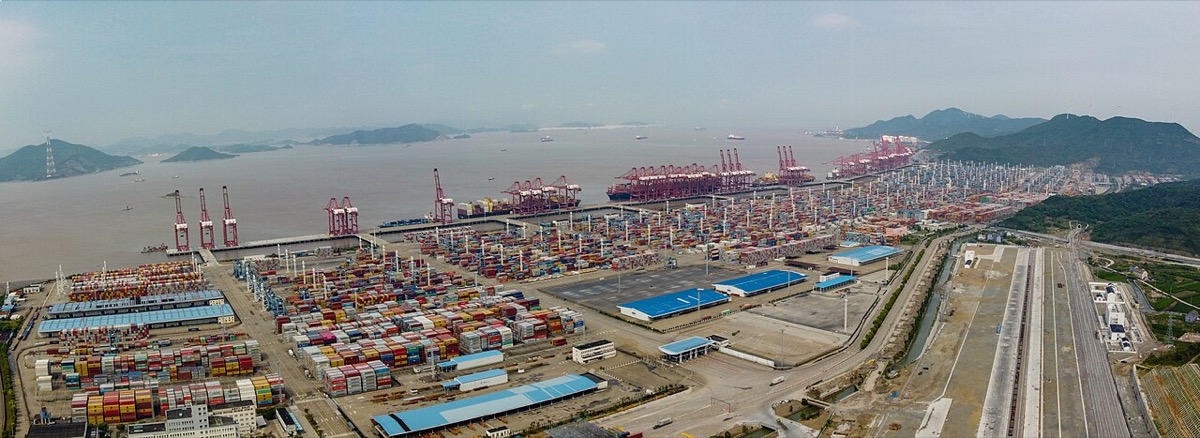
If you are importing into the US, every chemical substance on your bill of entry needs to be on the TSCA inventory or covered by a TSCA exemption. The importer of record is responsible, not the Chinese supplier. When your supplier changes production arrangements without telling you, outsources to a sub-supplier, substitutes a minor raw material, shifts production to a different facility, the chemical identity of what actually arrives may no longer match what you certified on TSCA.
EPA has been noticeably more active on TSCA import inquiries in 2025. A client last month received a Section 8(e) information request that took 11 days of document production to respond to, and the response required direct affidavits from the Chinese producer certifying the production process and raw material sources. That supplier scrambled to produce documentation they should have had on file from the outset, and the client came within 48 hours of having to pause all US entries pending resolution.
The preventative version of that conversation is a documented annual factory audit with TSCA compliance specifically in scope. $1,400 spent once a year against a potential $40,000 in legal and response costs is not a difficult decision.
A 30-Day Factory Verification Plan
Week 1: Triage. Rank your top 20 Chinese suppliers by annual spend. Flag any supplier where you have not had a physical on-site audit or inspection within the last 14 months. Flag any supplier who has changed banking details, sales contact, or shipping origin port in the last 6 months.
Week 2: Commission audits. For every flagged supplier, commission a verification audit from SGS, Bureau Veritas, Intertek, or QIMA. Scope: legal entity, physical production, quality system, TSCA/REACH documentation. Request a same-day photographic site walk-through as part of the deliverable.
Week 3: Review and escalate. Audit reports typically land 5-8 business days after site visit. For each audit with any red finding, schedule a call with the supplier’s legal representative (not the sales contact) within 5 business days. Get written confirmation on any outsourcing arrangements currently in use.
Week 4: Decisions. For any supplier where the audit cannot confirm direct production of the goods you are buying, or cannot confirm TSCA documentation currency, you need an alternate qualified by end of Q4. Start the alternate-supplier RFQ process that week. Non-China alternates (Korea, Taiwan, India) should be in the mix, but qualified Chinese alternates from larger Tier 1 producers are often available in the same province on 8-12 week qualification cycles.
The Inspection Market Is Quieter Than It Should Be
Back to the QIMA data point. US audit demand down 18% YoY means fewer importers are running the verification work that catches supplier risk. It also means the big inspection firms have capacity they did not have in 2022-2023. If you commission an audit this month, you will likely get a site visit scheduled within 10 business days, which is materially faster than the 3-4 week lead times of 18 months ago. That window is not going to stay open indefinitely, when sentiment turns, the inspection queue fills up fast.

One Move To Make This Week
Pick your top three Chinese chemical suppliers by annual spend. For each one, pull the most recent site visit or audit report on file. If the most recent is more than 14 months old, commission a verification audit this week. Scope it to include legal entity verification, physical production walk-through, and TSCA documentation currency. Budget $3,000 per supplier.
That is roughly $9,000 against a Tier 1 chemical import programme doing $8-15M of annual China-origin volume. If two of three audits come back clean, you have peace of mind on most of your exposure. If one of three comes back with red findings, you have an eight- to twelve-week window to qualify an alternate before the problem becomes acute.
Sourzi coordinates factory verification audits across Guangdong, Zhejiang, Jiangsu, and Shandong through our network of SGS, Bureau Veritas, Intertek, and QIMA contracts, and we review the audit findings with you before they hit your procurement team’s inbox. Email sourcing@sourzi.com with your top Chinese supplier list and we will scope a verification programme within 72 hours.