On January 1 MOFCOM added silver and a schedule of silver-bearing intermediates to the dual-use export control list. The regulation reads as a national security measure. The practical effect on US chemical importers shows up in four specific process chemistries and one emerging category most import managers hadn’t budgeted as a China risk heading into 2026. Silver nitrate for pharmaceutical intermediates, silver-based ethylene oxide catalysts, silver paste for photovoltaic cell metallisation, silver brazing alloys for heat exchanger fabrication, and silver-ion antimicrobial compounds for water treatment and medical device coatings.
The piece of context that matters before you read any supplier announcement is that China doesn’t dominate silver because it mines the most. Mexico and Peru mine more. China dominates because it refines and converts more silver into downstream industrial forms than any other country. That means the controls aren’t about raw silver availability. They’re about finished silver chemical products and alloys where China is the default global supplier. The January 1 move is an export licensing regime on the processed outputs, not an embargo on the metal.

The Five Chemical Use-Cases In The Control Scope
The MOFCOM notice schedules silver under HS 7106 and identifies silver content thresholds in derivative forms. The practical read-across to your procurement pipeline falls into five buckets.
Silver nitrate (AgNO3, CAS 7761-88-8) used in pharmaceutical synthesis, photographic chemistry, and laboratory analytical reagents. Chinese producers account for roughly 40 percent of the merchant market on this molecule. Alternative supply sits in Germany, Belgium, the US (domestic producers like American Elements), and Japan.
Silver-based ethylene oxide catalysts used in EO production from ethylene and oxygen. This is a specialty catalyst category where Chinese supply to US importers has grown because of price. The alternative is Shell Catalysts and Technologies, BASF, Scientific Design, and Sud-Chemie proprietary catalysts, all of which trade at a premium but don’t face an export licence.
Silver paste for photovoltaic cell metallisation. Chinese paste producers including DK Electronic Materials and Giga Solar dominate the global market. Alternatives include Heraeus (Germany), DuPont Solamet, and Targray (Canada), with qualification timelines that run 90 to 180 days for most cell architectures.
Silver brazing alloys used in HVAC heat exchanger fabrication, refrigeration assemblies, and stainless steel piping joints. HS code 7106 alloys and 8311 brazing rods. Alternative supply from Lucas-Milhaupt (US), Umicore (Belgium), Johnson Matthey (UK), and Morgan Advanced Materials.
Silver-ion antimicrobial additives used in medical device coatings, water filtration cartridges, and textile finishes. Alternatives from BASF HyGentic, Sciessent, and Microban-licensed chemistries.
The Alternative Sourcing Matrix By Country And Category
Here’s the honest read on where to source each affected category for 2026 delivery. We’ve run the calls with eight client supply chains in the last two weeks and the pattern is consistent across categories.
| Chemical category | Chinese share of current US imports | Best near-term alternative | Second alternative | Qualification time | Price premium vs China |
|---|---|---|---|---|---|
| Silver nitrate reagent grade | ~40% | Germany (Heraeus, Evonik) | US domestic (American Elements) | 30-60 days | 12-18% |
| Silver nitrate pharma grade | ~30% | Japan (Dowa Holdings) | Belgium (Umicore) | 90-180 days | 20-28% |
| EO silver catalyst | ~25% | BASF proprietary | Shell CT (Netherlands) | 120-240 days | 25-35% |
| PV silver paste | ~70% | Heraeus (Germany) | DuPont Solamet (US) | 90-180 days | 15-25% |
| Silver brazing alloys | ~45% | Umicore (Belgium) | Lucas-Milhaupt (US) | 30-90 days | 18-22% |
| Silver antimicrobial compounds | ~35% | BASF HyGentic | Sciessent (US) | 60-120 days | 10-20% |
The matrix assumes you’re shipping through normal commercial lanes. If you’re in a regulated end-use (medical, aerospace, defence) the qualification times stretch by 60 to 120 days because of the documentation requirements. Plan accordingly.
Mexico, Peru, And Poland: The Mining And Refining Geography
The three countries that sit upstream of the alternative supply chain are Mexico, Peru, and Poland. Mexico produced roughly 6,300 tonnes of silver in 2024, the world’s largest miner. Peru produced around 3,100 tonnes. Poland produced about 1,300 tonnes, largely as a byproduct of copper refining through KGHM Polska Miedź.
The reason those three countries matter for chemical importers isn’t that you’re buying silver bullion. It’s that the refiners and converters in Germany, Belgium, the US, and Japan source their feedstock from those mining regions. Silver feed security upstream is what allows Heraeus, Umicore, and American Elements to quote you without import licence risk. If you’re running a supplier risk assessment in February, document the upstream silver source for every alternative vendor. A German alloy producer sourcing Mexican and Peruvian silver is structurally safer than one dependent on Chinese refined silver for feedstock.
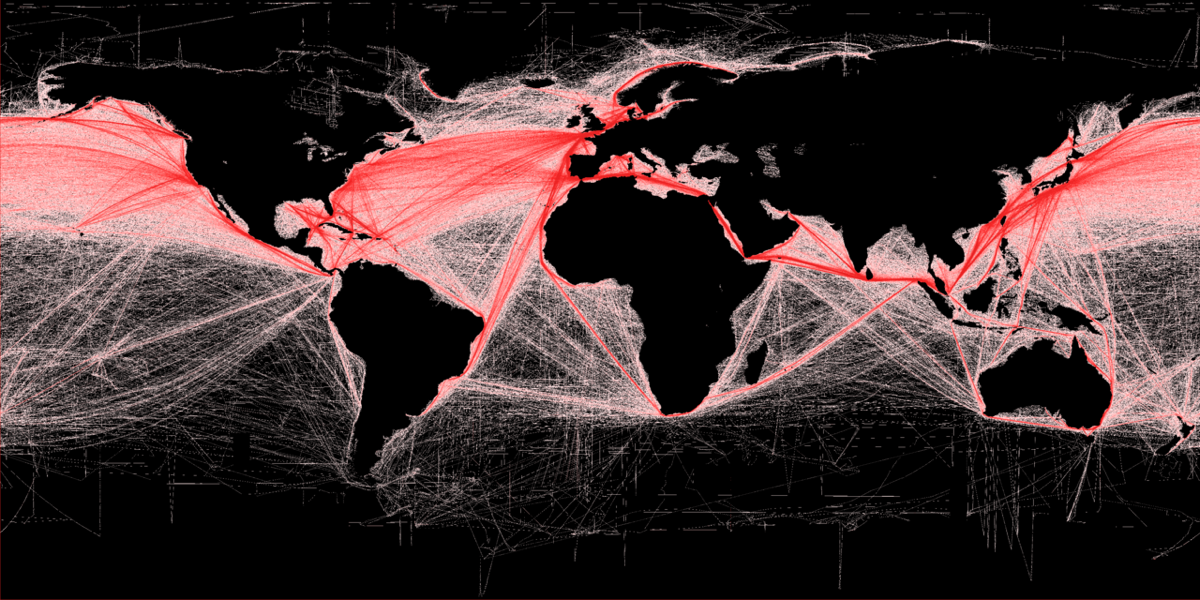
Port logistics shift accordingly. Manzanillo in Mexico is the west coast exit for most Mexican silver flows. Callao in Peru handles Peruvian exports. Gdańsk in Poland is the main European silver export hub. Your forwarder can quote direct lanes from any of those three into US Atlantic and Gulf ports.
The Licensing Process On The Chinese Side And Why It Will Slow Shipments Anyway
Even for importers who plan to stay with Chinese silver-product suppliers, the licensing process itself introduces two to six weeks of additional lead time on every shipment. MOFCOM’s licence review for dual-use exports historically runs 30 to 45 business days for standard applications and up to 90 days for politically sensitive end-use declarations. The licence has to identify the end-use, end-user, and expected consumption. Amendments require re-application.
For importers buying silver nitrate in small drummed quantities for laboratory distribution this means a shipment that used to clear Shanghai in five working days now sits at MOFCOM for four to six weeks before it can be booked. For importers buying PV silver paste on a production consumption cadence this means your supplier will be quoting you 60-day lead times in place of the 21 days you had in Q4 2025.
The practical move is to carry 90 days of safety stock on any silver-bearing input you’re still sourcing from China through Q2 2026. That’s a working capital commitment that should be weighed against the cost of qualifying an alternative supplier. For most of the categories in the matrix above, qualifying the alternative inside six months will be cheaper than carrying the extra inventory for twelve.
Landed Cost Maths On A Representative Silver Nitrate Flow
Take a representative 2,000 kg silver nitrate shipment, reagent grade, at a December 2025 FOB Shanghai quote of $920 per kilogram. Under the pre-control tariff stack (MFN at roughly 3.7 percent plus Section 301 at 25 percent plus IEEPA 10 percent plus IEEPA 10 percent equals roughly 48.7 percent on duty-paid basis, silver products do not fall under most Section 301 lists, so adjust accordingly for your actual HS subheading) the landed cost per kilogram sits around $1,070 depending on freight and broker charges.
Switch to a German-origin alternative at an FOB Hamburg price of $1,085 per kilogram. German supply is MFN only because Germany does not face IEEPA or Section 301 layers. Landed cost sits around $1,130 to $1,145. The premium over Chinese supply is roughly 6 to 7 percent on landed basis once you net out the duty differential, not the 15 to 20 percent headline price premium. The Chinese supply also carries the MOFCOM licence risk and the 60-day lead time extension. The German supply carries neither.
Run that maths on your actual silver-bearing flows before the end of February. For most clients the landed cost math flips in favour of the alternative once the tariff stack is properly modelled.
The Two-Week Action List
Pull your 2024 and 2025 purchase history for every HS 7106-related flow and every silver-content specialty chemistry. Cross-reference against the five-category matrix above. For any category where you’re over 25 percent dependent on Chinese supply, open an alternative supplier conversation with the matrix’s named first and second alternatives. Request quotes on your actual grades and volumes with 2026 delivery terms.
Commission a landed cost reconciliation that compares Chinese supply plus the MOFCOM licence risk premium against the alternative country supply. For clients we’ve run this for in the last week the math already favours switching on three of the five categories before a single supply disruption occurs.
If you want Sourzi to run the reconciliation against your specific silver-bearing input portfolio and hand back a prioritised switching roadmap, book a compliance call. The January 1 controls are a warning shot. The smart importers will have the switching decisions made by end of Q1.