The General Administration of Customs of China published November 2025 trade data on 7 December, and the headline number is doing the rounds in every trade desk memo this week. China’s January to November 2025 goods trade surplus hit USD 1.08 trillion, up 22.1 per cent year on year, making this the first calendar year on record where Chinese surplus will cross one trillion dollars with a full month still to book. Monthly surpluses have exceeded USD 100 billion seven times in 2025, which never happened before. That’s the headline. The bigger story for chemical importers is underneath.
US bound exports from China are down 28 per cent year on year through November. Exports to ASEAN are up 13 per cent. Africa 26 per cent. EU 8 per cent. Latin America 11 per cent. The direct US-China bilateral trade volume saw its biggest percentage drop since 1979, the year normal commercial relations were restored. Chinese chemical exporters, which means Wanhua, Sinopec, Sinochem, Jiangsu Hengli, Zhejiang Juhua, and the long tail of mid tier producers in Shandong and Jiangsu, have fundamentally repriced the importance of the US customer relative to ASEAN, African, Middle Eastern, and European customers. If you’re an Australian importer buying into that supplier base, the implications for your 2026 sourcing play are material, and they’re not all negative.
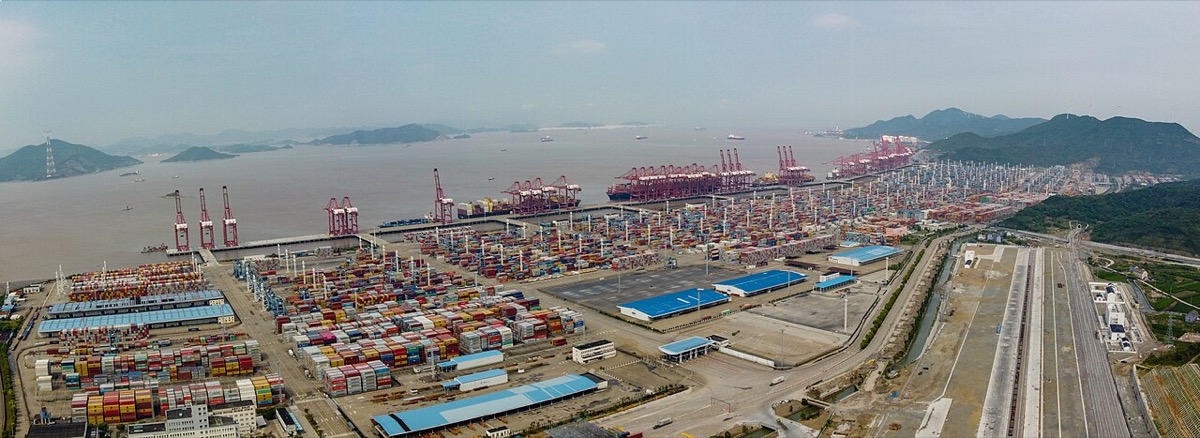
The GACC November Numbers in Detail
Total Chinese goods exports in November 2025 came in at USD 322 billion, up 4.2 per cent year on year. Total imports were USD 214 billion, down 1.8 per cent. The monthly surplus of USD 108 billion takes the cumulative January to November number to USD 1.08 trillion. For context, the previous full calendar year record was 2024’s USD 992 billion, which was a record at the time but looks modest next to the 2025 trajectory. December is seasonally strong for Chinese exports because of pre Lunar New Year buying, so the full year 2025 surplus is likely to land somewhere between USD 1.18 and 1.24 trillion.
The regional breakdown is where the chemical import implications crystallise. Exports to the US over the first eleven months came in at USD 391 billion, down from USD 543 billion over the same period in 2024. That’s a 28 per cent drop in absolute terms and it’s concentrated in goods categories that are directly exposed to Section 301 tariffs and the 2025 round of incremental duties. Chemical and chemical product exports to the US specifically are down 34 per cent year on year, running ahead of the aggregate decline.
Exports to ASEAN (Vietnam, Thailand, Malaysia, Indonesia, Philippines, Singapore) hit USD 524 billion over the same January to November period, up 13 per cent year on year. ASEAN has comfortably overtaken the US as China’s largest export destination and the gap is widening by the month. Africa imported USD 156 billion from China over eleven months, up 26 per cent, with North African and East African ports (particularly Alexandria, Lagos, Mombasa, Dar es Salaam) absorbing a rising share of Chinese chemical intermediate volume. EU imports from China were USD 484 billion, up 8 per cent, held back by the ongoing EU anti dumping investigations on specific chemical products but otherwise on a steady growth curve.
Why Chinese Chemical Exporters Are Repricing the US Relationship
The 28 per cent US decline isn’t a happy accident from a Chinese supplier’s perspective, it’s the result of a sequence of policy actions that have genuinely changed the economics of the US customer. Section 301 tariffs were ratcheted up across multiple chemical HS codes through 2024 and into 2025. The EPA’s TSCA PMN backlog continues to delay new chemical substance imports. CBP enforcement on Uyghur Forced Labor Prevention Act (UFLPA) scope has broadened to include more chemical precursors. And the 2025 incremental duty round added 10 to 25 per cent duties on a range of specialty chemical and polymer categories.
The Chinese producer response has been textbook. Volume that was going to the US is being rerouted into markets where the landed economics work. ASEAN is absorbing the bulk of the diverted industrial chemical and polymer volume. Africa is pulling in more fertilizer precursors and commodity chemical intermediates. Europe is taking more specialty and downstream formulated product. Latin America is taking a mix. The aggregate result is that Chinese chemical producers are running at high capacity utilisation, just not selling into the US.
For a Chinese exporter’s commercial team, the internal scoring has shifted. Three years ago, a US customer carrying a USD 10 million annual order book was a platinum tier account, worth priority production slots, favourable credit terms, and senior sales coverage. Today, that same customer is a yellow flag account because the trade policy volatility means the order book can evaporate on short notice. An ASEAN customer with a USD 6 million order book that’s been growing 20 per cent a year is a better relationship for the exporter. An African distributor with a USD 3 million order book that pays on time is a better relationship. The Australian importer sits somewhere in between, and where you land on that scoring shift depends on how you present your book.
What the Regional Pivot Looks Like on the Chemical Ledger
Let’s run the numbers on a representative Chinese producer to make this concrete. Wanhua Chemical, one of the top three Chinese polymer and specialty chemical producers, published its first three quarters 2025 results in late October. Export revenue broke down as follows. ASEAN was 24 per cent of export revenue, up from 17 per cent a year earlier. EU 19 per cent, flat. Middle East and Africa 16 per cent, up from 11 per cent. US 12 per cent, down from 21 per cent. Latin America 9 per cent, up from 7 per cent. Other Asia (Korea, Japan, Australia, New Zealand) 20 per cent, roughly flat.
What that reshuffle means in practice is that Wanhua’s commercial team has reallocated sales coverage, production priority, and credit approval headroom toward ASEAN, Middle East, and Africa accounts. It means that when a Vietnamese coating producer and a Texas coating producer both want 200 tonnes of the same MDI grade with a four week lead time, the Vietnamese order is getting scheduled first. It means the quote turnaround for an Indonesian buyer is faster than for a US buyer. And it means payment term flexibility, which used to be a US buyer advantage, is increasingly being extended to the growth market customers.
| Destination region | H1 2024 share | Jan-Nov 2025 share | YoY growth | Implication for Australian buyers |
|---|---|---|---|---|
| ASEAN | 17% | 24% | +13% | Lead times worst when competing with Vietnam and Thailand |
| EU | 19% | 19% | +8% | Stable, relationship depth still matters most |
| Middle East and Africa | 11% | 16% | +26% | New competition for spot capacity |
| US | 21% | 12% | -28% | Capacity freed up, but quoting discipline tightened |
| Latin America | 7% | 9% | +11% | Modest change, limited impact |
| Other Asia inc Australia | 20% | 20% | +2% | Australia sits inside this flat bucket |
The Australian importer implication is nuanced. On one hand, the US demand collapse has genuinely freed up Chinese production capacity, which means Australian buyers can access better spot pricing on commodity chemical grades than they could in 2022 or 2023. On the other hand, the ASEAN and Africa surge means you’re now competing with Vietnamese, Thai, Nigerian, and Egyptian buyers for the same production slots, and those buyers are often closer to the producer geographically, pay faster, and have simpler regulatory environments to ship into. The competitive math has changed.
How to Position Your 2026 Sourcing Against the Pivot
Four specific plays for an Australian chemical importer going into 2026 supplier negotiations. First, stop benchmarking your quotes against US domestic market rates or US to China import parity. Those benchmarks are decoupling from global spot because the US-China bilateral relationship is not operating like a normal trade channel any more. Benchmark against Rotterdam landed, Singapore spot, or Jebel Ali landed. Those indices track where Chinese producers are actually competing.
Second, package your annual volume commitments in a way that mimics the ASEAN and African buyer style. That means clean lead time windows (not rolling forecasts), fixed monthly draw commitments (not indicative annual volumes), and standardised commercial terms (not bespoke Australian freight arrangements). Chinese suppliers are rewarding predictable order patterns more than they were, because predictable orders let their production planning teams schedule confidently.
Third, pay attention to the Middle East and Africa growth tier and what it’s doing to specific product lines. For commodity inputs (caustic soda, sulfuric acid, methanol, MEG) the Middle East demand surge is competing with Australian imports for the same production volume. For specialty and downstream formulated products (coating resins, surfactants, polymer additives) the African distributor tier is taking low end volume but not competing for the specification sensitive grades Australian buyers usually want. Know which tier your product book sits in.
Fourth, take the US capacity displacement seriously as a negotiation lever. There are Chinese production lines running at 75 to 80 per cent utilisation where they were running at 95 per cent in 2022, because the US demand has fallen faster than the producers could redirect. Those lines are hungry for credible annual volume commitments. An Australian importer with a 2 million dollar annual book, clean payment history, and realistic growth plan can negotiate terms in 2026 that weren’t on the table in 2023 or 2024.
What to Do This Week
Three actions for the week of 10 December. Pull your 2025 supplier performance data against your top ten Chinese suppliers and score each one on lead time trend, quote turnaround speed, and credit flexibility through the year. Suppliers where those three metrics are deteriorating are likely the ones most aggressively reallocating to ASEAN and Middle East accounts, and your 2026 planning with them needs to account for that. Suppliers where the metrics are stable or improving are the ones still treating the Australian book as strategically meaningful.
Request a sales coverage update from each of your top five Chinese suppliers. Ask explicitly whether your named account manager has changed in 2025, whether their territory has been redrawn, and what the supplier’s 2026 Australia specific commercial plan looks like. The honest answers will tell you which suppliers have repositioned Australia as a growth account versus which have quietly deprioritised it. Finally, get clarity on your 2026 annual volume commitment windows. Chinese producers are increasingly running their 2026 order books on a Q4 2025 to Q1 2026 commitment window, rather than the rolling quarterly commitment style that dominated 2022 and 2023. If you’re not locked in by end of February 2026, you’re buying on spot terms for most of the year.
The 1.08 trillion dollar number is the biggest surplus in recorded history, and it’s being built on a supplier base that has genuinely repriced which customers matter. Australian importers who understand the regional pivot will negotiate 2026 contracts that capture the capacity upside without getting caught behind the ASEAN and Middle East buyer queue. Importers who assume the 2022 playbook still works will find themselves with longer lead times, weaker quote terms, and a supplier relationship quality that has quietly eroded.