Chinese New Year fell on Saturday 10 February. By then, the factories that matter for chemical importers, the MDI, TDI, and polyol producers in Shandong, the specialty intermediates makers clustered across Jiangsu and Zhejiang, the solvent and monomer plants around Guangzhou and Huizhou in Guangdong, were already cold. Most shut down between 3 and 7 February. Many won’t run at full rates again until the last week of February or the first week of March.
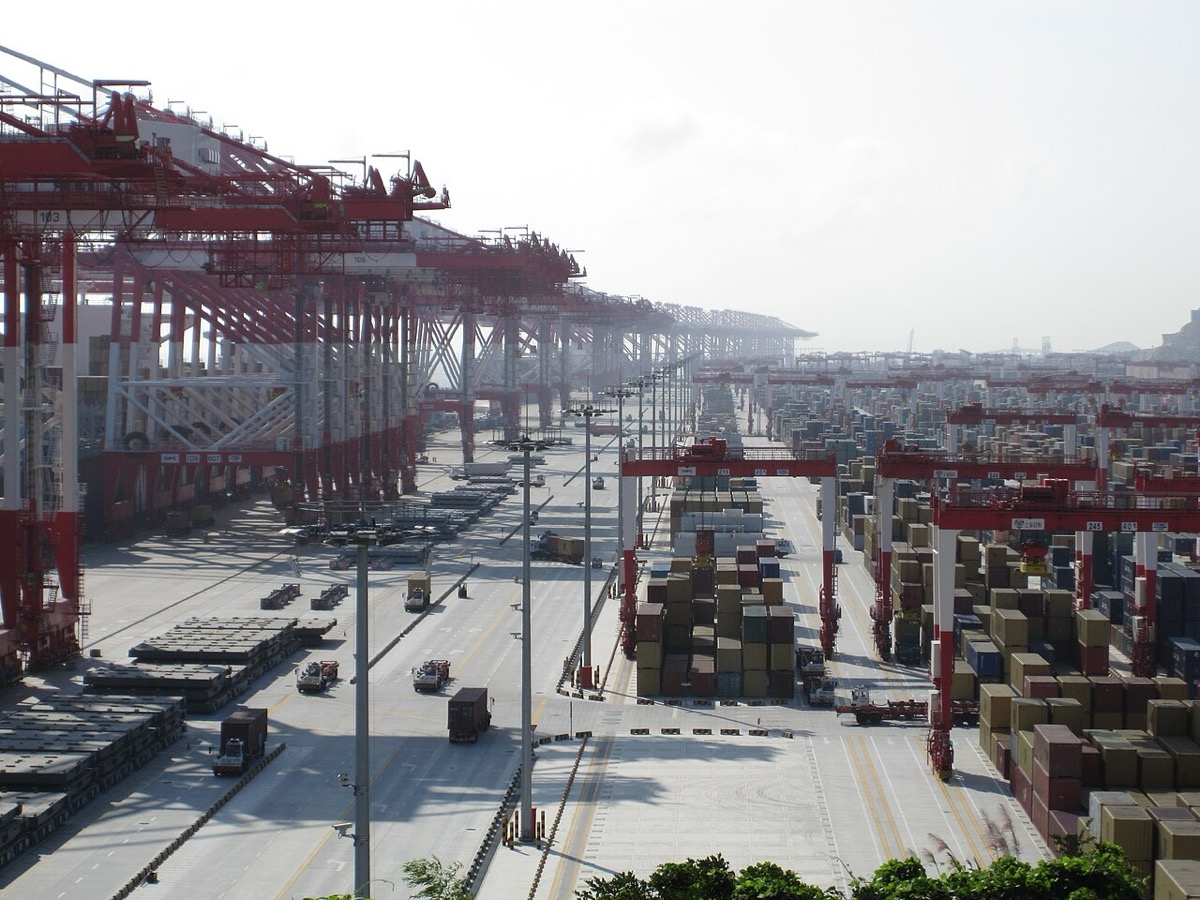
In a normal year, the Chinese New Year production pause is a manageable annoyance. You place your orders in early January, you load out before 5 February, your containers are in Rotterdam by mid-March or Houston by late March, and life goes on. This is not a normal year.
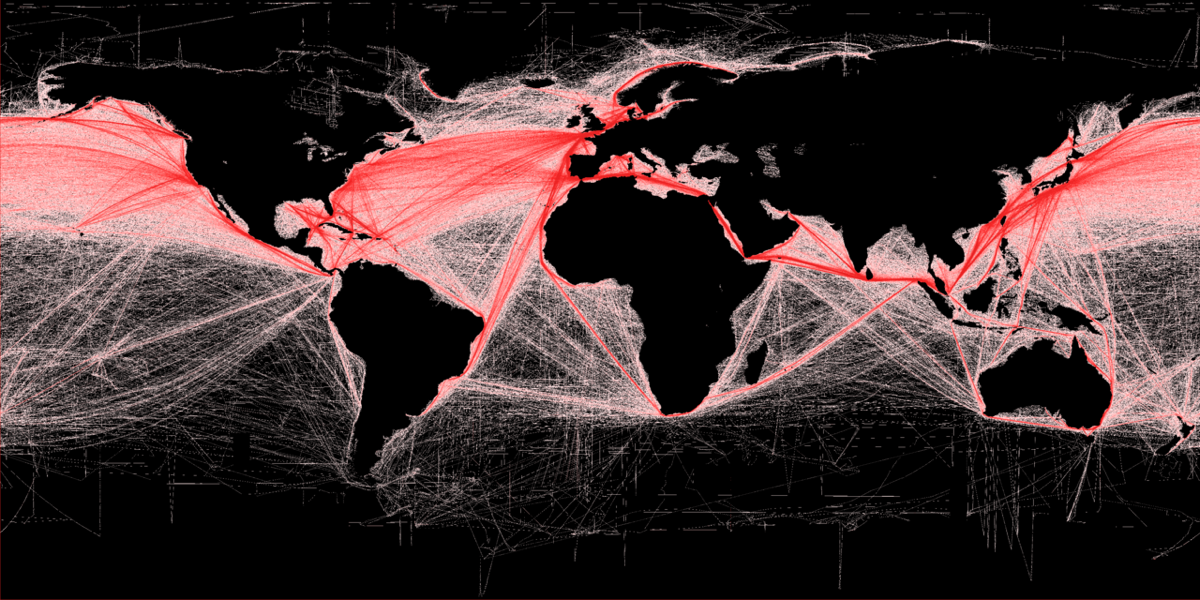
This is the first Chinese New Year since 2020 that has arrived on top of a live global shipping disruption. Red Sea rerouting, which began in mid-December, has added 10 to 16 days to Asia to Europe and Asia to US East Coast transits. Now you stack a 14-day factory shutdown on top of that, with a ramp-up period that extends into early March for many producers. The compound effect on your lead times is brutal.
What Dual Disruption Actually Means For Your February and March Arrivals
To understand the scale of the compound hit, let’s walk through the timeline for a typical Class 8 corrosive shipment from Ningbo to New York, placed in mid-January with a nominally acceptable lead time.
Order placed 12 January. Factory confirms production slot for week commencing 22 January. Material produced and ready for loading 2 February. In a pre-crisis environment you’d expect gate-in at Ningbo around 4 February, ocean loading 6 February, vessel ATD 7 February, Suez transit, ATD at Savannah around 11 March, onward drayage to final customer 14 March.
In the current environment, the same order looks like this. Order placed 12 January. Factory confirms production but lead time has slipped due to logistics congestion, slot now week commencing 29 January. Material ready 5 February but factory closes 6 February for CNY. Loading window missed. Material sits in the factory warehouse or in a bonded warehouse in Ningbo until ramp-up completes around 26 February. Gate-in 28 February. Ocean loading around 2 March. Vessel ATD 4 March. Cape of Good Hope routing, ATD Savannah around 21 April. Drayage 23 April.
That’s a stretch from 11 March to 23 April. Six extra weeks on a single shipment. If you had downstream customer commitments for March or early April, you’re in breach on the same order that would have delivered comfortably a year ago.
The Actual Factory Shutdown Pattern This Year
Chinese chemical production isn’t uniform. Different regions have slightly different shutdown timing, and different product categories recover at different rates. Here is what our supplier network has reported for 2024:
| Region / cluster | Shutdown started | Ramp-up targets full rates | Product categories |
|---|---|---|---|
| Jiangsu (Nantong, Taixing, Lianyungang) | 5 Feb | 26 Feb to 4 Mar | Specialty intermediates, agro-actives, pharma precursors |
| Zhejiang (Ningbo, Shaoxing, Jiaxing) | 6 Feb | 25 Feb to 1 Mar | Solvents, monomers, coatings chemistries |
| Shandong (Yantai, Dongying, Weifang) | 3 Feb | 22 Feb to 28 Feb | MDI, TDI, polyols, refinery derivatives |
| Guangdong (Guangzhou, Huizhou, Dongguan) | 4 Feb | 24 Feb to 2 Mar | Adhesives, surfactants, textile finishing |
| Fujian (Quanzhou, Zhangzhou) | 5 Feb | 26 Feb to 2 Mar | Specialty polymers, plasticisers |
Note the Shandong cluster ramps fastest because integrated complexes like Wanhua’s Yantai site keep continuous processes running through the holiday at reduced rates, with maintenance turnarounds rather than full shutdowns. If your material comes from there you have the best chance of an on-schedule February loading.
The Guangdong cluster is the most exposed to combined CNY plus logistics disruption because many producers are smaller, the workforce migration is more pronounced, and the onward logistics through Shenzhen and Yantian ports have been handling redirected volume from congested northern ports. Expect the longest ramp-up here.
Red Sea State Of Play As Of 15 February
Three updates on the Red Sea side of the equation:
Maersk extended its Red Sea suspension through the first half of 2024 in a statement dated 5 February. The company explicitly told customers to plan on Cape of Good Hope routing for Q2.
The US and UK coalition air strikes on Houthi targets across January did not deter maritime attacks. Drone and anti-ship missile incidents continued through February. Lloyd’s Joint War Committee has not reduced the listed area.
Container freight rates peaked in mid-January at around US$3,900 on the Drewry WCI and have softened slightly to roughly US$3,500 as of 14 February. That’s not because the crisis is easing. It’s because of reduced post-CNY bookings while factories are shut. Expect rates to firm up again from the first week of March as the pre-Easter loading window opens.
The operating assumption for chemical import planning should be that Red Sea rerouting stays in place through Q2 and that the baseline case for normalisation is now Q3 2024 at the earliest. Build your inventory plan accordingly.
The Dual-Hit Transit Time Calculator For Q2 Arrivals
This is the planning math you need to run on every active PO this week. For materials that did not load before 3 February, here’s the revised arrival window by destination:
| Origin to destination | Material ready 26 Feb | Material ready 6 Mar | Material ready 15 Mar |
|---|---|---|---|
| Shanghai to Rotterdam (Cape) | Arrive 10 to 14 Apr | Arrive 18 to 22 Apr | Arrive 27 Apr to 1 May |
| Ningbo to Antwerp (Cape) | Arrive 12 to 16 Apr | Arrive 20 to 24 Apr | Arrive 29 Apr to 3 May |
| Shanghai to New York (Cape) | Arrive 17 to 22 Apr | Arrive 25 to 30 Apr | Arrive 4 to 9 May |
| Shanghai to Houston (Cape) | Arrive 19 to 24 Apr | Arrive 27 Apr to 2 May | Arrive 6 to 11 May |
| Shanghai to Melbourne (direct) | Arrive 20 to 24 Mar | Arrive 28 Mar to 1 Apr | Arrive 6 to 10 Apr |
The Melbourne line is still the least affected because Asia to Oceania routing doesn’t touch Suez, but you’re still picking up 5 to 7 days of compound delay from CNY plus origin-port congestion as export volumes surge after the holiday.
A Worked Example, The Cost of Compound Disruption
Let’s take a realistic scenario. A specialty resin producer in Australia imports 8 FEU per month of a key Class 9 polymer additive from a Jiangsu supplier. The US-dollar FOB value is US$95,000 per FEU. The ex-factory lead time is normally 3 weeks plus 4 weeks ocean transit, giving a 7-week order-to-arrival cycle.
Pre-crisis baseline, 8 FEU ordered 1 January would arrive in Melbourne around 19 February.
Under the current compound conditions, the same 8 FEU ordered 1 January split into two production slots, the first four units made pre-CNY and loaded by 4 February, the remaining four units slotted for production week commencing 19 February after ramp-up. First batch into Melbourne around 26 February. Second batch, assuming loading 4 March and direct Asia-Oceania routing, arrives around 24 to 28 March.
The customer order book had committed 6 FEU of finished goods based on the expected 19 February landing. Two FEU arrive on time. Four arrive 26 February, 7 days late. Two arrive 24 March, 33 days late. On a finished-goods value of roughly US$180,000 per FEU through the customer’s supply chain, you’re looking at contract penalties, expedited airfreight replacement costs, or customer losses.
A realistic cost stack on this single two-month window:
| Cost item | Amount |
|---|---|
| Contract late-delivery penalties (if 2% of delayed FG value) | US$7,200 |
| Emergency airfreight for 1 FEU-equivalent (2 tonnes) to cover critical customer | US$38,000 |
| Additional ocean freight versus Q4 2023 rates (8 FEU at US$800 delta) | US$6,400 |
| CAS and GRI surcharges | US$4,000 |
| Working capital carry on delayed stock (33 extra days on US$190,000 at 9%) | US$1,550 |
| Total | US$57,150 |
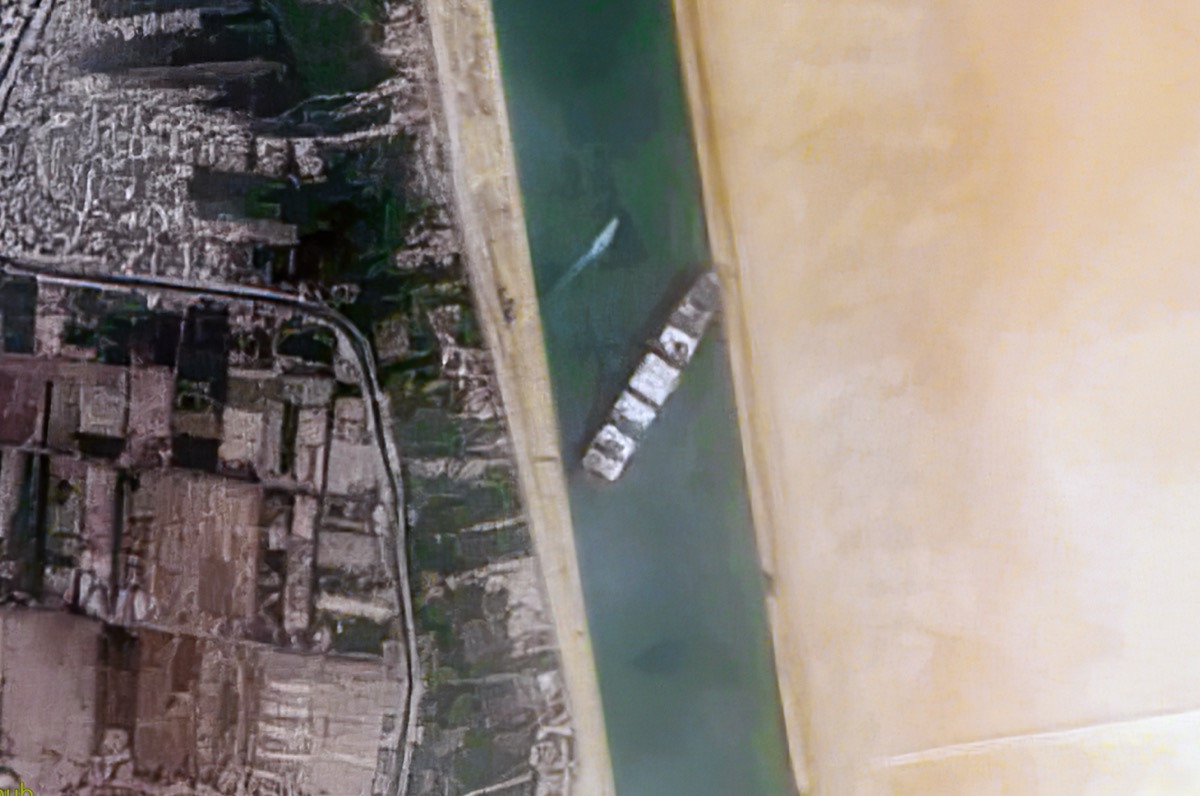
That’s the cost of one product line for one importer over two months. Scale it across your full product range and you can see why Q1 2024 is one of the worst quarters for chemical import landed costs since the Ever Given stuck in the Suez in March 2021.
The Demand-Side Pattern Nobody Is Talking About
Here’s a subtlety that affects how you should plan your Q2 purchasing. Because so many importers have delayed orders through January and February hoping for rate relief, the order book queuing up for March loading is enormous. Clarksons is flagging that Asia to Europe bookings for week 11 and week 12, mid-March to late March, are already running 30% above capacity at several major carriers.
What this means in practice: the 3,500 dollar Drewry rate you’re seeing today is going to firm up, not soften, as soon as factories ramp back up. Our read, and this lines up with what Xeneta’s long-term index is showing, is that Q2 rates on Asia to Europe will settle in the US$4,000 to US$4,500 range for standard FEU, with IMDG surcharges of US$400 to US$700 on top. If you’re waiting for rates to fall before booking, you’re likely to buy at worse prices than if you locked in today.
Second-order effect: equipment repositioning. With Cape routing consuming more box-days per voyage, empty container availability in Chinese origin ports has tightened. 40-foot high-cube shortages have been reported from Shanghai Yangshan in the first week of February, easing slightly post-CNY but not fully resolved. If you need special equipment, particularly flexitanks, ISO tanks, or 40-foot open-top units for oversized chemical packaging, book 6 weeks ahead rather than the usual 3.
What To Do This Week If You Haven’t Already
Revise every customer commitment for March, April, and early May. Get ahead of the conversation. Customers who hear about delays two weeks before they were expecting product are furious. Customers who hear eight weeks out and get a realistic revised ETA will adjust their own plans.
For anything critical that you cannot wait for, price airfreight options now. Shanghai Pudong and Guangzhou Baiyun cargo capacity will be tight in the first two weeks of March as post-CNY shipments that should have gone by sea take to the sky. Rates are elevated but feasible for high-value, low-volume chemistries. Class 3, Class 6.1, and Class 8 airfreight has specific IATA handling requirements and not every airline accepts every class. Use a forwarder with proven DGR experience.
Engage your freight forwarder on March and April booking confirmations before 25 February. Don’t wait for post-CNY spot market clarity. The GRIs being filed for 1 March and 15 March are already published. You’ll pay them whether you book early or late, but early booking gets you the space.
Review your safety stock policy. If you’ve been running 2 weeks of buffer stock on key imports and you’re now seeing 6 to 8 week lead time variability, 2 weeks is not enough. Either increase buffer stock, which ties up working capital, or redesign your customer commitment cycle to reflect current reality. Many Australian importers are moving from 30-day customer commitments to 60-day commitments specifically to absorb the current lead time volatility.
Have a conversation with your top five suppliers about supplier-managed inventory positioned in bonded warehousing in Australia or a third country. For high-volume chemistries this can be a good working-capital-neutral way to cut effective lead time to your customer. Your supplier holds consignment stock, you pull on demand, and the Red Sea plus CNY compound risk is absorbed upstream rather than crashing into your P&L.
Finally, if you don’t already have a monthly landed cost review as a standing item on your leadership team agenda, start this month. Chemical importing in 2024 is a risk-managed business, not a fixed-price business, and the organisations that come through the rest of this year well are the ones reviewing, adjusting, and communicating on a 30-day cycle rather than annually.
If you want the Sourzi team to stress-test your Q2 landed cost model, benchmark your current supplier terms against market, or workshop a supplier-managed inventory proposal with you, get in touch this week. The next six weeks will decide whether your Q2 looks like a margin squeeze or a margin meltdown.