Your inbox has force majeure notices in it right now. Maybe one, maybe five, maybe a stack from every supplier you have touched in the last six months. The situation in China is genuinely severe and I am not here to tell you these claims are fraudulent. Most of them are not. But accepting a force majeure notice without verification is how you hand your supplier a free pass on a Q1 production commitment, and some of these notices are covering performance problems that started well before COVID-19 entered the picture.
The February Shutdown Was Binding, Not Voluntary
The Chinese government extended Chinese New Year by administrative order, pushing factory restart dates to February 9 or 10 across most provinces. Hubei, the epicentre of the outbreak, got an indefinite extension with no fixed date. This was not a business decision. Factory operators faced real legal exposure and genuine public health risk for non-compliance. The orders came with reference numbers and issuing authorities, which matters later when you ask your supplier to prove the basis of their claim.
Zhejiang, Jiangsu, and Guangdong, the three provinces that collectively account for the bulk of China’s chemical manufacturing output, implemented staggered restart protocols. To reopen, a factory needed government approval, worker health certification, and a facility inspection. In practice, many plants that technically “reopened” on February 10 were running at 30 to 40% capacity because their workers were still stuck in home provinces and supply inputs were frozen.
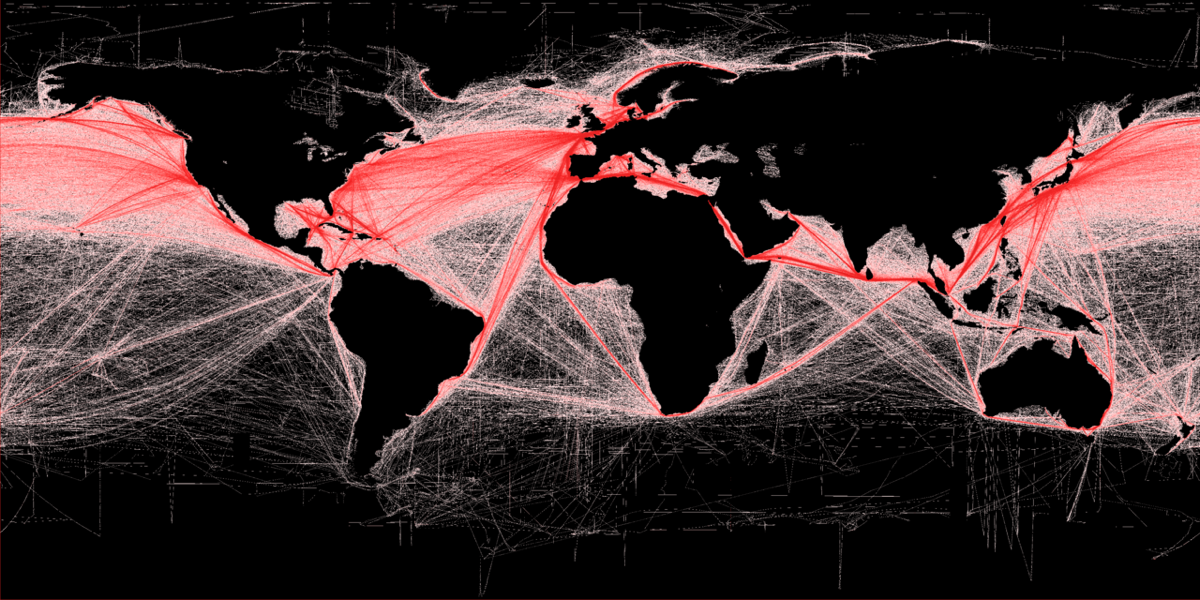
The Caixin manufacturing PMI for February came in at 40.3. Any reading below 50 indicates contraction. A reading of 40.3 is a collapse, the worst on record at the time, and it reflects the composite output of purchasing managers who were watching their own factory floors in real time. The disruption Hubei accounts for roughly 4% of total Chinese exports by value. The bigger problem was the nationwide labour movement freeze and logistics paralysis that spread across every province simultaneously. Your supplier in Jiangsu was not just dealing with their own factory. They could not get inputs from their own suppliers either.
What a CCPIT Certificate Actually Proves (and What It Does Not)
Starting February 2, 2020, the China Council for the Promotion of International Trade began issuing force majeure certificates to Chinese exporters. If you have received one, here is exactly what it is and what it is not.
A CCPIT certificate is an official government-adjacent document that confirms COVID-19-related shutdowns occurred broadly in China. That is it. It does not establish that your specific supplier’s non-performance was caused by the event. It does not establish that the failure was unavoidable. It does not establish that your supplier took any reasonable steps to limit the damage before stopping work. The certificate speaks to the existence of a crisis, not to the causal chain connecting that crisis to your specific shipment.
Under Article 117 of the Contract Law of the People’s Republic of China, four elements must coexist for a valid force majeure defence. The event must be extraordinary. It must have been unforeseeable at the time of contracting. It must be unavoidable. And there must be a direct causal link between the event and the specific non-performance. The CCPIT certificate handles the first element. You are on your own for the rest.
This matters most when a supplier was already behind before the virus. A factory that was behind on your order in December and is now waving a force majeure certificate at you has a dramatically weaker case than one that was fully on schedule when the shutdowns began. The certificate does not distinguish between those two situations, so you have to.
The Verification Questions to Send in Writing Today
Before you accept any force majeure claim, send a formal written response requesting specific documentation. Use email with read receipts, not WeChat, not a phone call. You need a paper trail. Here is what to ask.
What province and city is the factory registered in, and did that location receive a formal government shutdown order? Government shutdown orders in China are official administrative instruments with traceable reference numbers. Ask for the document number and the issuing authority. If your supplier cannot produce those details, that is a significant red flag.
What was the production status of your specific order on the last day of operations before Chinese New Year? Get a percentage in writing. An order that was 80% complete when the shutdown hit is a very different situation from one that had not started production yet.
What is the factory’s current production capacity as a percentage of normal, and what specific constraint is driving that? Worker availability, raw material shortage, and government restrictions are three different problems with different resolution timelines. Make them tell you which one it is.
Has the factory received its official resumption permit? Factories in Zhejiang and Jiangsu needed a government-issued permit to restart. If they have it, they can provide the permit number.
What steps has the supplier taken to mitigate the delay? Under Chinese contract law, the party invoking force majeure still has a duty to take reasonable steps to limit the impact on the other side. If your supplier has made zero effort to source from a sister facility, identify alternative logistics, or give you a revised schedule, that failure is directly relevant to whether their defence holds.
| Verification Question | What a Credible Answer Looks Like | Red Flag Response |
|---|---|---|
| Government shutdown order | Specific reference number and issuing authority | ”The whole country was shut down” with no document |
| Production status at shutdown | Percentage complete with batch record reference | ”We were almost ready” with no specifics |
| Current capacity | Specific percentage with named constraint | ”We are recovering” with no figure |
| Resumption permit | Permit number and date issued | No permit reference available |
| Mitigation steps taken | Alternative sourcing attempted or revised timeline provided | No action taken, claim filed immediately |
Your Legal Position Is Stronger Than You Think
You are not obligated to accept these claims without challenge. Acknowledge receipt of the notice in writing immediately, because under most contract frameworks including standard CISG principles, prompt notification from you matters. But acknowledgment is not acceptance.
Check your contract’s force majeure clause for notification time requirements. Many boilerplate contracts require the claiming party to notify within a specific number of days of the onset of the event. If your supplier waited three weeks to notify you, that procedural failure is relevant to their defence.
If your contract is silent on force majeure and governed by Chinese law, Article 117 applies by default. If it is governed by New York law or another US state, your analysis will be different. Many US-law contracts require that force majeure events be specifically enumerated, and “epidemic” or “government order” language may or may not appear. Before you send any email that uses the words “we accept your force majeure claim,” call your trade attorney. That sentence can function as a contractual waiver.
Your Q2 Planning Window Is Closing Fast
Lead times from booking to vessel departure are currently running 21 to 35 days. Pre-COVID, that baseline was 7 to 10 days. That extension, stacked on top of factory capacity constraints, means any chemical input you need in US inventory by late April should have been ordered no later than this week.
For Q2 materials needed in May and June, there is still a short window to issue purchase orders and get into production queues. But it is genuinely narrow and it is getting shorter every day you wait. Recovery to full production capacity across the chemical sector will likely extend through March and into April.
Build a scenario matrix for your Q2 planning right now.
| Scenario | Factory Capacity by March 1 | Lead Time to US Port | Action Required |
|---|---|---|---|
| Base case | 60% of normal | 45 to 50 days | Place orders this week |
| Adverse case | 30% through March | 55 to 65 days | Identify alternative province supplier |
| Contingency | Primary supplier offline | 70+ days | Emergency import from qualifying backup |
Price each scenario against your current contracts. If the adverse case makes a shipment unworkable at your current contract price, have that conversation with your supplier or your end customer before cargo is booked, not after it arrives.
The force majeure claims arriving in your inbox are real and they are documented. That does not mean every one of them deserves automatic acceptance. Verify each claim, document your responses, and preserve your contractual rights while maintaining the supplier relationship. Those two goals are not mutually exclusive, as long as you handle the correspondence professionally and move quickly.