If you were on the phone to Shanghai this week, you already know the tone in the trading houses has changed. On 3 March the White House signed Executive Order 14228, and the IEEPA fentanyl surcharge on Chinese-origin goods moved from 10 per cent to 20 per cent at 12:01am Eastern on 4 March. Two days later, GACC released the January-February combined export data and quietly confirmed what every procurement head in Australia had been muttering about since Lunar New Year. China exported roughly $USD 539 billion across the first two months, with February alone at $USD 314 billion, up 2.3 per cent year-on-year despite a shorter working month. The front-loading was real, and now the bill arrives.
For Australian importers buying through US subsidiaries, drop-shipping into American distributors, or consolidating via the West Coast before splitting cargo to Melbourne, the maths on every open purchase order has shifted. Not slightly. Materially.
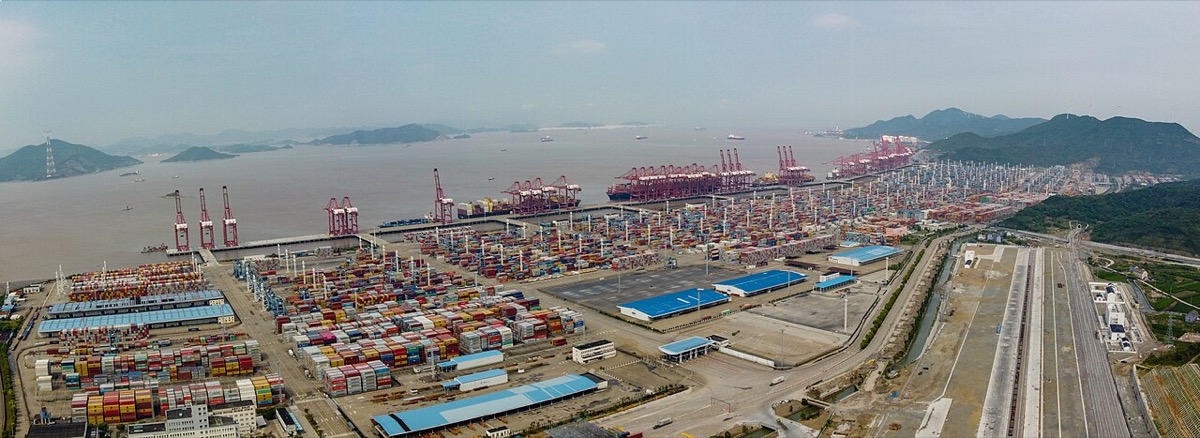
What changed at 12:01am on 4 March
The fentanyl IEEPA action is not the Section 301 duty you already know. It stacks on top. Section 301 List 3 goods still carry their 25 per cent. Section 232 steel and aluminium derivatives still carry their own load. The IEEPA surcharge sits above all of that as an extra line on the CBP 7501, and EO 14228 simply doubled the rate from 10 to 20 per cent. There was no phase-in, no exclusion process announced, and no de minimis relief for Chinese-origin goods crossing through US fulfilment.
Beijing answered inside 48 hours. MOFCOM and the State Council Tariff Commission added 10 per cent on US soybeans, pork, beef, seafood, cotton, fruit and vegetables, and 15 per cent on US chicken, wheat, corn and cotton for certain tariff lines. That does not hit your adipic acid or your TDI directly, but it does affect freight flows, reefer container availability on the back-haul, and the bargaining posture of every Chinese supplier you are negotiating with this quarter.
The GACC print gave the other half of the story. February exports to the United States alone hit roughly $USD 40.7 billion. Chemicals and organic compounds under HS Chapters 28, 29 and 38 were heavy in the mix. Suppliers pushed cargo out the door in January and early February because they read the writing on the wall after the February 1 executive order that created the initial 10 per cent rate. The pre-tariff window closed on 4 March. Anything still afloat as of that entry date is paying the new stack.
The tariff stack, line by line, for the chemicals you actually buy
Here is where the recalculation has to happen. A lot of Australian importers look at the IEEPA rate in isolation and forget it layers. It does not replace. It adds.
| HS Code | Product (common) | MFN Base | Section 301 | IEEPA (pre 4 Mar) | IEEPA (post 4 Mar) | Total Duty Post-4 Mar |
|---|---|---|---|---|---|---|
| 2917.14.10 | Adipic acid | 6.5% | 25% | 10% | 20% | 51.5% |
| 2921.51.10 | Aniline and salts | 6.5% | 25% | 10% | 20% | 51.5% |
| 3808.92.50 | Fungicides, packaged | 5.0% | 25% | 10% | 20% | 50.0% |
| 2929.10.80 | MDI isocyanates | 6.5% | 25% | 10% | 20% | 51.5% |
| 3901.20.50 | HDPE resin | 6.5% | 25% | 10% | 20% | 51.5% |
| 2815.11.00 | Caustic soda, solid | 0.0% | 25% | 10% | 20% | 45.0% |
| 3204.17.90 | Organic pigments | 6.5% | 25% | 10% | 20% | 51.5% |
Read that bottom row carefully. Caustic soda enters the United States at an MFN rate of zero. A year ago you were paying zero duty. Today, same product, same supplier in Shandong, same port pair, you are paying 45 per cent in duty alone before you have touched freight, HMF, MPF or broker fees. That is the compounding reality of the tariff stack, and it is why the “just absorb it” school of thought dies in Q2.
Worked landed cost: one container of adipic acid from Nanjing to Los Angeles, then on to Melbourne
Let us do the numbers on a real shape of buy. A 20-foot container of adipic acid, 20 MT net, loaded at Nanjing, routed through Shanghai Yangshan, discharged at LA/Long Beach, stripped and re-consolidated into an LCL to the Port of Melbourne. This is a buy pattern I saw three times in the last fortnight.
Assume FOB Shanghai at $USD 1,420 per MT. That is consistent with Wanhua and the independent producers in Jiangsu as of the second week of March. Ocean freight Shanghai to LA at $USD 2,850 per 20ft (Drewry WCI trending down from the January spike). Then the stack.
- FOB value: 20 MT x $USD 1,420 = $USD 28,400
- Ocean freight: $USD 2,850
- CIF value (simplified for duty basis): $USD 31,250
- MFN duty 6.5 per cent on FOB: $USD 1,846
- Section 301 List 3 at 25 per cent on FOB: $USD 7,100
- IEEPA fentanyl at 20 per cent on FOB (was 10 per cent): $USD 5,680
- Merchandise Processing Fee 0.3464 per cent, capped: $USD 108.23 (at cap)
- Harbour Maintenance Fee 0.125 per cent on CIF: $USD 39.06
- US broker, bond, ISF, chassis, drayage to CFS: roughly $USD 1,150
- Stripping, palletising, re-consolidation at LA CFS: $USD 620
- LCL Los Angeles to Melbourne, 20 MT at roughly $USD 115 per MT including THC both ends: $USD 2,300
- Australian 5 per cent GST on taxable importation value (landed CIF + duty + freight to Aus): calculated at the AU border
Stop there on the US side. Your pre-4 March US-landed cost per MT was around $USD 2,266. Your post-4 March US-landed cost is $USD 2,550 per MT. That is a $USD 284 per MT jump from the IEEPA doubling alone, on a product where your customer contract has maybe 40 to 60 basis points of margin headroom before they start asking you for a credit note.
If you are the one signing the PO, that $USD 284 per MT is not a rounding error. On a 200 MT annualised spend it is $USD 56,800 of margin compression on one SKU, assuming the supplier does not move and the customer does not accept the pass-through. Both assumptions are wrong right now, but you need to start the conversation with the numbers in hand.
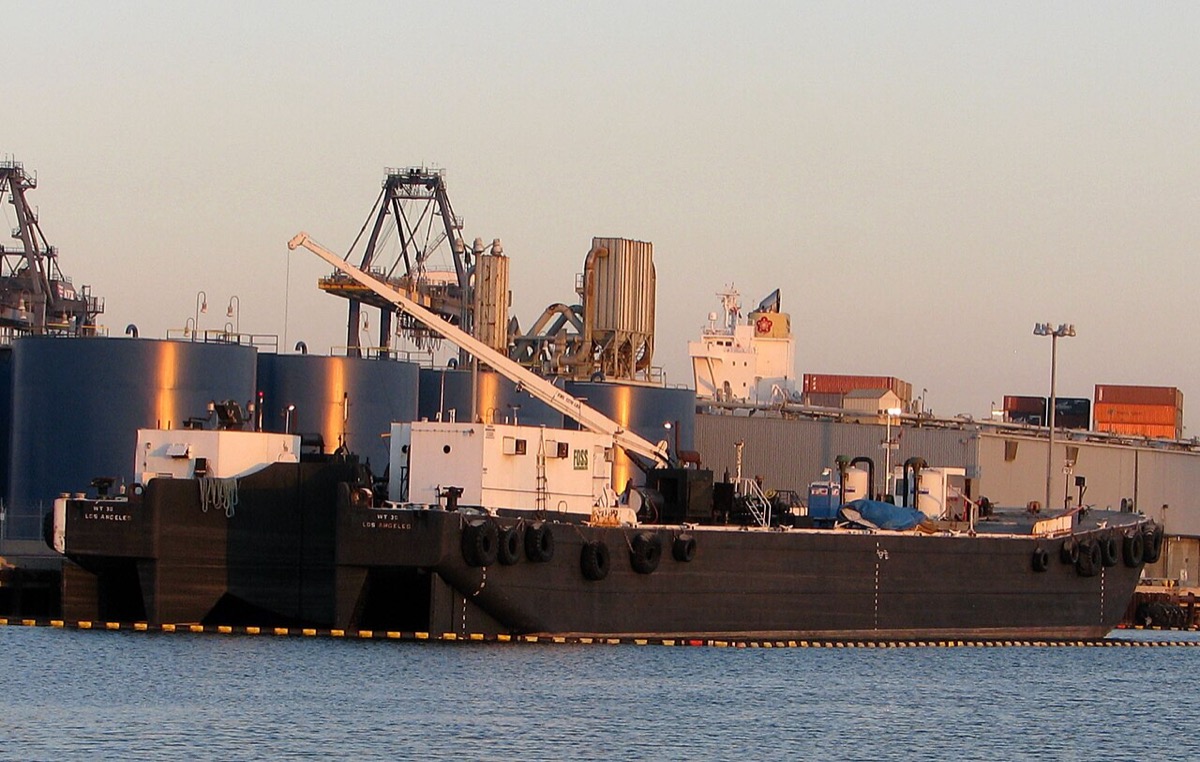
Why GACC’s $314 billion February matters for your April and May cover
The front-loading number is not a curiosity. It tells you two operational things.
First, Chinese producers burned through inventory buffers to get cargo out the door ahead of the 4 March entry cut-off. Wanhua, Sinopec Jinling, and several of the mid-tier aniline houses in Jiangsu are now running with tighter finished-goods stocks than they would normally carry into late March. That means your April and May offers are going to come in firm, with less willingness to negotiate on price, because the domestic salesforce has a clean order book to point at.
Second, the back-haul equipment position on the Transpacific is skewed. Empties are piling up on the US West Coast faster than carriers can reposition, and COSCO and OOCL are already quoting reefer ISO tank repositioning premiums from LA back to Shanghai that are 18 to 25 per cent above January levels. That filters into your Q2 tank container offers, particularly for aggressive product like epichlorohydrin or any of the amines that need high-grade stainless.
You should be asking your carrier account managers, whether that is Maersk, MSC, CMA CGM, Hapag-Lloyd or COSCO, for written April and May rate validity before 31 March. Verbal assurances will not hold.
The retaliation nobody is talking about yet
The 10 and 15 per cent Chinese counter-tariffs on US agricultural goods are getting most of the headlines. Watch the quieter moves. MOFCOM added 15 US entities to the Unreliable Entity List on 4 March and issued new export-control designations on 10 more. None of them are chemical majors, but the pattern matters. When the dual-use and entity-list machinery warms up, the next iteration usually reaches into specialty chemicals, catalysts, or fluorochemical intermediates. If you are buying anything with a defence-adjacent end use, or anything that could plausibly be caught in an expanded dual-use review, get your end-use declarations and your supplier licence position pinned down now.
SGS and Bureau Veritas are both reporting longer pre-shipment inspection booking windows out of Qingdao and Ningbo-Zhoushan as suppliers try to lock in certification before anything else changes. Book your inspection slots for April and May cargo this week, not next.
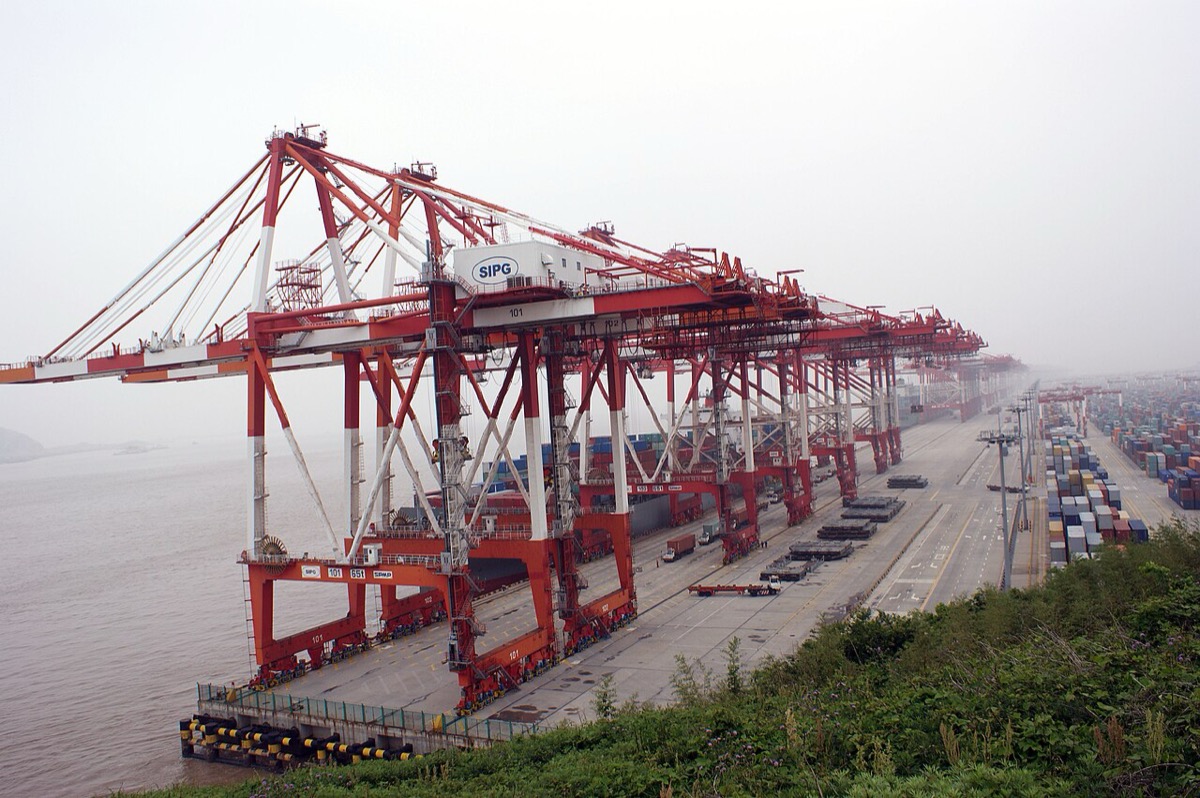
Five concrete moves for your Q2 budget this week
One. Pull every open PO with a US entry date after 4 March and recalculate landed cost using the 20 per cent IEEPA line. Do not wait for your customs broker to flag it. The CBP 7501 will show the new rate automatically and your duty deposits will be drawn at the higher number. If your cash flow is tight, talk to your broker about periodic monthly statement timing before the next drawdown.
Two. Rebuild your Q2 sourcing budget with a three-scenario model. Base case assumes 20 per cent IEEPA holds. Upside assumes a partial rollback by 30 June. Downside assumes a further 10 percentage point increase by end of May. You will not predict which one lands, but you will stop being surprised.
Three. Re-price every customer contract that has a China-origin exposure. If your contracts have a tariff pass-through clause, trigger it in writing this month with the EO 14228 citation. If they do not, open the renegotiation now. Waiting until June hands your customer the leverage.
Four. Diversify one SKU per category away from Chinese origin by 30 June. Not everything. Start with whichever product has the thinnest margin and the most credible alternative in India, Vietnam, Malaysia or South Korea. Huntsman in Singapore, LyondellBasell in the Gulf, and BASF Ludwigshafen still take quote enquiries in English and respond within a week. The cost of switching is real but the option value is bigger than it looks.
Five. Get your EPA TSCA and CBP CF-28 documentation tidy. Any spike in tariff revenue tends to correlate with a spike in CBP form audits and a tighter EPA eye on import certifications. Your file should be audit-ready by the end of this month.
The 20 per cent IEEPA rate is not the end state of this cycle. It is a mid-point. Your Q2 budget either absorbs that, or the spread between your cost stack and your customer price collapses into the second half of the year. This week is the week to rebuild the model.