Nine days ago, Hamas crossed the Gaza border into southern Israel and killed around 1,400 people, taking an estimated 200 hostages. Two days ago, the first Houthi-claimed cruise missile and drone salvos were intercepted by the USS Carney in the northern Red Sea while tracking toward Israeli territory. The Houthi political office in Sana’a has since declared that any vessel calling at an Israeli port is a legitimate target, and the first commercial vessel advisories from UKMTO and EUNAVFOR Atalanta went out over the weekend telling masters transiting Bab el-Mandeb to maintain heightened posture, keep AIS on, and report any approach within five nautical miles.
If you’re routing chemical product from Shanghai Yangshan, Ningbo-Zhoushan, or Qingdao to Rotterdam, Antwerp, Genoa, or Algeciras, this is no longer someone else’s problem. Your vessel almost certainly transits the southern Red Sea. Your war-risk insurance certificate almost certainly contains a clause that allows the underwriter to add an additional premium for specified listed areas, and the Joint War Committee has had the Gulf of Aden on the listed areas map for years. What has shifted this week is that additional war-risk premium quotes for Bab el-Mandeb transits have tripled over a seven-day window, and carriers are starting to talk openly about Cape of Good Hope routing as a contingency.
This is not March 2021. The Ever Given grounded in the Suez Canal for six days and cleared. A Bab el-Mandeb security situation driven by an ongoing regional war is open-ended, and the freight, insurance, and timing consequences for your IMDG class chemical shipments could run for months. If you’re an importer in Melbourne, Singapore, Rotterdam, or Houston sitting on open POs that route through Suez, you need a written view on diversion cost and a decision framework by the end of this week.

What the JWC Listed Area Status Actually Costs You
The Lloyd’s Market Association Joint War Committee maintains a list of areas where an additional war-risk insurance premium is payable on hull and machinery cover for the duration of transit. The Gulf of Aden and the southern Red Sea have been on that list since 2008, which is why the standard practice for vessels transiting Bab el-Mandeb is a “notice of entry” filed with underwriters 24 to 48 hours before passage and an additional premium that, for most of 2022 and early 2023, sat at roughly 0.04% to 0.05% of the insured hull value per transit.
That number has moved. Broker quotes circulating through London and Singapore this week put additional premium on Bab el-Mandeb transits at 0.15% to 0.20% of hull value, and that was before the Carney intercepted the October 19 missile salvo. By the weekend, individual underwriters were refusing to quote at all for vessels identified as Israeli-owned, Israeli-managed, or calling at Haifa or Ashdod. Those vessels are now paying what the market politely calls a “facultative” rate, which means a negotiated one-off premium that can run 0.50% or higher.
The carrier does not eat this. It is passed through as a war-risk surcharge on the bill of lading, typically quoted per container. Maersk, Hapag-Lloyd, CMA CGM, and MSC have not yet issued formal updated tariff notices, but internal commercial teams at the top five carriers have been modelling surcharge levels of USD 40 to USD 90 per 20-foot equivalent for Asia-to-Mediterranean and Asia-to-Northwest Europe strings. For a standard 20-foot box of IMDG class chemical, that is an extra USD 40 to USD 90 on top of the already elevated dangerous-goods freight rate.
The Cape of Good Hope Diversion Math
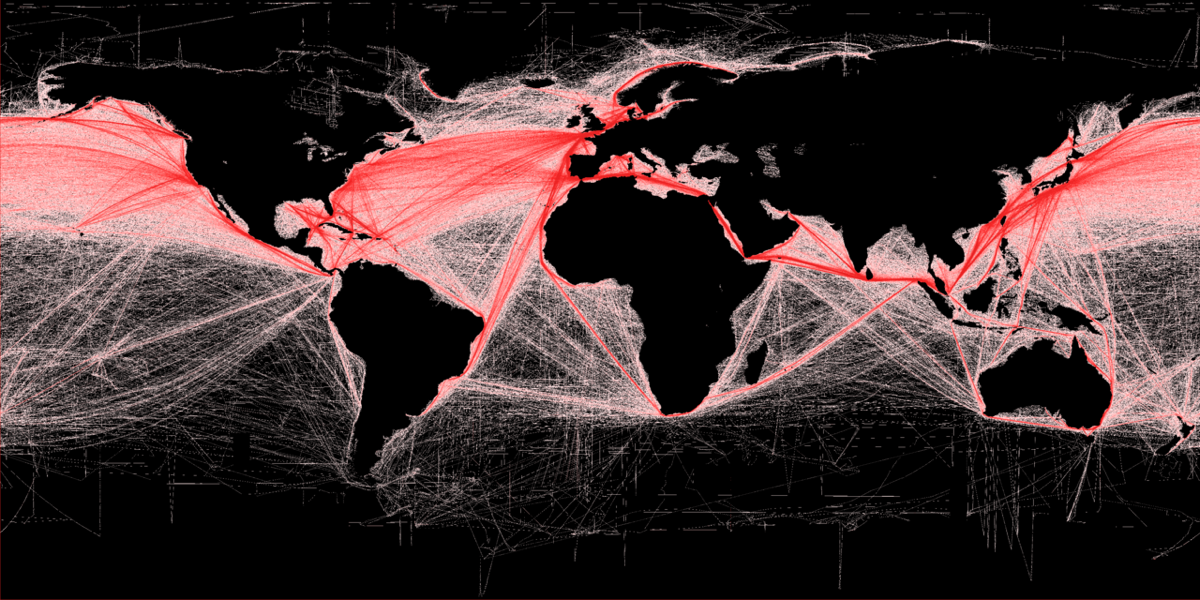
The larger decision sitting in front of carrier commercial teams right now is whether to divert Asia-Europe strings south of Africa rather than through Suez. This is not hypothetical. In 2008 during the worst of the Somalia piracy wave, several carriers ran South Africa routing for the premium-risk strings for months. In late 2011, CMA CGM and Maersk both publicly acknowledged diversion options for specific sailings.
Cape routing from Shanghai to Rotterdam adds roughly 3,500 nautical miles and between 8 and 10 sailing days to the standard 30 to 32 day Suez transit. At current bunker prices around USD 650 per tonne for VLSFO in Rotterdam, a large container vessel burning 150 to 180 tonnes per day adds USD 1.0 to USD 1.2 million in fuel cost over a single round trip. Spread across a vessel loading 15,000 to 20,000 TEU, that is roughly USD 60 to USD 80 per TEU of incremental fuel cost alone, before you account for the capital and schedule-integrity cost of a longer string.
Here is the comparative landed cost for a 20-foot container of IMDG Class 3 flammable liquid, roughly 18 tonnes of an aromatic solvent, moving from Ningbo-Zhoushan to Rotterdam under three scenarios: the early October 2023 baseline, the mid-October 2023 Suez transit with war-risk surcharge, and a notional Cape of Good Hope diversion.
| Line item | Baseline early Oct 2023 | Suez transit, mid Oct 2023 | Cape diversion notional |
|---|---|---|---|
| FOB Ningbo, USD/MT | 1,180 | 1,180 | 1,180 |
| Ocean freight, USD per 20 ft | 1,350 | 1,350 | 1,520 |
| IMDG Class 3 surcharge, per 20 ft | 420 | 420 | 420 |
| Bunker adjustment, per 20 ft | 185 | 210 | 275 |
| War-risk surcharge, per 20 ft | 0 | 65 | 0 |
| Ocean freight per MT (18 MT payload) | 108.61 | 113.61 | 123.06 |
| Marine insurance and war-risk cover, % of CIF | 0.14% | 0.32% | 0.18% |
| Insurance per MT | 1.81 | 4.14 | 2.36 |
| EU import duty (HS 2707, roughly 1.7% MFN) | 21.77 | 21.77 | 21.77 |
| Rotterdam THC and documentation, per MT | 12.50 | 12.50 | 12.50 |
| Transit time, days Ningbo to Rotterdam | 31 | 32 | 41 |
| Landed cost Rotterdam, USD/MT | 1,324.69 | 1,331.02 | 1,339.69 |
The headline is counter-intuitive. The Cape diversion, on steady-state operation, adds roughly USD 15 per MT over the baseline and only USD 8 per MT over the Suez-with-war-risk scenario. What kills you on the Cape route is not the unit cost. It is the ten extra days of inventory-in-transit, the knock-on effect on your manufacturing schedule, and the carrier’s reliability when every vessel in the string is running eight to ten days longer than designed.
If your end customer is a European coatings producer running just-in-time on solvent, losing ten days of lead time is an operational event, not a cost event. That is why the conversation inside carrier commercial teams this week is about whether to run a hybrid: Cape routing for the premium services and a war-risk-surcharged Suez routing for the rest.
IMDG-Specific Risks That Non-Hazmat Shippers Do Not Face
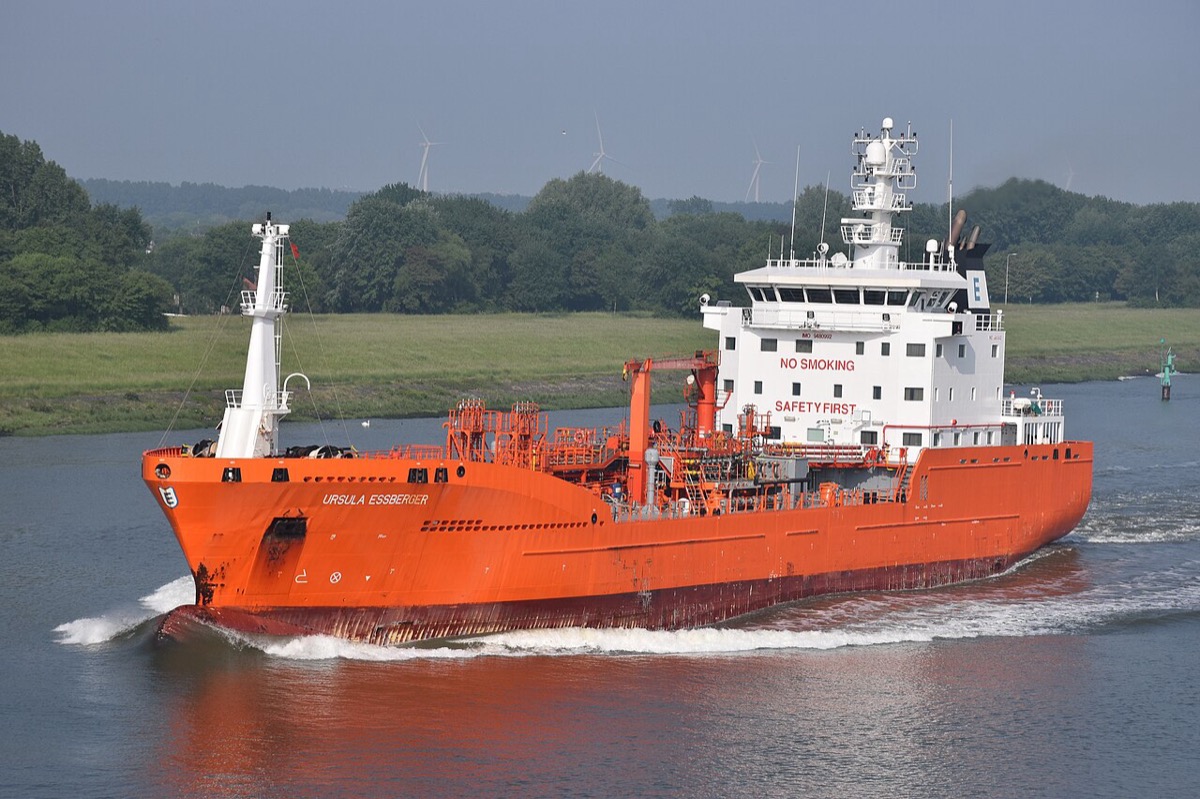
If you ship IMDG class 3 flammables, class 4 combustibles, class 5.1 oxidisers, class 6.1 toxics, or class 8 corrosives, you have a secondary layer of exposure that dry-cargo shippers do not. Your cargo is named in the vessel’s dangerous-goods manifest. Your cargo often sits on an exposed deck position because IMDG stowage rules push certain classes topside. A kinetic event, even a close aboard drone splash, can trigger a salvage claim, a York-Antwerp general average declaration, or worst case a vessel loss of life scenario that drags chemical shippers into a multi-year claims process.
Your marine cargo cover almost certainly contains an F.C. and S. endorsement, which excludes losses caused by war, strikes, riots, civil commotions, and related perils unless you buy back cover explicitly through the Institute War Clauses and Institute Strikes Clauses. Check your policy today. If your war risks coverage is on a transit basis rather than an annual open cover, your underwriter may apply a 48-hour cancellation clause to the war extension, meaning the insurer can walk away from future transits on short notice.
Your sale contract also matters. If you’re selling CIF Rotterdam and the war-risk surcharge lands after you quoted the price, you eat that surcharge unless your contract has an explicit pass-through clause. If you’re buying CIF, your supplier is about to try to pass through that surcharge with a revised invoice, and you need to be ready to push back on the documentation and the amount.
What Carriers Are Likely to Announce in the Next Ten Days
Based on the pattern from prior security events, expect the following sequence over the next two weeks. First, a General Rate Increase on Asia-Europe strings announced with 30 days’ notice, coming into effect mid to late November, in the range of USD 200 to USD 400 per TEU. Second, a formal war-risk surcharge filed separately and effective within 15 days, typically USD 50 to USD 100 per TEU. Third, space-allocation tightening on IMDG bookings as carriers preserve deck slots for higher-margin reefer and general cargo that don’t carry the same salvage exposure.
If you have October or early November sailings already booked with a confirmed slot, hold them and expect surcharges to be added as supplementary invoices. If you have December or January sailings that are not yet booked, book them now at currently quoted all-in rates. A mid-November GRI plus a war-risk surcharge could add USD 250 to USD 500 per TEU to your Q1 landed cost if you delay.
The Australian Importer’s Decision Framework
If you’re running import operations from Melbourne for Australian or regional distribution, your Red Sea exposure is narrower than a European importer’s but still material. Most Australian-bound container traffic from China routes via Singapore and the Straits of Malacca, which are not directly affected. However, any European-origin feedstock you pull via Rotterdam, Antwerp, or Genoa rides the Asia-Europe strings in reverse, and you will see the surcharges on every eastbound container.
The practical decisions for Australian buyers this week are three. First, if you have European-origin specialty chemicals, solvents, or performance additives on order, check whether the supplier’s proforma shows a war-risk surcharge line item. If it does, that is your price. If it does not, assume one is coming and budget for it. Second, if you have an open RFQ with a European supplier, specify “all surcharges included as at bill of lading date” in your purchase order, not at order date, to avoid a retroactive surcharge dispute. Third, for any shipment carrying an Israeli transshipment leg, for example consolidation services that route through Haifa, pull that shipment out of your string this week. The premium on Israeli-linked vessel segments is now prohibitive.
For Chinese-origin product routing to Australia via Singapore, Fremantle, Adelaide, and Melbourne, the Red Sea situation is a watch-item, not an action item. The secondary risk to monitor is Strait of Hormuz, because if the conflict spreads to Iranian proxy activity in the Gulf, Australia’s imported ammonium sulfate, urea, and other fertiliser-grade product from Saudi and Emirati loaders would be the next exposure.
What to Do This Week, in Dates
Before October 20: audit every open IMDG container booking to Europe and classify as locked rate, surcharge-exposed, or not yet booked. Get surcharge-exposed lines priced with carriers today.
Before October 27: verify your marine cargo war-risk extension is active and not on a 48-hour cancellation clause. If it is, move to an annual open cover with a firmer cancellation provision.
Before November 3: for any November to January sailings, lock freight at current quoted all-in rates and pre-position inventory where warehouse economics allow.
Before November 15: have a written diversion scenario prepared. If carriers announce Cape of Good Hope routing, your operations team and your customer need to know that transit times go from 31 to 41 days and what that does to your safety stock and your delivery commitments.
If you’re trying to figure out whether to hold or ship a specific IMDG container this week, send us the bill of lading class and UN number, the carrier and string, the load and discharge ports, and the booked sailing date. We will walk it through on a call before Friday. The October 19 Carney intercept has already changed the pricing. The next shoe, likely a formal carrier war-risk surcharge filing, will drop inside ten days.