The Greek-owned, Liberia-flagged bulker Magic Seas took two anti-ship missile hits and a drone strike early on 6 July 2025, was evacuated by the crew, and sank in the southern Red Sea within 48 hours. The vessel had been transiting under a Liberian flag with a predominantly Filipino crew, all 22 of whom were recovered by a passing merchant vessel and handed to naval assets. Two days later the Eternity C took a similar strike and at least four crew were confirmed dead. The Houthi spokesman Yahya Saree claimed both attacks on the group’s Al-Masirah channel.
The May 2025 ceasefire framework, brokered through Omani and US channels, is gone. The working assumption every importer had built into their Q3 routing and their Q4 contracts has been invalidated in forty-eight hours. If you’re moving chemical cargo on an Asia-Europe service, or transhipping dangerous goods through any hub east of Suez, the arithmetic changed this week.

What actually happened, and why this sinking is different
The Magic Seas was carrying fertiliser, not chemicals per IMDG Class definitions, and she was operating on a spot charter out of Zhuhai, China, bound for Turkey. That cargo profile matters for two reasons. First, the Houthi target selection is no longer limited to vessels with an Israeli, US, or UK operator link, which was the claimed rule-set through 2024. The Magic Seas had a Greek beneficial owner with a minor prior port call at an Israeli terminal more than eighteen months back, and that was apparently enough. Second, the loss came with an environmental release of agricultural fertiliser into the southern Red Sea, which triggered a separate insurance cost profile and an IMO pollution reporting chain that your carrier’s P&I club is now absorbing.
Container vessel traffic through Bab el-Mandeb was already at roughly 25% of the 2023 baseline going into July. The ceasefire had brought selected operators back for limited transits, mostly CMA CGM on French-flagged hulls and a handful of MSC ships under risk-managed routing. The 6 July sinking has already produced the predictable reaction. Hapag-Lloyd announced on 7 July that all its Asia-Europe services would remain on the Cape of Good Hope rotation through at least Q4. Maersk confirmed the same. ONE, Yang Ming, and Evergreen followed within 48 hours.
The real cost line: war-risk insurance
Here’s where the number starts to bite. War-risk insurance for a Red Sea transit has been pricing at roughly 0.7 to 1.0% of vessel hull value since January 2024, and underwriters reopen quotes every 48 hours. A VLCC tanker with a $180 million insured value pays $1.26 million to $1.8 million per voyage on the upper band. For a mid-sized 6,800-TEU container ship with a $95 million hull value, you’re looking at $665,000 to $950,000 per transit on war-risk alone. The Magic Seas sinking has underwriters at Lloyd’s and the Norwegian war-risk club repricing upward. Expect 1.1 to 1.5% by the end of the week.
| Vessel type | Insured hull value | War-risk at 0.7% | War-risk at 1.0% | Post-sinking 1.25% |
|---|---|---|---|---|
| VLCC tanker (2M barrels) | $180M | $1.26M | $1.80M | $2.25M |
| Suezmax tanker (1M barrels) | $110M | $770K | $1.10M | $1.38M |
| 14,000-TEU container ship | $145M | $1.02M | $1.45M | $1.81M |
| 6,800-TEU container ship | $95M | $665K | $950K | $1.19M |
| 20,000-DWT chemical tanker | $68M | $476K | $680K | $850K |
For a chemical tanker loaded with parcel-sized cargo moving into a European discharge port, the war-risk line is a sizable chunk of the voyage economics. Carriers don’t absorb it silently. Hapag-Lloyd’s Red Sea surcharge was $200 per TEU pre-ceasefire, dropped to $90 in June, and has already been refiled at $180 as of 7 July. Expect $250 to $320 by month end.
The routing trade: Cape versus Suez
The pure math on Shanghai to Rotterdam says Suez wins on fuel, loses on insurance, and breaks even on days once the Red Sea surcharge reloads. Cape of Good Hope adds roughly 3,300 nautical miles and 12 calendar days, burns an extra 0.14 MT of fuel per FEU, and currently avoids the war-risk premium entirely.
| Metric | Cape of Good Hope | Suez (post-6-July) | Delta |
|---|---|---|---|
| Shanghai to Rotterdam days | 40 to 45 | 28 to 32 | 12 days |
| Nautical miles | 14,180 | 10,870 | 3,310 |
| Fuel burn per FEU (MT IFO380) | 0.62 | 0.48 | 0.14 MT |
| Bunker cost per FEU at $520/MT | $322 | $250 | $72 |
| War-risk insurance per FEU | $0 | $38 to $62 | -$38 |
| Carrier Red Sea surcharge per FEU | $0 | $180 to $320 | Varies |
| Working capital cost per FEU (12 extra days at 8% on $28K cargo) | $74 | $0 | $74 |
For a standard-value TEU of chemical cargo, Cape is roughly $146 more expensive per box once you price in the extra bunker and working capital. For a high-value parcel shipment on a chemical tanker where the per-voyage war-risk line is $680,000 and up, Cape gets dramatically cheaper very quickly.
The practical answer for chemical importers moving cargo from Ningbo-Zhoushan, Shanghai Yangshan, or Qingdao to Rotterdam, Antwerp, or Hamburg is that you’re back on the Cape rotation for all of Q3 and almost certainly through Q4. If you’re shipping into LA or Savannah on the trans-Pacific, the Red Sea doesn’t directly touch you, but the capacity reshuffle does.
Why your trans-Pacific rate is about to move
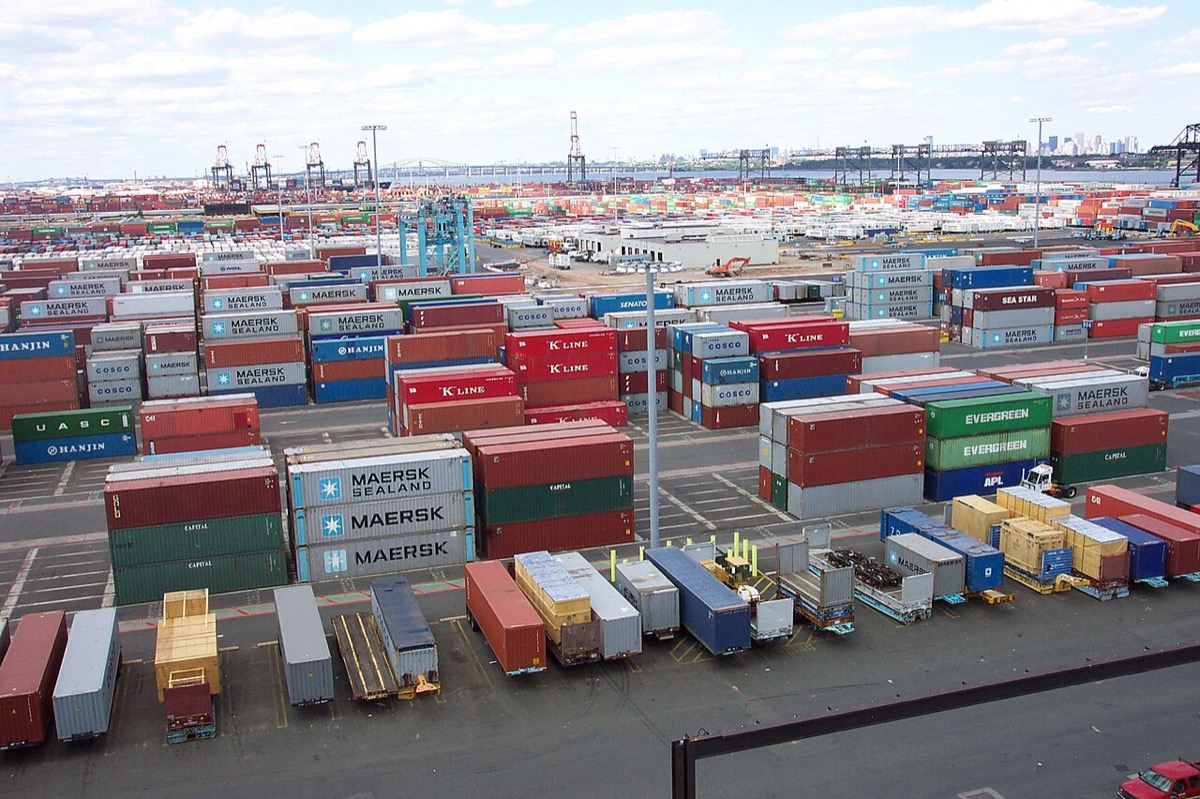
The cascade effect is what a lot of importers underprice. When Asia-Europe ships go around the Cape, that absorbs roughly 8 to 11% of global container capacity into extra tonne-miles. The carriers fill the gap by pulling ships off Asia-Americas services and chartering in replacement tonnage. When capacity tightens on the trans-Pacific, rates firm.
The Drewry WCI Shanghai-LA lane printed $4,716 per FEU on the 17 July read, which is a 12% week-on-week jump and the first clear sign that the capacity withdrawal is flowing through. If Cape routing remains the default for the rest of 2025, the trans-Pacific rate probably settles in the $5,000 to $5,500 range through Q4, with spikes above $6,000 on mid-tier lanes and ad-hoc DG moves.
For a US importer running 800 FEU a year from Shanghai to LA, a $3,000 per FEU increase is $2.4 million in incremental freight. That’s not a margin absorption conversation. That’s a price pass-through conversation you need to have with your downstream customers in the next two weeks, before October orders get entered.
The DG-specific risk you’re carrying
Dangerous goods cargo has two extra complications on Red Sea or Cape routing that general containerised cargo doesn’t.
First, IMDG Code segregation rules mean Class 3 flammables, Class 6 toxics, and Class 8 corrosives require specific stowage positions that not every ship can accommodate on a given voyage. When carriers reduce Asia-Europe capacity by 40% via Cape routing, DG slot availability falls harder, because the DG-compatible positions are fixed as a fraction of total slots. Expect DG surcharges to rise faster than base rates.
Second, P&I clubs price war-risk-adjacent coverage differently for hazardous cargo. If you’re moving UN 1760 corrosive liquids NOS, UN 1993 flammable liquids NOS, or UN 2735 amines in IMO-compliant ISO tanks on a containership, your forwarder’s war-risk uplift will be 20 to 35% above the vanilla container number. That’s another $50 to $100 per TEU on top of the $180-plus Red Sea surcharge.
For a typical mixed container with two UN-numbered DG positions out of twenty packages, the all-in surcharge stack on a 6 July-plus voyage looks like this.
| Surcharge line | June 2025 ($/TEU) | Post-sinking ($/TEU) | Delta |
|---|---|---|---|
| Base ocean freight Shanghai-Rotterdam | 1,820 | 2,180 | +$360 |
| Red Sea war-risk / routing surcharge | 90 | 280 | +$190 |
| DG surcharge (IMDG 42-24) | 320 | 420 | +$100 |
| Bunker adjustment (Cape extra) | 220 | 322 | +$102 |
| Low-sulphur surcharge | 180 | 180 | - |
| All-in per TEU | 2,630 | 3,382 | +$752 |
That’s a 29% jump per container, and it will compound if a second major vessel loss hits in the next 30 days.
What to do this week
Call your forwarder and freeze DG slot allocations for August and September sailings today, not next week. Capacity is going to be the constraint, not price, for the next six to eight weeks. A booked slot at $3,382 is better than an unbooked slot at $3,600 that doesn’t exist.
Push your supplier for FOB terms if you’re currently on CIF. The CIF price your Chinese manufacturer quoted in May assumed a functional Red Sea and $90 per TEU on war-risk surcharge. That price is now structurally wrong and you’ll end up in a dispute on the PO if you don’t reset it.
Review your insurance certificate war-risk clause. A lot of standard US importer marine cargo policies carve out war-risk coverage for vessels transiting Bab el-Mandeb. If your container is on a ship that’s transiting the strait and something happens, you might be covered by the carrier’s hull war-risk but not have your own cargo covered. A separate cargo war-risk binder runs 0.05 to 0.12% of cargo value for a single voyage, which is cheap insurance at a moment when a named loss just happened.
Model Cape routing as your base case through 31 December. If the ceasefire comes back and the Red Sea reopens, you can always pull some boxes back to the shorter rotation, but you can’t unbook cargo after the surcharge refiles at $320.
The macro read
The Magic Seas sinking is not an isolated event. It’s the market’s confirmation that the May ceasefire was a pause, not a resolution. The Houthis have demonstrated they can sustain a campaign against shipping for well past eighteen months with limited infrastructure and a modest missile and drone inventory. US and allied naval assets in the region are stretched. The Red Sea remains structurally unsafe for at least the remainder of 2025 on any sensible risk assessment.
For chemical importers, the 6 July sinking means three things, concretely. Your Asia-Europe freight is back on the Cape, which means 12 extra days of working capital and $300-plus per TEU in surcharges. Your trans-Pacific freight is about to catch the capacity squeeze and rates will firm through Q3. And your DG surcharge is moving up independent of base rates, driven by IMDG 42-24 transition costs and P&I club war-risk repricing.
Budget for a 10 to 15% all-in landed cost uplift on China-origin chemical imports through Q4 2025. If the Red Sea reopens faster than expected, you get a margin tailwind. If it doesn’t, you’ve priced your 2026 contracts correctly and you’ll be the importer with slots while competitors are scrambling.
Book the tonnage this week.