The IMO Maritime Safety Committee adopted Resolution MSC.556(108) back in May, and Amendment 42-24 to the International Maritime Dangerous Goods Code quietly entered its voluntary window on 1 January 2025. That window shuts on 1 January 2026. From that date, every dangerous goods declaration, every packing certificate, every segregation plan on a vessel calling a US port has to comply with 42-24 or the box does not load.
You have got four months. If your compliance team is still referencing 41-22 language in your SOPs, your freight forwarder is about to hand you a very expensive education.
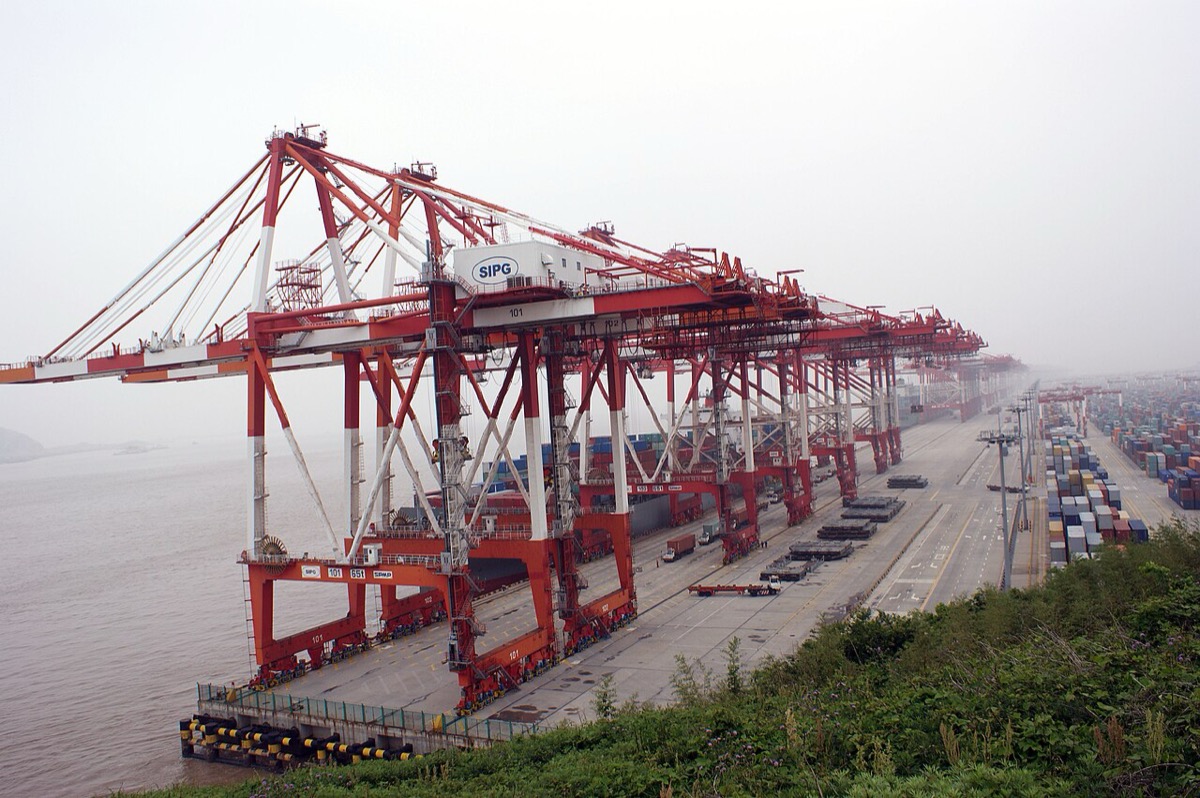
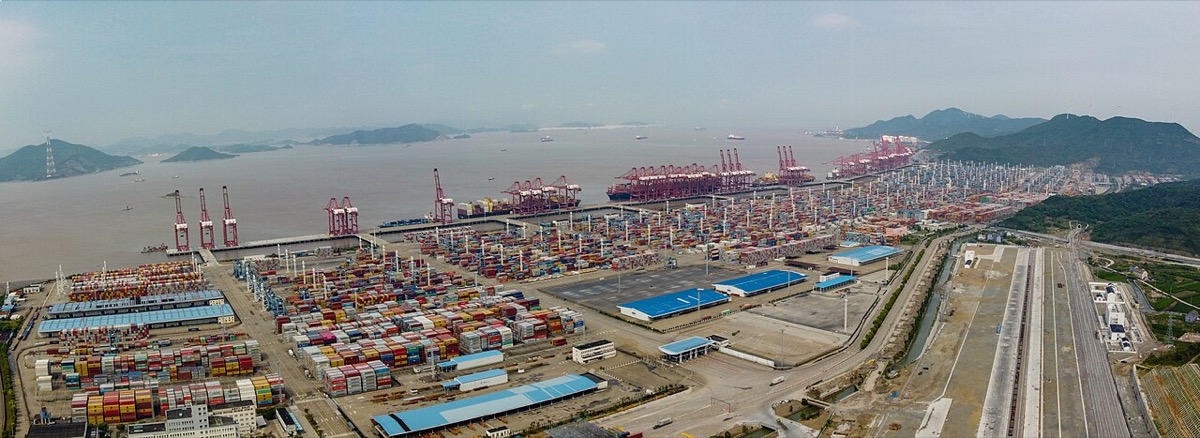
We have been shipping chemicals out of Shanghai, Ningbo-Zhoushan and Qingdao for twenty years, and every IMDG amendment cycle brings the same scramble. This one is heavier than most. Over 300 individual changes. New UN numbers that did not exist six months ago. Deleted Special Provisions that thousands of shippers still list on their MSDS templates. And carriers have already started pricing the risk.
What Actually Changed in Amendment 42-24
The headline changes that will hit a US chemical importer sourcing from China fall into five buckets: new entries in the Dangerous Goods List, deletions, stowage reclassifications, packaging updates, and documentation language. Your compliance officer needs the full Volume 1 and Volume 2 reprint, but here are the ones that will bite fastest.
Sodium-ion batteries finally get their own UN numbers. Before 42-24, Chinese factories shipping sodium-ion cells for energy storage installations were cross-declaring under lithium-ion entries or, worse, under generic battery UN numbers that never fit. Now we have UN 3551, UN 3552 and related entries with specific packing instructions and a Class 9 classification that aligns with how LA/Long Beach terminal operators want them stowed. If your supplier in Ningbo is still putting UN 3480 on a sodium-ion battery container, you are misdeclaring, and the CBP penalty schedule for hazmat misdeclaration starts at $789 per violation under 49 CFR 107.329 and climbs fast.
Charcoal just got harder. Special Provision 925, which allowed certain non-activated charcoal products to skip IMDG classification entirely, has been deleted. That means UN 1361 charcoal, animal or vegetable origin, now travels under full Class 4.2 self-heating substance rules. If you import activated carbon for water treatment, coconut shell charcoal for metallurgy, or bamboo charcoal for cosmetics, your previous “not regulated” declaration is dead on 1 January. Your Chinese supplier needs a self-heating test result per UN Manual of Tests and Criteria 33.3.1.3.3 before you can even book the container.
Lithium batteries lost their below-deck option on most vessel types. Under 42-24, UN 3480 and UN 3481 in larger packagings are restricted to on-deck stowage only on container vessels. That sounds benign until you realise on-deck containers get rate premiums, weather damage exposure is higher, and Hapag-Lloyd and MSC have both quietly cut on-deck lithium allocations per sailing. If you ship EV battery packs, power tool batteries, or lithium cells from Shenzhen or Tianjin, expect to lose two to three days per sailing on rebooking when your first-choice vessel is full on deck slots.
The UN Number Changes Every Chemical Importer Needs to Audit
Here is a compressed table of the 42-24 changes most likely to hit a US chemical import operation sourcing from China. This is not the full 300-plus list, but it covers the entries that show up on about 80 percent of our client cargo manifests.
| Change Type | UN Number | Substance | 42-24 Impact | Action Required |
|---|---|---|---|---|
| New entry | UN 3551 | Sodium-ion batteries, contained in equipment | New Class 9 with specific PI | Update MSDS, retrain classifier |
| New entry | UN 3552 | Sodium-ion batteries, packed with equipment | New Class 9 with specific PI | Update MSDS, retrain classifier |
| SP deleted | UN 1361 | Charcoal, animal or vegetable origin | SP 925 gone, full Class 4.2 | Self-heating test from supplier |
| Stowage | UN 3480 | Lithium-ion batteries | On-deck only on container vessels | Rebook if currently below-deck |
| Stowage | UN 3481 | Lithium-ion batteries in or with equipment | On-deck only on container vessels | Rebook if currently below-deck |
| Packaging | UN 1950 | Aerosols | Revised PI 203 pressure test spec | Certificate from Chinese packer |
| Language | UN 3077 | Environmentally hazardous substance solid NOS | Revised marine pollutant text | Reprint all UN 3077 labels |
| Language | UN 3082 | Environmentally hazardous substance liquid NOS | Revised marine pollutant text | Reprint all UN 3082 labels |
| Classification | UN 3549 | Medical waste, Category A, affecting humans | Expanded scope | Flag lab reagent imports |
| Segregation | UN 1830 | Sulfuric acid | Revised segregation from foodstuffs | Plan stow separation |
Every row in that table is a distinct compliance workstream. You cannot delegate the full audit to your freight forwarder because forwarders get paid to book boxes, not to redraft your MSDS library. You need the supplier in China to supply updated documentation and you need your in-house DG specialist to verify it.
The $250 DG Surcharge Is Just the Opening Bid
Hapag-Lloyd announced a $250 per container Dangerous Goods premium earlier this year, and it has already started appearing on booking confirmations for chemical cargo out of Shanghai, Ningbo and Qingdao. Maersk is charging a similar DG fee that varies by trade lane, and CMA CGM has a separate lithium battery surcharge that can exceed $400 per FEU on certain sailings. COSCO has been slower to add a standalone DG line item, but their base rate for DG cargo has crept up against non-DG of the same volume.
Here is what the DG surcharge actually does to landed cost on a typical 20-tonne consignment of UN 3082 marine pollutant liquid chemicals from Shanghai to Long Beach.
| Cost Line | Before DG Surcharge | After Hapag-Lloyd DG Premium | Delta |
|---|---|---|---|
| Base ocean freight per FEU | $2,400 | $2,400 | 0 |
| DG premium | $0 | $250 | +$250 |
| BAF and CAF | $180 | $180 | 0 |
| LA terminal DG handling | $340 | $340 | 0 |
| Chassis and inland haul to warehouse | $720 | $720 | 0 |
| CBP harbor maintenance fee | $31 | $31 | 0 |
| Landed cost per FEU | $3,671 | $3,921 | +6.8% |
A 6.8 percent jump on a single line item is not catastrophic on one container. On 200 FEUs across a year, that is $50,000 of pure margin evaporation. And this is before the rumoured 42-24 implementation surcharge that two forwarders have told us carriers are modelling for Q1 2026.
Your 42-24 Compliance Checklist Before 1 January 2026
Work through this list in order. The sequence matters because documentation depends on classification, and booking depends on documentation.
Pull your last twelve months of DG manifests and list every unique UN number you have imported from China. Most importers have fewer than fifty recurring UN numbers even if their catalogue runs to thousands of SKUs, because the carrier DG classifications cluster around broad entries like UN 3077, UN 3082, UN 1993, UN 3480 and a handful of others.
Cross-reference each UN number against the 42-24 Dangerous Goods List for changes. The IMO publishes the consolidated text, and paid services like Labelmaster and DGM run diff reports that highlight every amendment versus 41-22. Flag every entry where packaging, stowage, segregation or Special Provisions have shifted.
Notify your Chinese suppliers in writing, in Mandarin and English, of which of your UN numbers require updated test data, updated packing certificates or updated MSDS language. Give them a 45-day deadline. Suppliers in Guangdong and Zhejiang typically need at least three weeks to coordinate with their own DG testing labs, most of which book out heavily in Q4.
Book your packing certifications with SGS, Bureau Veritas or Intertek for any UN number where 42-24 has changed packing instructions. UN 1950 aerosols are a particular bottleneck because the new PI 203 pressure test spec requires lab time that books out weeks in advance in Shanghai and Ningbo.
Retrain your DG classifier, your operations team and your customs broker. IATA and IMDG training certificates typically require refresh every two years under 49 CFR 172.704, and the 42-24 transition is the natural trigger. Budget between $800 and $1,400 per staff member for a recognised IMDG refresher course.
Audit your carrier contracts for DG surcharge pass-through language. If your current contract with Hapag-Lloyd, Maersk or MSC does not explicitly cap DG surcharges or give you a termination right on material surcharge changes, you are exposed. Q4 is the natural window to renegotiate before 2026 tenders lock.
Update your AES filing templates in ACE. CBP will start cross-checking AES hazmat declarations against carrier manifest data under the new IMDG entries, and mismatches trigger hold rates that can blow a just-in-time production schedule. Your broker needs the new UN 3551 and UN 3552 schedule B codes loaded before the first sodium-ion booking hits.
Run a tabletop exercise with your logistics team on a 42-24 incident. Pick one of your UN numbers that has changed significantly, simulate a supplier packing error, and walk through notification, booking hold, rebooking and cost recovery. It is the cheapest way to find the gaps in your SOPs before a real event.
What Happens If You Miss the Deadline
Penalty exposure on 1 January 2026 is not theoretical. The US Pipeline and Hazardous Materials Safety Administration enforces hazmat classification under 49 CFR, and the maximum civil penalty per violation currently sits at $89,678 per day of continuing violation, with baseline penalties for misdeclaration starting around $789. CBP has its own parallel enforcement mechanism for customs declaration fraud on hazmat, and PHMSA and CBP share data.
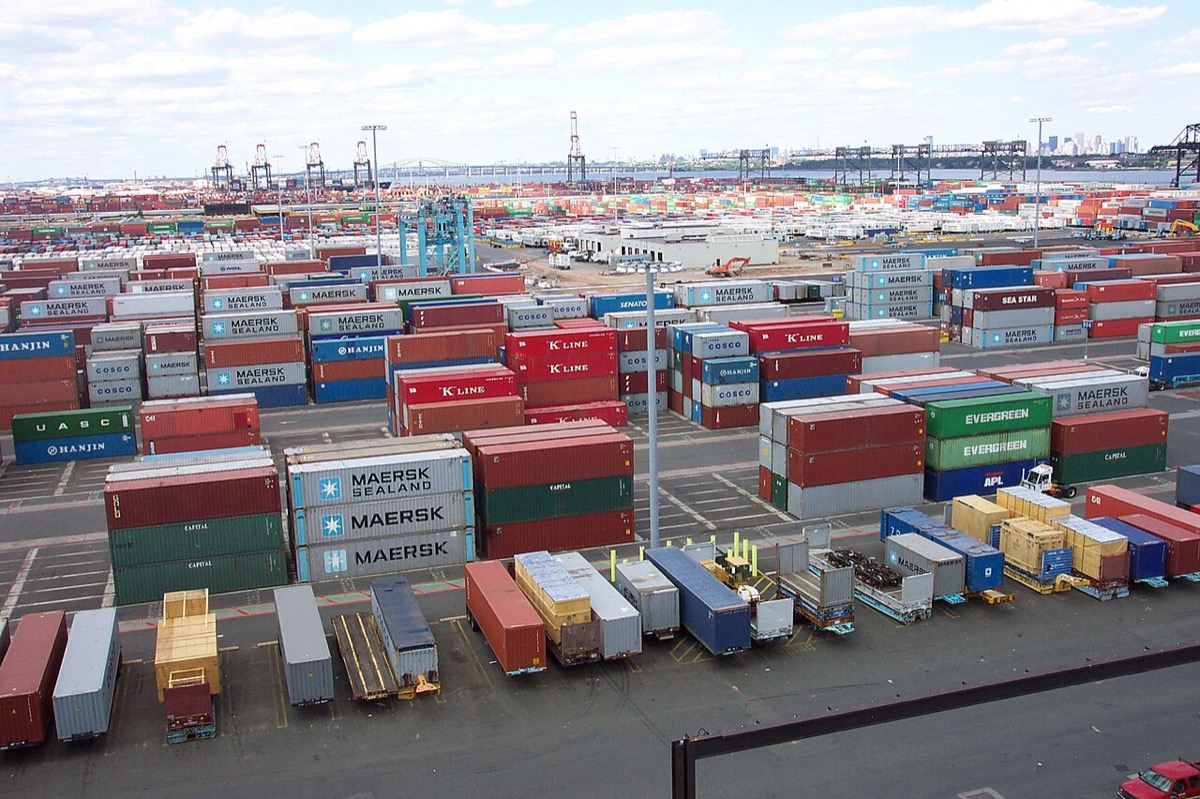
Beyond the regulator, the commercial fallout is worse. A misdeclared container that gets flagged at Long Beach will sit in a demurrage-accruing holding yard for five to twelve days while the shipper sorts remediation. LA terminal demurrage on a DG box runs above $400 per day after the free period. Add rebooking fees, correction affidavit fees, legal fees if there is an incident, and the total cost of a single misdeclared FEU can clear $15,000 before you have moved the cargo a metre.
Then there is the carrier relationship. Hapag-Lloyd, Maersk and MSC all maintain shipper watchlists for DG misdeclaration, and repeat offenders lose space allocation during tight capacity windows. That is a long-tail cost that nobody quantifies until you need expedited Q1 space and cannot get it.
Your Next Move Before Friday
Pull your top ten UN numbers by volume this quarter and send them to your DG classifier with a request for a 42-24 delta report by end of next week. If you do not have an in-house DG specialist, book a two-hour consultation with a classifier at Bureau Veritas Shanghai or SGS Ningbo. They are already running 42-24 readiness workshops for Chinese manufacturers, and US importer slots are filling.
Email your three biggest Chinese chemical suppliers today asking for confirmation of their 42-24 readiness programme, their updated MSDS reissue schedule, and any surcharge pass-through they are modelling. If a supplier cannot answer those three questions in writing within seven days, you have a supplier risk problem that will surface on 2 January. Better to surface it now, when you still have time to move volume.
Sourzi runs IMDG readiness audits for US chemical importers sourcing from China, including supplier compliance verification in Shanghai, Ningbo, Qingdao and Tianjin. If your 2026 compliance plan is still a draft, we should talk this week.