Two weeks ago you had a reasonably ugly tariff stack. Today you have a compound emergency. Between 2 April and 10 April the White House and Beijing ran one of the fastest escalation sequences any of us have seen since 2018. Executive Order 14257 on 2 April opened Liberation Day with a 10 per cent universal baseline and reciprocal surcharges on dozens of trading partners. EO 14259 on 8 April and EO 14266 on 9 April escalated the China-specific rate into triple digits. By 10 April the effective combined duty on most Chinese-origin goods entering the United States peaked at 145 per cent when you stack the IEEPA fentanyl rate, the Section 301 base, and the new reciprocal layer.
Beijing did not blink. On 4 April MOFCOM and the General Administration of Customs issued Announcement No. 18, putting export-licence requirements on seven medium and heavy rare earth elements and their compounds. Samarium. Gadolinium. Terbium. Dysprosium. Lutetium. Scandium. Yttrium. The Caixin China General Manufacturing PMI for March printed earlier at 51.2, but the April flash read dropped to 49.0, the first contraction since last October. If you import chemicals through any US node, or you buy anything with a rare-earth-dependent catalyst, this fortnight reorders your year.
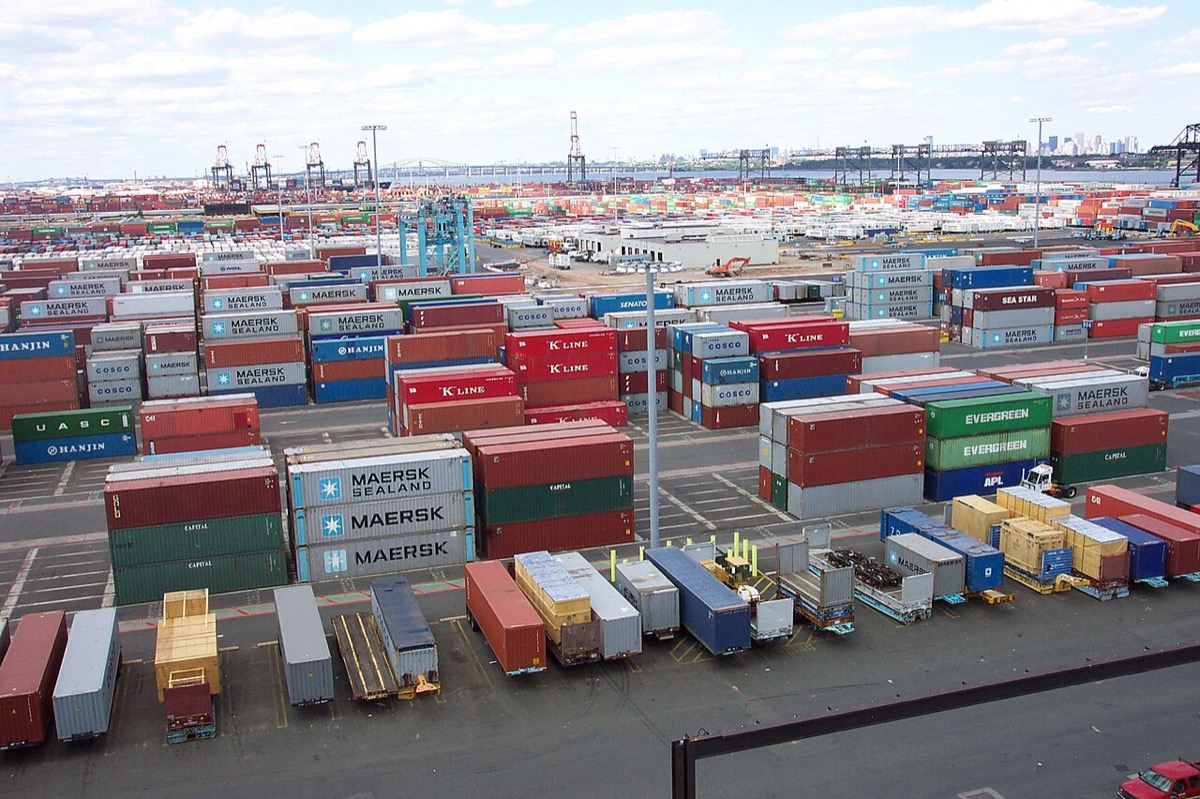
The sequence, in the order it actually happened
It helps to lay the dates out plainly, because compliance teams are getting tangled on effective entry dates.
EO 14257 was signed on 2 April and set a 10 per cent universal baseline tariff on imports from most countries, effective 5 April, with higher reciprocal rates for a named list including China. The initial China-specific reciprocal rate was 34 per cent. That sat on top of the Section 301 25 per cent and the 20 per cent IEEPA fentanyl surcharge that came in on 4 March. Before Liberation Day stacked on, a typical Chapter 29 organic chemical was already carrying 51.5 per cent in duty. Add the 34 per cent reciprocal and you were at roughly 85.5 per cent on 5 April.
China retaliated on 4 April with its own 34 per cent tariff on US goods, plus MOFCOM Announcement No. 18 on the rare earth export-licence regime. EO 14259 on 8 April raised the China reciprocal rate to 84 per cent effective 9 April. EO 14266 on 9 April raised it again to 125 per cent effective 10 April, with the White House fact sheet citing a combined effective rate of 145 per cent when the IEEPA layer was included. At the same time, the broader reciprocal regime on other trading partners was paused for 90 days, leaving the China stack as the outlier.
This matters for your paperwork because the CBP rate applicable is the rate in force on the date of entry, not the date of the commercial invoice or the bill of lading. A container that sailed from Ningbo on 28 March and entered the US on 12 April is paying the 12 April rate. There is no grandfathering.
The stack, post-10 April, for the chemicals you actually buy
| HS Code | Product | MFN | Sec 301 | IEEPA | Reciprocal (EO 14266) | Total Duty |
|---|---|---|---|---|---|---|
| 2917.14.10 | Adipic acid | 6.5% | 25% | 20% | 125% | 176.5% |
| 2929.10.80 | MDI isocyanates | 6.5% | 25% | 20% | 125% | 176.5% |
| 2915.21.00 | Acetic acid | 1.8% | 25% | 20% | 125% | 171.8% |
| 3808.92.50 | Fungicides, packaged | 5.0% | 25% | 20% | 125% | 175.0% |
| 2815.11.00 | Caustic soda, solid | 0.0% | 25% | 20% | 125% | 170.0% |
| 3901.20.50 | HDPE resin | 6.5% | 25% | 20% | 125% | 176.5% |
| 3204.17.90 | Organic pigments | 6.5% | 25% | 20% | 125% | 176.5% |
Those numbers are not typos. If your adipic acid is entering the United States on or after 10 April and it is Chinese origin, you are paying close to 1.77 dollars in duty for every dollar of declared customs value. This is the stack the White House summarised as the “145 per cent effective rate” once you factor in how the IEEPA and reciprocal layers combine on the landed cost basis rather than the FOB basis. Different brokers are calculating it slightly differently in the first two weeks. Agree the methodology with your broker in writing before your next entry.
Worked landed cost: one FEU of HDPE resin from Ningbo to Houston, March versus post-10 April
Take a 40-foot container of HDPE injection-grade resin, 25 MT net, ex Ningbo-Zhoushan, discharged at Houston Bayport. FOB offer from a tier-two Chinese producer in early March was $USD 1,050 per MT. By mid-April the same producer is quoting $USD 1,180 per MT because domestic inventory has cleared and they are not chasing US business.
Pre-Liberation Day (mid-March) stack on a March shipment:
- FOB value: 25 MT x $USD 1,050 = $USD 26,250
- Ocean freight Ningbo to Houston all-in: $USD 4,650 per FEU
- MFN duty 6.5 per cent on FOB: $USD 1,706
- Section 301 at 25 per cent on FOB: $USD 6,563
- IEEPA at 20 per cent on FOB: $USD 5,250
- MPF (capped), HMF, ISF, bond, broker: roughly $USD 430
- Drayage and chassis at Houston: $USD 680
- US-landed cost per MT: approximately $USD 1,825
Post-10 April stack on an April shipment, same lane:
- FOB value: 25 MT x $USD 1,180 = $USD 29,500
- Ocean freight Ningbo to Houston all-in: $USD 5,100 per FEU (Drewry Transpacific-Atlantic relay trending up on April disruption)
- MFN duty 6.5 per cent on FOB: $USD 1,918
- Section 301 at 25 per cent on FOB: $USD 7,375
- IEEPA at 20 per cent on FOB: $USD 5,900
- Reciprocal at 125 per cent on FOB: $USD 36,875
- MPF (capped), HMF, ISF, bond, broker: roughly $USD 440
- Drayage and chassis at Houston: $USD 720
- US-landed cost per MT: approximately $USD 3,511
Your landed cost per MT on HDPE has moved from roughly $USD 1,825 to roughly $USD 3,511 in five weeks. That is a 92.4 per cent increase on the same lane, same product, same supplier. If your US customer sits on a fixed-price contract with no tariff pass-through clause, that delta lands entirely on your P&L.
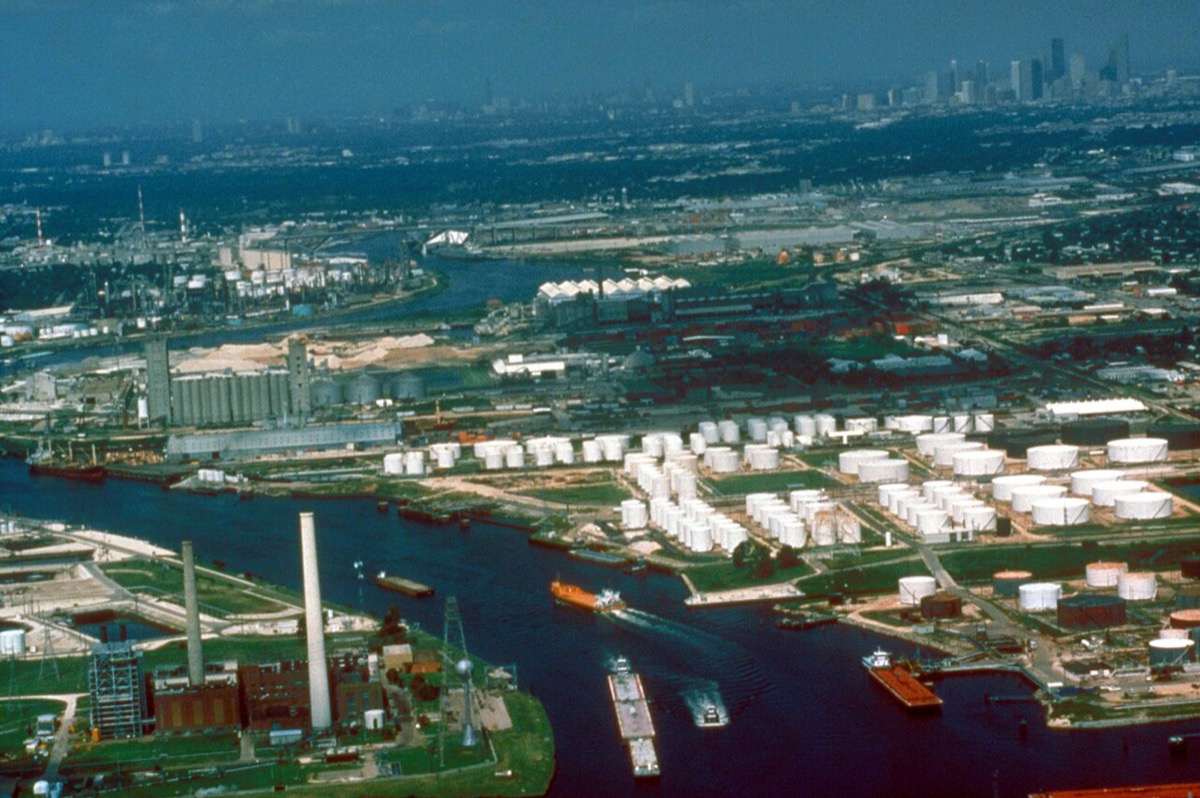
Announcement No. 18 and the seven rare earths you now need a licence for
The MOFCOM action on 4 April is the slower-burning problem. Announcement No. 18 placed export-licence controls on samarium, gadolinium, terbium, dysprosium, lutetium, scandium and yttrium, together with their oxides, alloys, mixtures and certain magnets. The controls are not outright bans. They require a dual-use export licence issued through MOFCOM with input from the Ministry of State Security and, for military end-uses, a denial posture by default.
For a chemicals trader the direct hit is narrow. You are probably not importing terbium oxide in bulk. The indirect hit is wide. Specialty catalysts used in petrochemical cracking, fluid catalytic cracking additives, automotive catalyst washcoats, optical glass polishing compounds, and certain pigment and phosphor systems all embed trace rare earth content. Your suppliers in Shandong, Jiangsu and Zhejiang are already getting letters from their upstream requesting end-use statements that would have been unheard of six weeks ago.
The licence lead time is the question. Industry chatter in the first ten days of the regime is that routine civilian-end-use applications are taking 45 to 60 days. Anything ambiguous is taking longer. That is enough to disrupt a Q2 production run at Wanhua or Sinopec Jinling that depends on a rare-earth-containing catalyst refresh. Expect some of your April and May offers to carry a “subject to raw material availability” clause that did not appear in February. Push for written delivery commitments where you can.
The PMI tell at 49.0 and what it says about supplier behaviour
The April flash PMI at 49.0 is the first print below the expansion line since October. New export orders subcomponent dropped sharper still. For an Australian buyer that reads two ways. First, Chinese producers are going to discount harder on non-US destinations to keep utilisation up. If you are willing to ship direct to Melbourne rather than via a US leg, you have more negotiating room than you did in February, particularly on commodity chemicals out of the independent producers.
Second, tier-two and tier-three suppliers in Jiangsu and Hebei will start to wobble on working capital in May and June. A 34 per cent reciprocal Chinese counter-tariff on US imports plus a collapse in US-bound orders shrinks the cash-conversion cycle for anyone who was running thin. Tighten your supplier-risk review. Ask for updated financial statements and cross-check your Dun and Bradstreet or local equivalent files before you place deposits on new orders. SGS and Bureau Veritas can also run supplier-factory audits inside two weeks if you get the briefs in this month.

Five moves before 30 April
One. Stop every Chinese-origin PO that has not already sailed and model it two ways. The first model assumes the 145 per cent stack holds through discharge. The second assumes a partial climbdown inside 60 days. If the first model breaks your margin, pause the order and call the supplier to renegotiate FOB. You will not be the first customer on their line this week asking for that conversation.
Two. Split any US-destination cargo into two legs where it makes sense. Cargo destined for US customers stays exposed. Cargo destined for Melbourne, Auckland, Kuala Lumpur or Singapore does not need to touch a US port, and you remove one layer of risk and one layer of cost. CMA CGM, MSC and COSCO all quote direct Ningbo-Port of Melbourne and Qingdao-Melbourne services.
Three. Re-open every tariff pass-through clause in your customer contracts this month. EO 14257, EO 14259 and EO 14266 together give you the clearest documented basis for a change-in-law notice that most contracts recognise. Cite all three EO numbers and the CBP rate effective dates in the notice. Your legal team should have the template drafted by the end of this week.
Four. Audit your rare-earth catalyst and pigment exposure. Ask every Chinese supplier whose product contains any of the seven named elements to provide a written statement of licence position and expected delivery reliability for Q2 and Q3. Where the answer is vague, start qualifying an alternative source in Korea, Japan, or from Dow, BASF or LyondellBasell in the Gulf. Qualification is slow. Start this month.
Five. Rebuild your cash-flow model for the next 120 days. A 145 per cent duty rate on a standard FEU can tie up thirty to sixty thousand US dollars of additional duty cash per container on the CBP single-entry bond basis. If you are not already on a continuous bond and periodic monthly statement with your broker, switch before your next five entries. The working capital saving alone covers the broker fees several times over.
The 145 per cent number is probably not the permanent state of play. Treaty back-channels are already running, and there will almost certainly be a partial climbdown before the end of the quarter. That does not mean you can sit still. The cargo that enters in the next four weeks pays the current stack regardless of what happens at a negotiating table. This fortnight is about protecting the P&L you already have, and setting up the option to move quickly when the number changes.