On Friday 15 December Maersk announced it was pausing all container vessel transits through the Bab el-Mandeb strait. By Monday 18 December the pause was formal and global. Hapag-Lloyd followed the same day. CMA CGM confirmed its suspension on 16 December and widened it on 22 December. MSC, the single biggest carrier in the world by TEU, stopped sending ships through the Red Sea after the Galaxy Leader and Number 9 attacks and made it policy on 16 December.
Inside one business week, the four carriers that move roughly half of global containerised trade have closed the Suez shortcut for you. If you’re importing chemicals out of Shanghai Yangshan, Ningbo-Zhoushan, or Qingdao into Rotterdam, Antwerp, Felixstowe, or onward to the US East Coast via transhipment, your cargo is now going the long way. Around Africa. Past the Cape of Good Hope. Through some of the nastiest open-ocean weather on the planet in the southern summer.
This isn’t a blip. The Houthi Ansar Allah movement has launched more than 100 drone and missile strikes on merchant shipping since 19 November, when they seized the Galaxy Leader. The US-led Operation Prosperity Guardian was announced 18 December and it will take weeks before anyone trusts the corridor again. You need a plan for Q1 2024 now, not when your first delayed container arrives in February and your downstream customer rings you asking where the tonnes are.
What Actually Changed Between 15 and 22 December
Bab el-Mandeb is the 20-mile choke point at the southern end of the Red Sea, between Yemen and Djibouti. Roughly 12% of global trade and around 30% of global container volume normally passes through it en route to the Suez Canal. That share is now sitting near zero for the big alliances.
Here’s the week as it unfolded:
| Date | Carrier | Action |
|---|---|---|
| 15 Dec | Maersk | Initial pause announced after attack on Maersk Gibraltar |
| 16 Dec | CMA CGM | All vessels instructed to pause Red Sea transits |
| 16 Dec | MSC | Suspension confirmed after Number 9 and Palatium III strikes |
| 18 Dec | Hapag-Lloyd | Formal suspension of Red Sea routing |
| 18 Dec | US DoD | Operation Prosperity Guardian announced |
| 19 Dec | BP, Equinor, Evergreen | Energy majors and Evergreen join the pause |
| 22 Dec | CMA CGM | Widens suspension to cover all vessels and sets Cape routing |
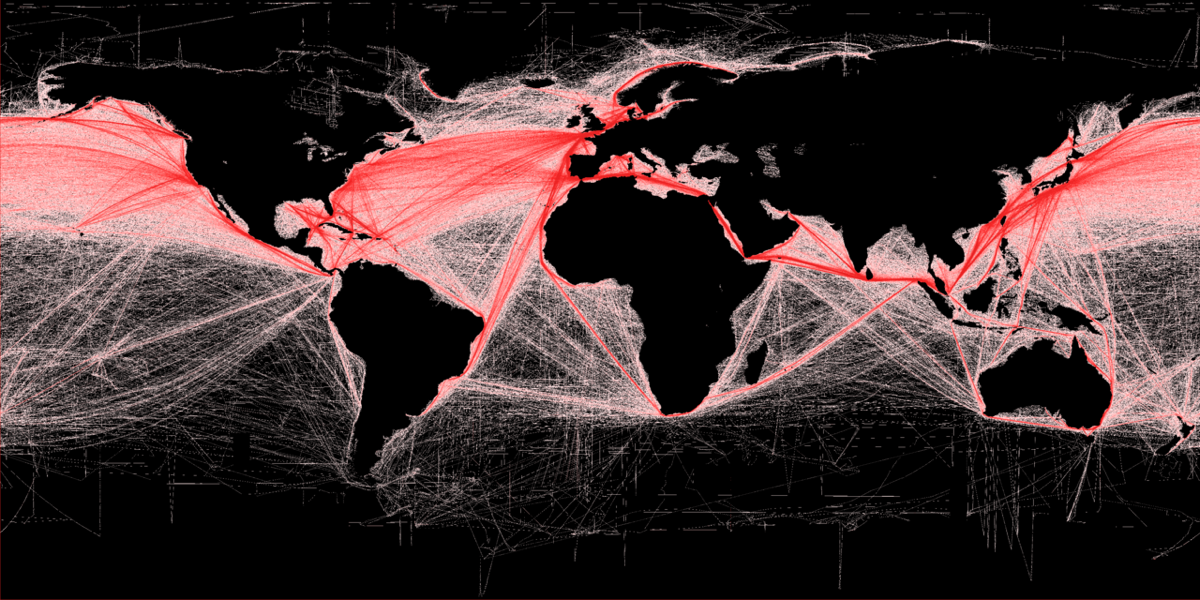
If you check MarineTraffic right now you can watch it in real time. The Red Sea looks empty. The route round the Cape is lit up like a motorway.
For chemical importers this matters more than it does for general cargo, because your shipments are almost always IMDG classified. That means dangerous goods declarations, special stowage, and insurance terms that reference specific trade lanes. When the lane changes, your policy wording has to keep up.
The New Cape of Good Hope Routing, In Days and Dollars
The round-Africa alternative adds real time. Shanghai to Rotterdam via Suez runs roughly 26 to 28 days port-to-port. Via the Cape it’s 36 to 42 days depending on vessel speed and whether the carrier slows to save bunker fuel or pushes to catch up the schedule. The additional fuel burn at 18 to 20 knots is substantial, and that’s before you add the South Atlantic weather window.
For an Asia to US East Coast service routed through Suez, you were looking at roughly 32 to 35 days. Via the Cape you’re now at 46 to 53 days. That’s a full two extra weeks on your cash conversion cycle. If you’re financing 40-foot containers of specialty chemicals at a landed cost of US$60,000 to US$120,000 each, that extra fortnight is real money sitting on a ship.
The freight rate effect has been immediate. Drewry’s World Container Index was sitting around US$1,500 per FEU in mid-November. The spot market started reacting the minute Maersk blinked. GRIs and peak-season surcharges have landed already. Here is what we’re seeing quoted out of Shanghai this week:
| Lane | Pre-crisis FAK (Nov) | Post-suspension spot (late Dec) | Delta per FEU |
|---|---|---|---|
| Shanghai to Rotterdam | US$1,400 | US$2,600 to US$3,200 | +US$1,200 to US$1,800 |
| Shanghai to Felixstowe | US$1,450 | US$2,700 to US$3,300 | +US$1,250 to US$1,850 |
| Shanghai to New York (via Cape) | US$2,400 | US$3,600 to US$4,400 | +US$1,200 to US$2,000 |
| Shanghai to Houston | US$2,300 | US$3,400 to US$4,200 | +US$1,100 to US$1,900 |
On top of that, most carriers have filed Contingency Adjustment Charges or Transit Disruption Surcharges of US$500 to US$700 per FEU for January sailings. MSC announced an Emergency Operating Cost Surcharge. Hapag-Lloyd published a Suez Canal / Cape of Good Hope Surcharge. Read the fine print. Some apply from Bill of Lading date, some from vessel ATD, some from gate-in.
IMDG Cargo, War Risk, and Why Your Insurance Broker Should Be On Speed Dial
Here’s the part that hits chemical importers harder than any other category. Your cargo is classified under the International Maritime Dangerous Goods Code. Class 3 flammable liquids, Class 8 corrosives, Class 6.1 toxic substances, Class 9 miscellaneous including lithium battery precursors, these all attract underwriting conditions that are sensitive to war-risk zones.
Lloyd’s Joint War Committee added the southern Red Sea and the Gulf of Aden to its listed areas on 11 December. That listing is what your marine cargo policy looks at when deciding whether a seven-day war-risk notice is in play. Some underwriters are quoting additional war-risk premiums on IMDG cargo transiting the Red Sea at 0.5% to 0.7% of cargo value, where previously it was 0.05% or nil. On a US$2 million shipment of amine intermediates that’s US$10,000 to US$14,000 added to one container run.
The Cape of Good Hope routing isn’t a war-risk area. That’s the good news. The tricky bit is that many existing policies have warehouse-to-warehouse clauses that assume a specific routing via Suez. When you change the route you want a written endorsement confirming that the insurer accepts the Cape passage and that there’s no deductible or sub-limit triggered by the variation. Don’t rely on a broker’s email. Get the endorsement.
Three questions to put to your broker this week:
- Is the Cape of Good Hope routing explicitly covered under my existing policy wording, and can you issue a notation on the certificate of insurance?
- What is my current war-risk premium rate on Class 3 and Class 8 cargo, and what triggers a rate review?
- If my carrier changes routing mid-voyage, does my policy follow the cargo or lapse at the point of deviation?
If any answer is vague, get it in writing before your next sailing.
Landed Cost Worked Example, 1 FEU of Specialty Chemical from Shanghai to Houston
Let’s work through a real example. You’re bringing in 20 tonnes of a Class 8 corrosive intermediate, CAS declared, HS 2915.90, in a 40-foot high-cube with proper IMDG placarding. FOB price out of Shanghai is US$82,000.
| Cost line | Pre-crisis (Nov 2023) | Post-suspension (late Dec 2023) |
|---|---|---|
| FOB Shanghai | US$82,000 | US$82,000 |
| Ocean freight FEU | US$2,300 | US$3,800 |
| Cape of Good Hope surcharge | US$0 | US$600 |
| Bunker adjustment delta | Included | US$180 |
| IMDG declaration and handling | US$350 | US$350 |
| Marine cargo insurance (0.15%) | US$125 | US$125 |
| War-risk endorsement (nil or 0.05%) | US$40 | US$600 |
| US customs entry and HMF | US$310 | US$310 |
| Drayage Houston | US$520 | US$520 |
| Finance cost of extended transit (14 extra days at 8%) | US$0 | US$252 |
| Total landed | US$85,645 | US$88,735 |
That’s roughly US$3,090 per FEU in added cost, or about 3.8% of the FOB value, attributable directly to the Red Sea event. If your margin on that material is 12% to 15%, you’ve just lost a quarter to a third of it unless you pass the cost through or renegotiate with your buyer.
Multiply across a typical mid-size chemical importer running 200 to 400 FEU a year out of China and you’re looking at US$620,000 to US$1.2 million of unplanned landed cost hitting Q1 2024 P&L.
What Chinese Factories Are Saying About Feb and March Shipments
We’ve been on the phone with producers in Jiangsu, Shandong, and Zhejiang this week. Three patterns are emerging:
Wanhua Chemical and its MDI and TDI buyers are already talking about allocation rules for February loadings. Tier-one customers with long-term contracts get priority. Spot buyers and smaller importers are being told to expect 3 to 5 week booking lead times with carriers, up from the usual 7 to 10 days.
Sinopec distributors handling solvent and monomer chemistries are quoting ex-works for February in preference to FOB. They don’t want the routing risk on their books. That transfers the headache to you but it also means your freight forwarder needs to be on their game. If you’re not already working with a forwarder who has NVOCC space allocations out of Ningbo and Shanghai, find one this month.
Smaller specialty producers, particularly those servicing coatings, adhesives, and textile finishing, are recommending that customers bring forward their Chinese New Year pre-build. Factories in Guangdong typically wind down around 7 February ahead of the holiday on 10 February. If you want material on the water before the combined Red Sea plus CNY compound hit arrives, your purchase orders need to be placed and confirmed before mid-January.
What To Do In The Next Ten Working Days
Stop looking at December transit times as representative. They aren’t. Anything booked after 15 December is going around the Cape, and your 2024 budget model needs to reflect that from day one.
Contact every carrier you have a 2024 contract with and ask three specific questions: what is the current Cape routing surcharge, what is the expected transit time from your origin port to your destination port, and is there any allocation restriction on IMDG cargo for January and February sailings. Get written answers.
Call your marine insurance broker and request a written endorsement confirming Cape of Good Hope routing coverage, war-risk premium rates for your specific IMDG classes, and the deviation clause treatment if a carrier reroutes mid-voyage.
Review your sales contracts with downstream customers. If you’ve quoted fixed landed prices for Q1 delivery, you need to assess whether your force majeure and change-in-circumstances clauses cover carrier rerouting events. This is not a one-week outage. Most forecasters have the Red Sea closure running through Q1 2024 at minimum.
Bring forward your Chinese New Year pre-build. Orders placed by 10 January have a fighting chance of loading before the combined Red Sea and CNY effect pushes your lead times to 9 or 10 weeks. Orders placed after 20 January are likely to be arriving into US East Coast ports in April, not February.
Finally, model three scenarios for Q1: Red Sea reopens in February, Red Sea reopens in April, Red Sea remains closed through June. Work out your cash requirements, your customer communications, and your alternative sourcing options for each. If you haven’t done scenario planning since the Ever Given grounded in the Suez Canal in March 2021, now is the week to dust it off.
Sourzi is fielding routing and landed cost queries from Australian importers every day this week. If you need a second pair of eyes on your Q1 plan, or if you want us to benchmark your carrier quotes against what the market is actually transacting at, get in touch before Christmas. The quicker you move, the more options you’ll have.