The Panama Canal Authority posted a quiet but consequential bulletin on 11 July 2025. Gatun Lake was sitting at 86.6 feet above mean sea level, the operational target is back to full 50-foot tropical fresh water draft for Neopanamax transits, and the FY2025 transit count (Oct 2024 to Sep 2025, tracking to close) was on pace to finish at 13,404, up 19.3% from the drought-battered FY2024 low of 11,237. Berthing times at Puerto Colón on the Atlantic approach have dropped 47% year-on-year.
For US East Coast chemical importers who’ve been routing around the Cape of Good Hope, stacking demurrage at the Panama locks, or paying the transcontinental rail premium on trans-Pacific discharge at Los Angeles, the all-clear changes your Q4 2025 and Q1 2026 routing decision. It also quietly resets the negotiation position with your carrier on any all-water East Coast service.

The drought year in the rear-view mirror
Panama’s 2023 dry season ran into a dry wet season, and by October 2023 the Authority had cut daily transit slots from 36 to 24, then to 22, then to 18. Neopanamax lock usage was restricted to vessels accepting a 44-foot draft, which meant partially loaded departures for any container ship or tanker spec’d against the 50-foot max. Spot auction premiums for priority slots hit US$4 million on a single northbound transit in late November 2023. That’s a story every chemical importer reading this already lived through.
The 2024 hurricane and rainy seasons didn’t fully reset Gatun, but the 2025 wet season has. The 86.6 ft reading on 11 July is within 1.5 feet of the long-run average for that calendar date. More importantly, the water management projections from ACP’s hydrology team are indicating the dry season ahead (late December 2025 to April 2026) should run with 36 slots per day restored through at least February.
| Metric | FY2023 baseline | FY2024 drought | FY2025 recovery | Δ vs. drought |
|---|---|---|---|---|
| Total transits | 14,080 | 11,237 | 13,404 (projected close) | +19.3% |
| Daily transit slots | 36 | 22 to 24 | 34 to 36 | +10 to 12 |
| Max draft (ft) | 50 | 44 | 50 | +6 ft |
| Gatun Lake (ft, July print) | 87.5 | 80.2 | 86.6 | +6.4 ft |
| Puerto Colón berth wait (hours) | 14.5 | 42.8 | 22.7 | -47% |
| LNG transits | 702 | 188 | 189 | -73% vs FY2023 |
| Neopanamax bookings 100% filled | Yes | No | Yes | Restored |
Note the LNG line. LNG carriers remain 73% below the FY2023 throughput, because during the drought Atlantic basin LNG exporters rerouted cargo through Suez to Asian buyers and those multi-year charters haven’t unwound. That’s a segment-specific story rather than a canal problem.
The East Coast routing matrix: four options, priced
The chemical importer landing cargo in Houston, Savannah, Charleston, or New York/New Jersey has four practical routing options from Shanghai, Ningbo, or Qingdao. Each one has a different cost stack in the July 2025 environment.
Option 1: Trans-Pacific to LA/LB, then rail east
Ship to LA or Long Beach on the 14-day trans-Pacific service, discharge, dray to intermodal ramp, and rail east to Chicago, Memphis, or Dallas for final distribution. Drewry WCI Shanghai-LA printed $4,716 per FEU on 17 July 2025. Rail adds $2,800 to $3,600 per FEU to Houston and $3,100 to $4,200 per FEU to the NY/NJ hinterland.
Option 2: All-water Panama to Savannah or NY/NJ
Ship to Savannah, Charleston, or NY/NJ via the Panama Canal on a 28 to 33-day all-water service. Shanghai-NY via Panama printed $6,320 per FEU on 17 July. No rail leg needed.
Option 3: All-water via Suez and Cape
Ship to Savannah or NY/NJ via the Cape of Good Hope (Suez is functionally closed to container services post the 6 July Magic Seas sinking). Transit time 42 to 48 days. Rate around $6,800 per FEU.
Option 4: Trans-Pacific to Houston direct
Ship to Houston direct via Panama on selected all-water services. Houston has specific capabilities for liquid chemical tanker discharge at the Ship Channel. Rate around $6,420 per FEU for container, higher for parcel chemical.
| Routing option | Transit days | All-in $/FEU | $/day-cost | Best for |
|---|---|---|---|---|
| Trans-Pac to LA + rail to NY | 14 + 6 | 4,716 + 3,600 = 8,316 | 416 | Mid-Atlantic DC networks |
| All-water Panama to Savannah | 28 | 6,180 | 221 | Southeast distribution |
| All-water Panama to NY/NJ | 32 | 6,320 | 198 | Northeast, no rail contract |
| Cape to NY/NJ | 46 | 6,800 | 148 | Extended lead-time tolerant |
| Panama to Houston direct | 30 | 6,420 | 214 | Gulf Coast liquid chemical |
The Panama-direct all-water rate looks more expensive at first glance but it’s cheaper on a per-day basis and it removes the West Coast rail contract from your cost equation, along with the dwell-time risk at LA/LB which is currently running 4 to 7 days on peak weeks.
What the all-clear actually changes
Through Q1 2025, most chemical importers had defaulted to trans-Pacific plus rail because Panama’s slot auction premiums and draft restrictions made the all-water service unreliable. Carriers couldn’t commit to sailing schedules because they couldn’t guarantee booked transits. NY/NJ arrival windows were being missed by 5 to 9 days routinely, which broke JIT delivery to downstream customers.
The July 2025 all-clear means carriers can reinstate advertised Panama all-water schedules with reliability in the 85 to 90% on-time range, which is comparable to trans-Pacific LA service. That reliability gain is what triggers the routing switch, not the raw rate.
MSC’s Santana service and Maersk’s AE-17 rotation were both operating at reduced frequency through Q1 and Q2, with blank sailings tied to draft restrictions. Both have announced returned weekly cadence effective late August. CMA CGM’s FAL service has already resumed normal rotation. ONE and Hapag-Lloyd on the joint Asia-East Coast strings are restoring slot availability.
For a chemical importer running 300 to 800 FEU a year into the East Coast, the switch from Option 1 (trans-Pac plus rail) to Option 2 or 3 (all-water Panama) saves $1,800 to $2,400 per FEU, reduces the dray and intermodal handoff chain which reduces damage claims for drummed and IBC cargo, and gives you a more predictable transit for contract delivery windows.
The chemical tanker specific read
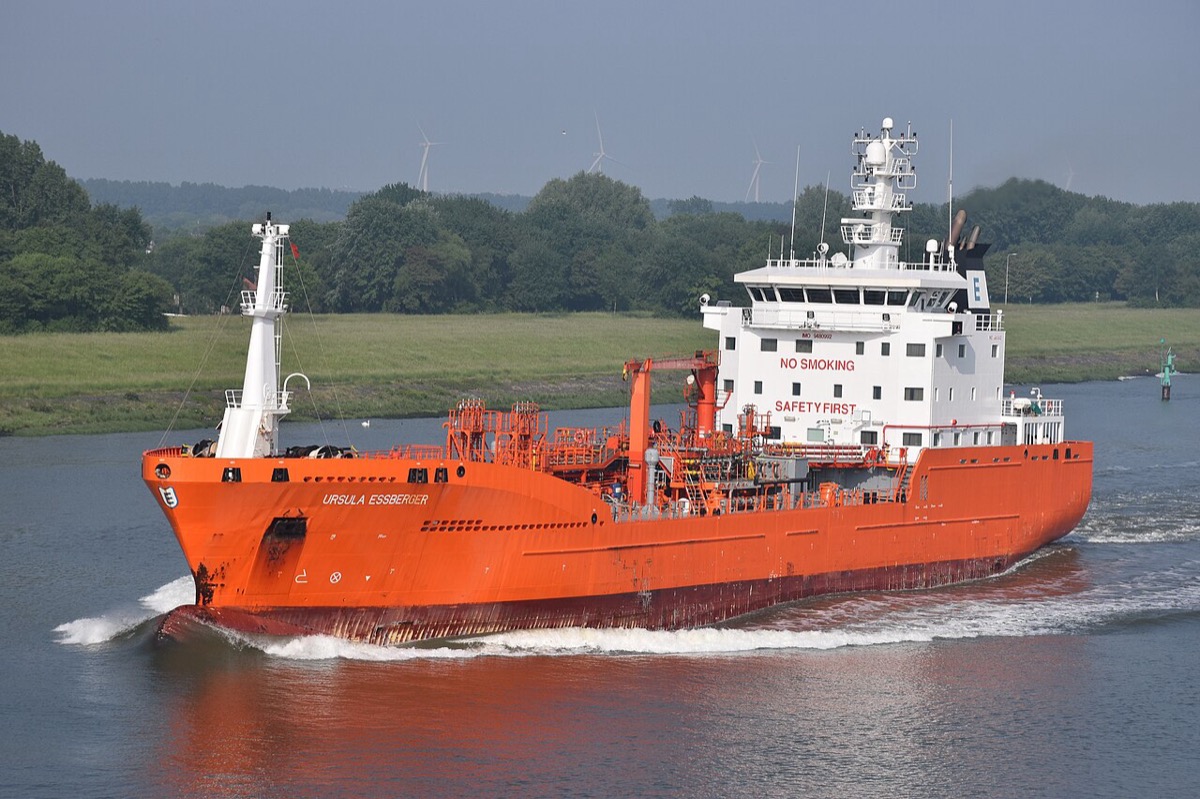
Parcel-sized liquid chemical moves on Stolt, MOL Chemical Tankers, and Odfjell services have their own Panama calculation. The 50-foot draft restoration matters disproportionately for these ships because they’re frequently loaded at or near max draft. During the drought, chemical tankers transiting Panama at 44-foot draft left 1,500 to 2,200 MT of cargo on the table per voyage, which destroyed voyage economics and pushed operators toward Cape routing even for Gulf-destined parcels.
With the 50-foot draft restored, a 40,000-DWT chemical tanker can load to full capacity, transit Panama at max draft, and discharge at Houston Ship Channel, Baton Rouge, or New Orleans without leaving cargo behind. For the spot parcel market in methanol, glycols, and aromatics moving from North Asia to the US Gulf Coast, that’s a 10 to 14% reduction in voyage-level freight costs.
Houston and Baton Rouge berthing has also normalised. Through Q1 the backlog at Kinder Morgan and NuStar terminals was pushing chemical tanker wait times to 3 to 5 days on top of transit. July numbers show wait times back to 12 to 18 hours on normal traffic.
What to do with this
If you’re currently on trans-Pacific plus rail for East Coast distribution, get your 2026 bid package to include all-water Panama services as a parallel option. MSC, Maersk, CMA CGM, and Hapag-Lloyd will price aggressively on East Coast rotations now that reliability is restored, because they have extra capacity freed up by Cape routing not being enforced on the Panama-North America lane.
If you’re shipping parcel chemical to Gulf Coast and you’ve been on Cape routing, reset the bid to Panama-direct. The voyage time savings alone is worth 5 to 8% on freight and another 2 to 3% on working capital.
If your supplier is quoting CIF East Coast, ask for the routing to be specified on the contract. A CIF NY/NJ price based on Cape routing versus Panama routing can differ by $600 to $900 per FEU, and the supplier’s forwarder will default to whichever routing maximises their margin unless you lock it.
Review the Houston discharge option specifically for any liquid chemical where you have Gulf Coast customers. Drayage from Houston to downstream customers in Texas, Louisiana, Oklahoma, and Arkansas is materially cheaper than railing from LA, and Panama-direct to Houston just got reliable again.
The risk that hasn’t gone away
Panama’s water situation is structurally fragile. Climate patterns affecting Central America remain volatile, and the Authority’s reservoir management plan depends on a normal 2025-2026 rainy season to carry through Q1 2026 dry season at full slot capacity. If the wet season underperforms by 15% or more, slot restrictions return by February.
The ACP’s Rio Indio project, which would add a third water source to the canal system, is in engineering but not operational, and the earliest meaningful capacity addition is 2028. Until then, every drought year is a risk to the transit schedule.
For chemical importers, the practical hedge is not to go all-in on Panama routing. Keep 20 to 30% of your East Coast volume on trans-Pacific plus rail, or on Cape routing for truly extended lead-time tolerant cargo, as a capacity hedge. The rates are higher but the optionality is worth something if Gatun drops back below 82 feet in late Q1 2026.
The 2026 contract conversation
Trans-Pacific and Asia-East Coast service contract renewals for 2026 are negotiated between January and March. With the Panama all-clear confirmed and trans-Pacific capacity firming on the back of Red Sea-driven Cape routing on Asia-Europe, the carrier negotiation dynamic shifts. Carriers need your East Coast volume more than they need your West Coast volume right now, because East Coast services are the ones coming back from reduced frequency and they need to fill the restored slots.
Ask for a 2026 East Coast rate in the $5,600 to $6,000 per FEU range to Savannah and $5,900 to $6,300 to NY/NJ, with explicit draft commitment clauses that carry through Neopanamax lock access restrictions. If the carrier balks at the draft clause, find out why, because it tells you what they know about Panama water situation that you don’t.
The Panama all-clear is real. Use it.