Gatun Lake is three metres below where it should be. That single hydrological fact is now reshaping the economics of every chemical shipment that moves between the Gulf of Mexico, the US East Coast, and Asia. The Panama Canal Authority announced on 30 July 2023 that daily transits would drop from the standard 36 slots to 32 from 8 August, then step down to 31 on 1 September, and finally to 24 slots by 1 November. Draft limits were cut to 44 feet, down from the 50 feet that Neopanamax tankers routinely drew through the winter. The notice was administrative in tone, three pages of scheduling language and a polite reference to “prevailing hydrological conditions.” The reality on the water is queues above 130 vessels, wait times approaching three weeks, and a spot auction system that is quietly charging Neopanamax operators $2 million and upward to jump the line.
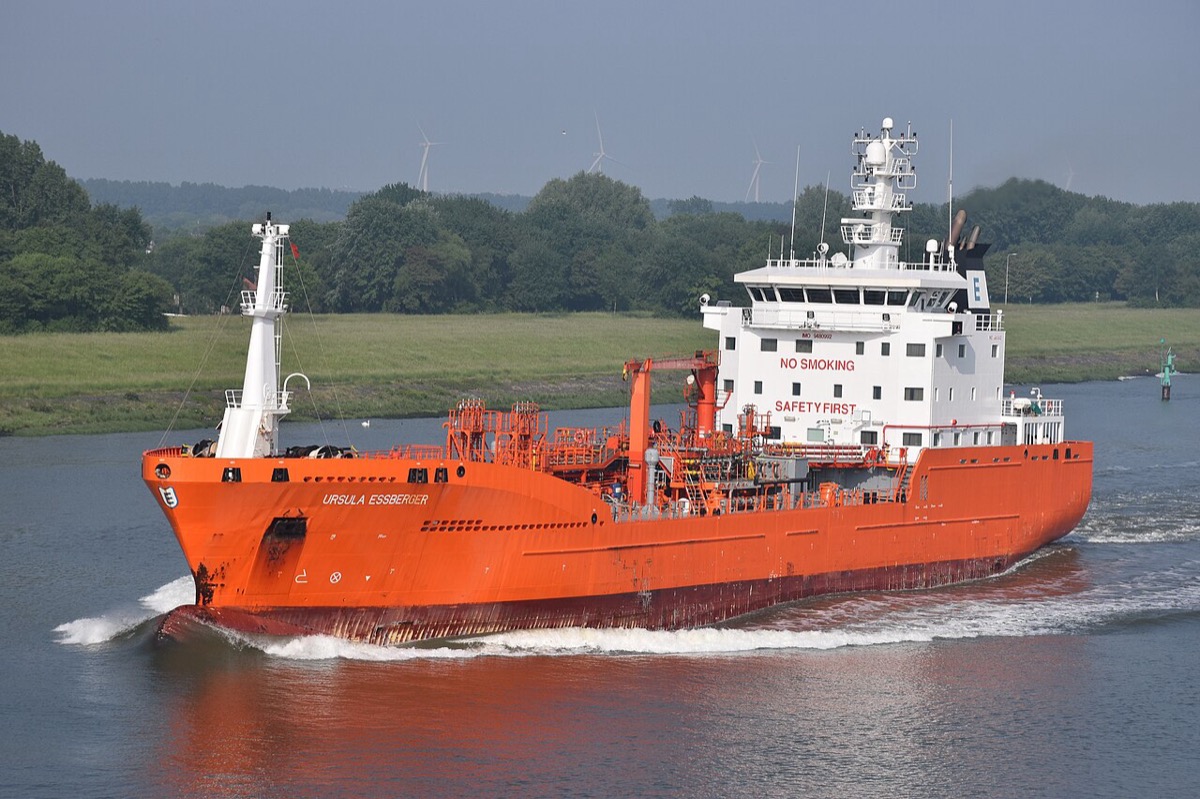
If your chemical importing operation moves anything from Houston to Ningbo, from Corpus Christi to Shanghai, from New Orleans to Qingdao, or the reverse, this is now a first-order problem. Roughly 14% of world seaborne trade by tonnage transits Panama. Chemical tankers, LPG carriers, clean product tankers, and dry bulk carriers make up a meaningful share of that flow. The draft restriction at 44 feet forces most Neopanamax chemical tankers to either leave 20 to 40% of their cargo on the dock, swap to a smaller vessel class, or reroute around the Cape of Good Hope or through the Suez Canal. Every one of those options costs real money.
Your 20 August or 12 September sailing that you booked three months ago on the assumption of a normal Panama transit is now either sitting in the Gulf anchorage near Cristobal, or being quietly rebooked by your forwarder onto a Suez routing at a freight rate you have not seen yet, or being lightened and split onto two vessels to fit the draft limit. None of those outcomes is what your customer ordered. Your Q4 and Q1 pricing assumptions need to be rebuilt around the canal reality, not around the October 2022 rate sheet.
What the ACP Notice Actually Says, and Why the Drought Caused It
The Autoridad del Canal de Panamá sits on the operational side of a very particular hydrology. Every lockage through the Miraflores or Gatun locks uses about 197 million litres of fresh water from Gatun Lake, which is fed exclusively by rainfall on the canal watershed. A dry rainy season, of the sort 2023 has delivered, means the lake drops. A lake at 79 feet of elevation runs the locks at full capacity. A lake at 76 feet, where it has been for most of July, forces either lower drafts, fewer lockages, or both. The current hydrological forecast runs through El Niño-driven dry conditions into the first quarter of 2024, with meaningful recovery unlikely before the next rainy season in May.
The administrative response is predictable in direction but unprecedented in scale. Daily transits cut from 36 to 32 to 31 to 24 across the next three months. Draft limit at 44 feet, which effectively caps Neopanamax vessel utilisation at 60 to 80% of nameplate capacity depending on cargo density. A revised booking-slot auction system where unbooked slots are offered to the highest bidder a day or two ahead. And a first-come, first-served queue for vessels that cannot or will not pay the auction premium, which is now running at 3 weeks for unbooked vessels.
For context, the last time Panama saw anything like this was the 2019 to 2020 drought when the ACP introduced temporary draft restrictions and fresh-water surcharges. Those measures were lifted by the middle of 2020. The 2023 restrictions are more severe, are coming at higher vessel traffic levels than 2019, and are forecast to last longer. The chemical shipping market has never operated under these conditions at this scale, which is why spot rates on affected lanes are moving in ways that break conventional freight models.
Which Chemical Flows Get Hit, and How Hard
Run the exposure map by product and lane.
| Lane | Typical Cargo | Vessel Class | Impact Severity |
|---|---|---|---|
| US Gulf to North Asia | Ethane, LPG, chemical tanker parcels of MEG and benzene | Neopanamax, VLGC | Very high, draft and queue both biting |
| US Gulf to Chile / West Coast Latam | Caustic soda, ammonia, specialty chemicals | Panamax and smaller | High on queue, moderate on draft |
| US East Coast to Asia | Petrochemical intermediates, clean products | Mix | High on queue |
| South America East Coast to US Gulf | Glycols from Brazil, fertiliser intermediates | Panamax | Moderate, counter-directional queue less congested |
| Europe to US West Coast | Specialty chemicals in containers | Container ships | Lower, container slots prioritised over bulk |
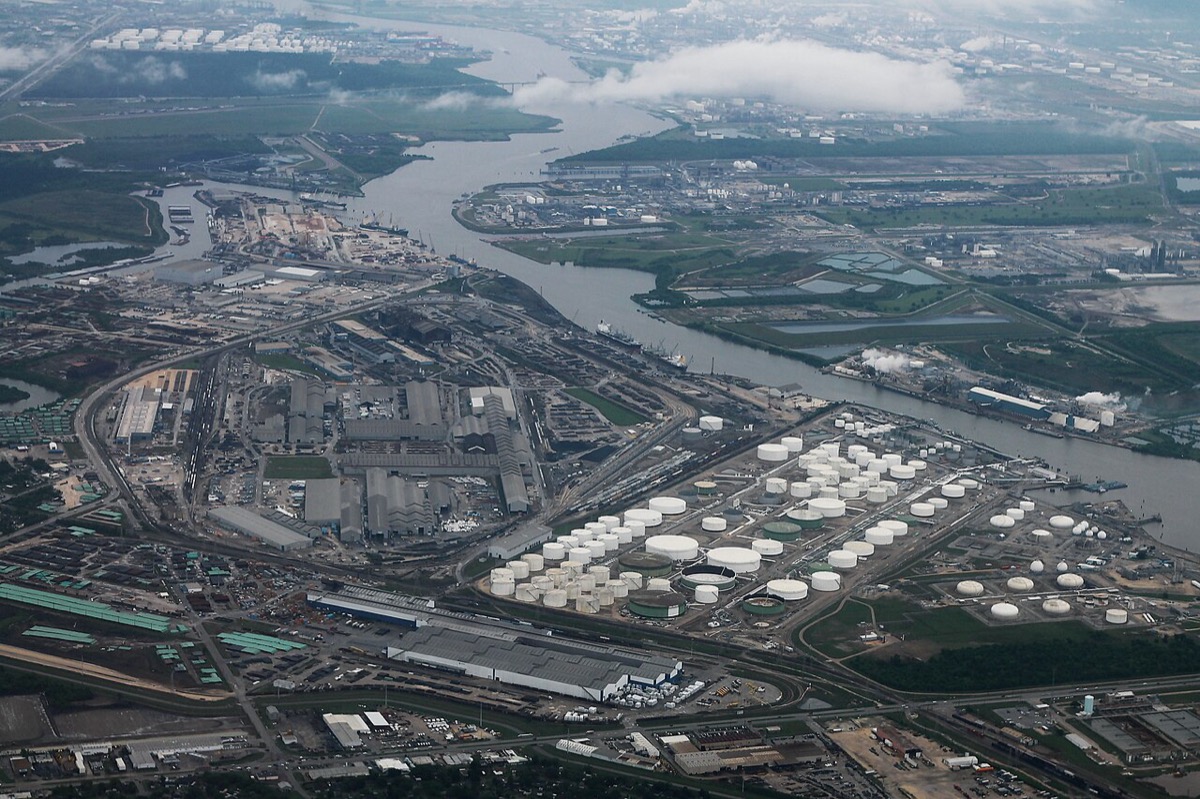
Ethane and LPG from US Gulf Coast terminals bound for Chinese petrochemical complexes is the most exposed flow. Wanhua, Satellite Petrochemical, and the other Chinese ethane crackers run on a delivered molecule from terminals in Texas and Louisiana, and the economic assumption underlying those contracts is Panama transit. Every extra day a Very Large Gas Carrier sits in the queue off Cristobal is several tens of thousands of dollars of charter cost, a significant contribution to terminal demurrage, and a delay that propagates into the Chinese cracker’s feedstock scheduling.
Chemical parcel tanker operators moving MEG, benzene, toluene, styrene, and similar intermediates on the Gulf-to-Asia route are rerouting half their voyages via the Cape of Good Hope. The Cape routing adds roughly 18 to 22 days of voyage time depending on origin and destination and adds $450,000 to $800,000 of additional voyage cost on a typical parcel tanker depending on bunker prices and vessel size. That cost has to land somewhere, and it is landing on spot parcel rates into Asia, up 40 to 55% against June quotations.
Caustic soda and ammonia cargoes on Gulf-to-West Coast Latam lanes are seeing queue-driven delays but not catastrophic rerouting because the alternatives, particularly around Cape Horn, are weather-constrained and commercially unattractive most of the year. Expect those flows to continue through Panama with slot auction costs and queue delays baked into spot pricing.
The Slot Auction System: How the New Economics Actually Work
The ACP’s slot auction is the piece most chemical procurement teams have not fully internalised. Here is how it works in practice today.
Each day, the ACP allocates scheduled slots to pre-booked vessels who reserved months in advance. Any slots unused by 1600 local time the day before transit become available in a short auction. Before the 2023 restrictions, auction slots went for a few tens of thousands of dollars. In early August 2023, a Neopanamax LPG carrier reportedly paid $2.4 million for a single jump-the-queue slot. Another paid $1.1 million. These are not anomalies. The auction clearing prices have settled into a range of roughly $500,000 to $3 million depending on vessel class, urgency, and day.
The commercial logic, from the shipowner’s perspective, is straightforward. A VLGC on charter at $90,000 per day would burn close to $1.9 million over a 21-day queue wait, before counting demurrage, terminal penalties at the load or discharge end, and any contractual penalty for late delivery. Paying $1 million to $2 million for a slot to save three weeks can pencil out. From the chemical importer’s perspective, whoever pays for that slot is going to pass the cost somewhere, and often that somewhere is you.
Your forwarder may or may not be transparent about slot auction exposure in your quotes. Ask explicitly. If your freight rate quote includes a line labelled canal surcharge, congestion surcharge, low water surcharge, or any variant thereof, get the carrier to decompose it between the ACP tariff proper, the ACP freshwater surcharge, the slot auction premium, and the carrier’s own margin. You will find that the line items move week to week and that the slot auction component is where most of the movement is.
Landed Cost Arithmetic: A Parcel Tanker Shipment of MEG From Texas to Ningbo
Take a representative chemical flow. 5,000 MT of ethylene glycol from a Houston loading terminal to Ningbo-Zhoushan, shipped on a stainless-steel coated chemical tanker. Pricing built in May 2023 for August lifting, and pricing as actually quoted in August 2023 under the Panama constraints.
May 2023 quote for August lifting, Panama routing, normal conditions.
FOB Houston, 5,000 MT at $615 per MT = $3,075,000 Ocean freight, Panama routing, parcel tanker at roughly $65 per MT = $325,000 Marine insurance, 0.3% of CIF = $10,200 Panama Canal tolls, normal regime, approximately = $180,000 Bunker adjustment factor, included above Discharge port costs Ningbo = $18,000 Chinese customs entry and duty, applicable MFN rate approx 5.5% on CIF chemical basis = $188,732 Chinese VAT 13% on dutiable value = approx $470,820 Landed total into Ningbo warehouse = $4,267,752 Per MT landed = $853.55
August 2023 actual quote, Cape of Good Hope routing forced by Panama constraints.
FOB Houston, 5,000 MT at $615 per MT = $3,075,000 Ocean freight, Cape routing, parcel tanker at approximately $98 per MT = $490,000 Marine insurance, 0.3% of CIF = $10,695 Cape routing additional bunker and time charter cost, already in freight above Panama Canal tolls, not applicable = $0 Discharge port costs Ningbo = $18,000 Chinese customs duty on higher CIF = approx $196,415 Chinese VAT 13% on dutiable value = approx $489,792 Landed total = $4,279,902 Per MT landed = $855.98
Alternatively, August 2023 quote, Panama routing accepted, with slot auction premium and queue demurrage.
FOB Houston, 5,000 MT at $615 per MT = $3,075,000 Ocean freight, Panama routing at approximately $72 per MT = $360,000 Slot auction allocation, pro-rated across cargo = $45,000 Queue demurrage, 9 days at $3,200 per day pro-rated = $28,800 Marine insurance, 0.3% of CIF = $10,549 Panama tolls, elevated freshwater surcharge = $230,000 Discharge port costs Ningbo = $18,000 Chinese duty on CIF = approx $193,890 Chinese VAT = approx $483,482 Landed total = $4,444,721 Per MT landed = $888.94
The read on this arithmetic is instructive. Cape routing, which adds 18 to 22 days of voyage, actually lands on a very similar per-MT number to Panama routing with queue demurrage and slot auction premium, because Panama fees and delays have risen so sharply that the all-in costs have converged. Your carrier’s choice of routing depends on factors you cannot see, including their existing vessel positioning, slot auction exposure, and bunker strategy. The per-MT delta against the May quote, however, is about $35 per MT in either case, which is roughly $175,000 on a 5,000 MT parcel. Your customer contracts for August, September, and October deliveries either pass this through or eat it on margin. Which one is a function of how well your contracts are written.
Rerouting Options and Their Real Costs
Beyond Cape versus Panama, chemical shippers are experimenting with several routings. Here is the practical read on each.
Suez Canal is the standard alternative for Atlantic-to-Asia parcel tankers that do not transit Panama. Adds 10 to 14 days against Panama on Gulf-to-Asia voyages. Tolls are a separate cost centre but are not currently running drought-constrained. Available and working, but adds roughly 14 to 22% against Panama freight on clean chemical parcels.
Cape of Good Hope is the longer alternative, adding 18 to 24 days against Panama. No toll cost but substantial bunker and charter cost increase. Piracy and weather risk are factors but manageable on well-insured routes. Freight rate premium in the 50 to 70% range against Panama routing.
Smaller-vessel Panama transit at 44 foot draft works for parcel tankers and product tankers in the 30,000 to 50,000 DWT range that load light enough to meet the draft. Your cargo may need to be split across two smaller vessels instead of one Neopanamax, which means two sets of port costs, two parcel charter premiums, and more complex scheduling. The all-in cost is typically 25 to 45% above a single Neopanamax voyage.
Cross-panama pipeline and rail options exist for certain liquid products through the Trans-Panama pipeline and for dry goods on limited rail infrastructure. Neither is a real option for chemical tanker volumes at the scale most importers run.
Transshipment through US West Coast with intermodal to East Coast buyers, or equivalent transshipment in Panama at Balboa and Cristobal terminals, is being quietly explored by several chemical majors. The economics work for specific high-value, low-volume specialty chemicals but not for commodity petrochemicals.
What to Do in Your Contracts, Your Scheduling, and Your Pricing
Five concrete steps for any chemical importer or exporter with Panama exposure over the next six months.
First, open your last three months of freight invoices and reconcile the canal-related line items against a cleanly itemised quote from your forwarder. You should be able to distinguish ACP toll, freshwater surcharge, slot auction premium, queue demurrage, and any carrier margin. If you can’t, your forwarder owes you a better invoice. Bring Drewry’s benchmark rate series to the conversation as a reference point.
Second, rewrite your purchase and sale contracts to include a canal contingency clause. The language should do two things. It should allow a defined freight cost adjustment for routings forced by ACP restrictions, documented with a specific Federal Register or ACP advisory reference. It should also allocate responsibility for delay-related penalties, demurrage, and customer-facing late delivery charges. A simple clause that says force majeure covers ACP restrictions is not enough. You need specific cost-allocation language.
Third, rebalance your scheduling with a 14-day buffer for any Gulf-to-Asia or Asia-to-Gulf shipment that relies on Panama transit through March 2024. That buffer costs you inventory holding, warehouse space, and working capital. It is cheaper than customer contract penalties and demurrage charges.
Fourth, price your Q4 2023 and Q1 2024 customer contracts with an explicit canal cost element, broken out on the quote. Whether the buyer agrees to pay it or not, the transparency protects you in the negotiation. Buyers who understand the arithmetic will generally accept the pass-through. Buyers who do not will find it easier to understand when it is itemised.
Fifth, get your carrier and forwarder on the record about their routing strategy for your cargoes over the coming 90 days. Some carriers have restructured their Gulf-Asia services onto Suez routing with longer round-trip times. Others are maintaining Panama transit with slot auction exposure. Either choice can work for your cargo, but you need to know which one applies to each of your bookings and what it implies for arrival dates.
The Panama water situation will ease, but not on any timeline that matters for your current pricing and customer commitments. ACP’s own guidance suggests draft restrictions through at least February 2024, and market analysts are modelling restrictions into the second quarter. Build your operating plan around nine months of constraints, not three.
Anyone who tells you the canal is back to normal by Christmas is selling you something. Price and plan for the long version.