Nancy Pelosi’s plane touched down in Taipei on the evening of 2 August 2022. By the morning of 4 August, the People’s Liberation Army had published coordinates for six live-fire exercise zones that effectively surrounded Taiwan, and ballistic missiles were arcing over the island. Taiwan’s Ministry of National Defence counted 11 Dongfeng-series missiles landing in waters north, south, and east of Taiwan before the day was out. By 10 August, the drills had formally wound down, but the shipping map had already been redrawn.
If you import anything out of China, Korea, Japan, or Taiwan itself, this mattered to you within hours. The Taiwan Strait carries roughly half the world’s active container tonnage at any given moment and every major ULCS lane from North Asia either transits it or diverts around it. Kaohsiung, Taiwan’s largest port and a global top-20 chemical handling facility, suddenly had vessels re-routing to avoid the southern exclusion zones. Shipping lines dusted off east-of-Taiwan routing plans, carriers’ war-risk committees met in emergency session, and underwriters started repricing.
The reason you need to sit up and pay attention, even with the drills over, is that this was a dress rehearsal. Nothing about the underlying dispute got resolved. Your chemical supply chain just absorbed a four-day near-miss and the signal sent to suppliers, insurers, and your own board is permanent.

Why Half the World’s Container Ships Transit One Narrow Strip of Water
Look at a Marine Traffic heat map for a normal week in July 2022. The Taiwan Strait, about 180 kilometres wide at its narrowest, lights up like an airport runway. That is not decorative. Between Shanghai Yangshan, Ningbo-Zhoushan, Qingdao, Xiamen, Hong Kong, Shenzhen-Yantian, and the Taiwan ports themselves, you’re looking at the densest concentration of container export origin anywhere on earth. Vessels heading from Northeast Asia to Southeast Asia, to the Indian Ocean, to Europe via Suez, or to Australia, almost all funnel through this channel.
The International Chamber of Shipping estimated that roughly 48% of the global container fleet in active service transited the Taiwan Strait at least once in the first half of 2022. For crude and LNG tankers, the figure is lower because those often take deeper-water routes east of Taiwan anyway, but for the chemical parcel tanker and the container lines moving your drums, IBCs, and ISO tanks of Chinese-origin product, this is the default lane.
The PLA’s six exercise zones sat north, northeast, east, southeast, southwest, and west of Taiwan. Three of them overlapped directly with Taiwan’s 12 nautical mile territorial waters, which was the part Beijing wanted the world to notice. But for shipping, the operational issue was different: the southwest zone sat squarely across the approach to Kaohsiung, and the northern zones straddled the main traffic separation scheme used by north-south container traffic between Shanghai and Hong Kong.
What Actually Happened to Kaohsiung and the Chemical Tanker Lanes
Kaohsiung handles around 9.8 million TEU a year in containers and is a major petrochemical port in its own right, sitting alongside the CPC Corporation and Formosa Plastics complexes at Mailiao and Kaohsiung itself. When the PLA zones went live, Kaohsiung didn’t close, but it effectively lost normal approach lanes from the southwest for several days.
Vessels inbound from Singapore, the Malacca Strait, and the Philippines, which is where most of the crude feedstock, aromatic solvents, and certain specialty chemical parcels originate, had to add 12 to 36 hours of steaming to loop east of Taiwan and approach from the south or east. Formosa Plastics confirmed to customers in private communication that at least two chemical parcel tankers bound for its Mailiao complex diverted east of Taiwan on 4 and 5 August. Evergreen, Yang Ming, and Wan Hai, the three Taiwan-flagged container lines, issued internal routing bulletins advising masters to avoid declared zones without specifically suspending service.
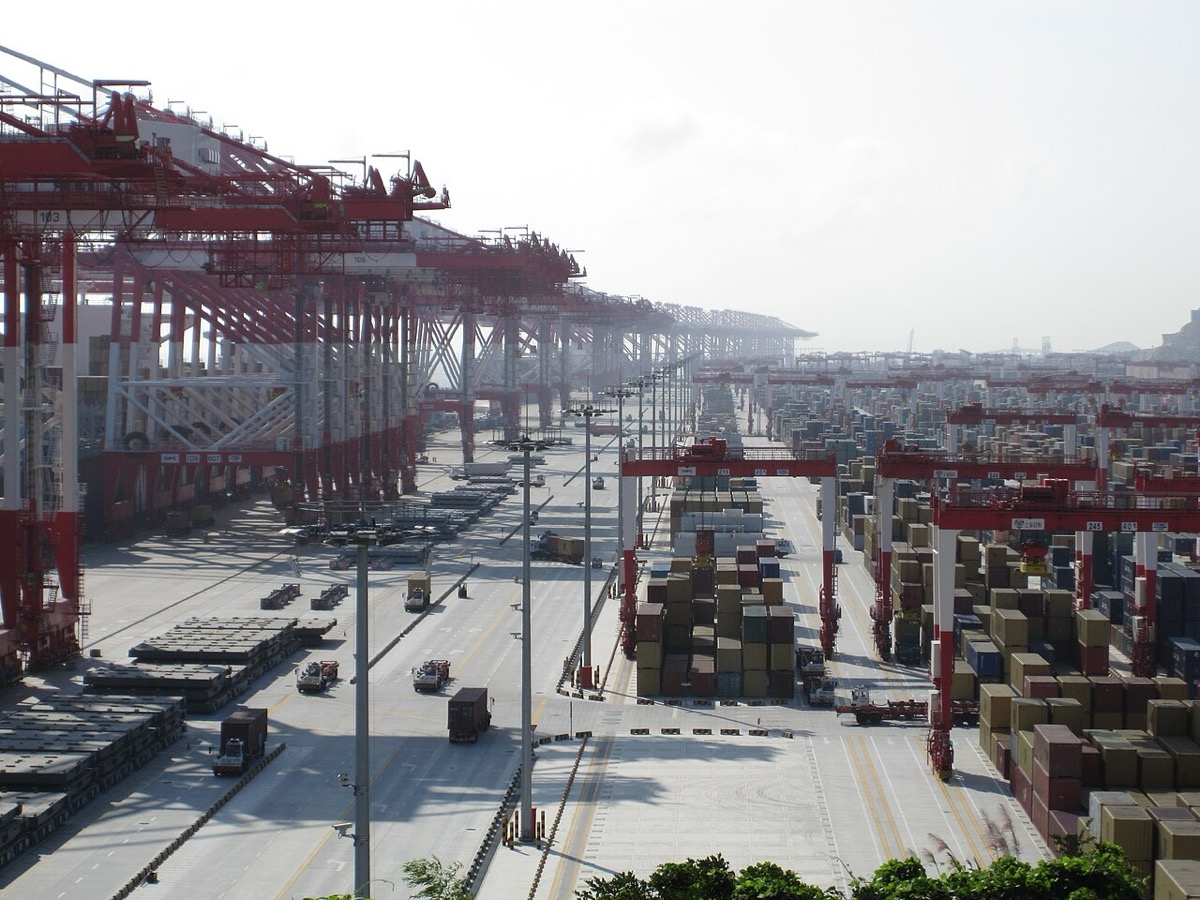
The knock-on effect on Chinese ports was immediate. Vessels that would normally complete a Shanghai-Kaohsiung-Hong Kong-Singapore rotation were running 24 to 48 hours behind schedule. For chemical importers in the US running on tight prepayment-and-sail windows, that slippage compounded with existing 2022 congestion at Los Angeles and Long Beach, and then again at Savannah and Houston.
War-Risk Insurance: The Number That Jumped Overnight
This is where the crisis started hitting P&L directly. Marine insurance for vessels transiting conflict or potential conflict zones is governed by the Joint War Committee at Lloyd’s of London, which publishes the Listed Areas of Enhanced Risk. The Taiwan Strait itself has not been formally listed, but war-risk underwriters price individual voyages based on perceived risk, and perceived risk jumped hard between 2 and 5 August.
Hull war-risk premiums for vessels transiting the Taiwan Strait typically ran 0.0125% to 0.025% of hull value per voyage pre-crisis. During the exercises, several London underwriters were quoting 0.05% to 0.10% on a per-voyage basis for vessels electing to transit rather than divert. For a $120 million container ship, that is a jump from roughly $15,000 to $30,000 to $60,000 to $120,000 in war-risk premium per transit. That cost doesn’t hit the bill of lading directly, but it feeds into general rate increases and surcharges within 30 to 60 days.
Cargo war-risk cover under Institute War Clauses (Cargo) also repriced. Your forwarder or carrier typically blends war-risk cover into the base ocean freight quote, but certain lanes saw explicit surcharges appear on quotes issued from 5 August onward. If your 2022 freight contracts do not specify who bears war-risk reprising cost between Hong Kong or Shanghai and US East Coast via Suez, this is where that gap shows up.
The Prepayment Tightening Nobody Is Talking About Out Loud
The more uncomfortable conversation is the one happening between Chinese suppliers and their long-standing US customers. Within a week of the Pelosi visit, several major Chinese chemical producers sent quiet signals that prepayment terms were shifting.
Wanhua Chemical and Sinochem distributors tightened credit on specialty orders originating from Yantai, Ningbo, and Zhuhai. We’ve seen first-hand correspondence where 30% deposit plus 70% against BL copy shifted to 50/50 or full prepayment for new customers and smaller repeat buyers. The explanation wasn’t framed as political, it was framed as general market uncertainty, but the timing wasn’t coincidence. Chinese producers worry about US sanctions escalation at the same time US buyers worry about Chinese supply interruption, and nobody wants to be the one carrying the credit risk if something goes sideways mid-voyage.
If you’re a chemical importer running 60 to 90 day terms with Chinese suppliers on open account or basic LC, expect those terms to drift tighter over the next two quarters. Get ahead of it now. Book the capital. Talk to your trade finance bank about increasing your LC facility. If you show up in January asking for an extra $2 million in working capital to cover deposit increases, you’ll get it, but slowly, and at a worse rate than if you had the conversation in August.
| Scenario | Pre-Crisis Terms | Post-Pelosi Terms | Working Capital Impact on $5M Annual Buy |
|---|---|---|---|
| Long-standing Wanhua MDI customer | 30% deposit, 70% against BL | 30% deposit, 70% against BL (unchanged) | No change |
| Mid-tier Sinopec PP buyer | Open account 60 days | 30% deposit, 70% net 30 | +$1.5M deposit float |
| New Zhejiang specialty customer | 30% deposit, 70% sight LC | 50% deposit, 50% sight LC | +$1.0M deposit float |
| Smaller Jiangsu solvent buyer | 30/70 BL copy | 100% prepayment T/T | +$3.5M prepayment float |

Running the Landed Cost on a Re-Routed ISO Tank from Zhejiang
Let’s put real numbers on it. Say you’re importing a 20 MT ISO tank of a specialty amine out of Ningbo-Zhoushan to Houston, valued at $48,000 FOB. Pre-crisis, you were quoting roughly $6,200 all-in ocean freight plus fees, arriving in 36 days door-to-door via Suez. During the first week of August, the same tank moved under modified routing and the maths shifted.
| Cost Component | Pre-Crisis (July 2022) | August 2022 Crisis Week |
|---|---|---|
| FOB Ningbo-Zhoushan, 20 MT amine | $48,000 ($2,400/MT) | $48,000 ($2,400/MT) |
| Inland drayage to terminal | $280 | $280 |
| Ocean freight Ningbo to Houston via Suez | $6,200 | $6,650 (7% GRI applied 10 Aug) |
| War-risk surcharge (new line item) | $0 | $180 per ISO tank |
| Bunker adjustment for 36 extra hours rerouting | $0 | $120 |
| Section 301 tariff at 25% of customs value | $12,000 | $12,000 |
| US port fees, customs, HMF, MPF | $340 | $340 |
| Inland delivery to Houston facility | $680 | $760 (port congestion surcharge) |
| Financing cost on 3 extra days in transit | $0 | $40 |
| Total landed cost, 20 MT ISO tank | $67,500 | $68,370 |
| Landed cost per MT | $3,375/MT | $3,418/MT |
$43/MT of added landed cost doesn’t sound catastrophic on one tank. Multiply it across 240 ISO tanks a year and you’re looking at just over $10,300 of drift that showed up in four weeks, with nothing structural changed in your programme. If the next crisis lasts two weeks instead of six days, or it involves an actual closure rather than exercises, those numbers don’t multiply by two, they multiply by five.
The Contingency Plan You Should Have on Paper Before October
The Pelosi drills were a stress test, and most importers failed parts of it without realising. The specific gaps worth closing now:
Pre-qualified non-Chinese supply for your top five product lines. For MDI, that means having Covestro Shanghai and Wanhua’s Hungarian JV on your approved vendor list, not just Wanhua Yantai. For specialty solvents and glycol ethers, that means having a qualified Korean or Japanese producer, even if unit cost is 8 to 12% higher. You’re not switching your programme, you’re buying optionality on 15 to 25% of volume.
Routing flexibility language in your 2023 freight contracts. Specify that the carrier may elect Cape of Good Hope routing, east-of-Taiwan routing, or trans-Pacific alternative at the carrier’s discretion in the event of declared conflict or military exercise zones affecting normal lanes, without requiring case-by-case written authorisation from you.
War-risk and delay cost allocation written explicitly. Who pays if Lloyd’s lists the Taiwan Strait? Who pays if war-risk reprises mid-voyage on a fixed-rate contract? If it isn’t in the document, it’s in dispute the moment it matters.
Inventory buffer maths run against a 21-day disruption scenario, not a 7-day one. Most chemical importers carry 30 to 45 days of safety stock on domestically produced inputs and 60 to 90 days on Chinese-sourced inputs. A genuine Taiwan Strait closure that lasted three weeks would burn through your China buffer before your first diverted vessel arrived.
Documentation of your suppliers’ own contingency plans. Ask Wanhua, Sinopec, and your Zhejiang specialty producers what happens to their shipments if Shanghai Yangshan and Ningbo-Zhoushan close simultaneously. If they can’t answer specifically, that is your answer, and it tells you where to put your second-source effort next quarter.
What to Watch Between Now and Year End
The PLA drills ended on 10 August but Beijing retained the option to run them again, and the political calendar guarantees more heat ahead. The 20th Party Congress opens on 16 October and Xi Jinping’s third-term confirmation is the centrepiece. Any provocation, real or perceived, in the weeks either side of that date will be answered forcefully. The US mid-terms land on 8 November and another congressional Taiwan visit is a live possibility. None of this is speculation. It’s public calendar.
If you haven’t already, pull every FOB Chinese-origin contract with a delivery date between 1 October 2022 and 31 January 2023 and review the force majeure, routing, and war-risk clauses line by line. Pay particular attention to any cargo that must transit Kaohsiung or use Taiwan Strait lanes. For the ones that look exposed, talk to your forwarder about alternative routing quotes now, while the market is calm. If the next event is an actual blockade rather than a six-day exercise window, there will be no quotes to get.
The window to fix this is open right now. Use it.