Friday February 20, 2026, at 10:03 am Eastern, the Supreme Court handed down Learning Resources, Inc. v. Trump and the tariff architecture you’ve been paying against for 13 months was ruled unlawful. The vote was 6 to 3. Chief Justice Roberts wrote the majority opinion. The court held that the International Emergency Economic Powers Act of 1977, 50 USC 1701 and following, does not authorise the President to impose tariffs, duties or imposts in the absence of a specific tariff delegation from Congress. Both the 10% fentanyl tariff on Chinese goods and the 10% reciprocal tariff that sat on top of it were invalidated. The administration has until Tuesday February 24 to unwind collection.
If you import chemicals, plastics, pigments, coatings intermediates or any raw material out of China into the US, that sentence just changed your landed cost, your pending entries, and your refund claims. By 4 pm Friday, Treasury had issued a memorandum directing CBP to cease collection of IEEPA duties effective 00:01 hours February 24. By 6 pm, the President had signed an Executive Order invoking Section 122 of the Trade Act of 1974, 19 USC 2132, imposing a replacement 10% global tariff for a statutory maximum of 150 days while Congress is asked to pass a durable authority. The tariff stack you knew on Thursday is not the tariff stack you are quoting against on Monday.

This piece explains what the ruling actually says, what the February 24 cutover looks like at a Form 7501 line level, what replaces IEEPA, and the exact calls you need to make this week. You’ll find a comparison table at the bottom covering IEEPA versus Section 122 for chemical HS lines you actually ship.
What Learning Resources v. Trump actually held
The case came from a Chicago toy and education products importer that had been paying IEEPA tariffs on Chinese inbounds since February 4, 2025. Joined by 11 other plaintiffs including three chemical distributors, the action moved fast through the Court of International Trade, the Federal Circuit, and was taken up on expedited certiorari in December 2025. The question presented was narrow. Does the phrase “regulate importation” in 50 USC 1702(a)(1)(B) of IEEPA confer authority to impose ad valorem duties on imported goods.
Chief Justice Roberts, writing for a majority that included Justices Thomas, Alito, Gorsuch, Kavanaugh and Barrett, held that it does not. The opinion leans heavily on the major questions doctrine as reinforced in West Virginia v. EPA, and on the text of the Constitution’s Article I, Section 8 taxing and duties clause which vests tariff authority in Congress. The majority acknowledged that IEEPA permits the President to block, freeze, prohibit and restrict transactions, but drew a bright line at the imposition of new taxes. Justice Kavanaugh’s concurrence went further and suggested the Trade Expansion Act Section 232 authority is also potentially vulnerable if used for revenue rather than security purposes.
Justices Sotomayor, Kagan and Jackson dissented. Justice Kagan’s dissent argued that tariffs are a form of regulation and that Congress has acquiesced to presidential tariff authority under IEEPA through decades of non intervention. She lost by four votes.
The remedy section of the majority opinion is what matters for your desk. The court ordered that all IEEPA tariffs collected by CBP since February 4, 2025 are subject to refund. It did not order automatic refund. It directed the Court of International Trade to manage the claims process with CBP under 28 USC 1581(a). CBP has 180 days to stand up an electronic refund system for entries flagged with Chapter 99 IEEPA codes 9903.01.20 and 9903.01.24.
What February 24 looks like at the line level
Your broker will wake up Tuesday with three distinct buckets of entries to manage.
Bucket one is pre February 24 entries already liquidated. Those are eligible for protest refund under 19 USC 1514, but only if you file a protest within 180 days of liquidation. If your entries from March, April and May 2025 have already liquidated and the 180 day protest window has closed, you need to file a Section 1520(d) or 1520(c) claim depending on whether the court’s order qualifies as “mistake of law”. CIT case management orders published Friday afternoon indicate the court will treat the SCOTUS ruling as a clerical error in liquidation eligible for reliquidation, which keeps the door open.
Bucket two is pre February 24 entries not yet liquidated. This is the simplest bucket. CBP will suspend liquidation on any entry with an IEEPA Chapter 99 code and process the refund automatically once the refund system is live, expected by mid to late August 2026.
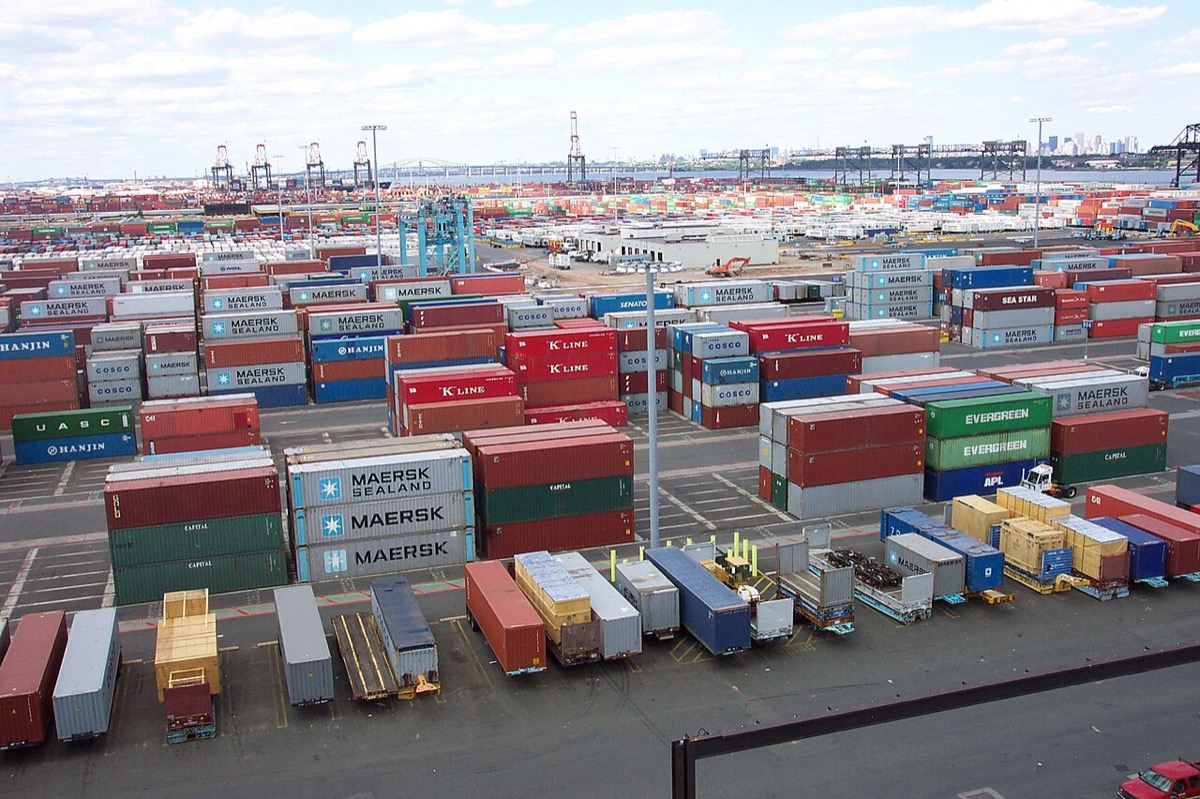
Bucket three is entries filed on or after February 24. Those drop the IEEPA 20 percentage points entirely and pick up the new Section 122 10% tariff, which itself carries chemical exemptions we’ll cover in the companion piece. Your broker needs to update entry templates before the first truck leaves the Long Beach rail yard Tuesday morning.
The replacement tariff and why it is not identical
At 6 pm Friday the President signed an EO under Section 122 of the Trade Act of 1974. Section 122 authorises a 15% ad valorem tariff for 150 days in response to balance of payments conditions, stepping down after. The EO set the rate at 10%. Penn Wharton’s budget model published Saturday morning estimated the effective US tariff rate on Chinese goods fell from 51.6% under the old IEEPA stack plus Section 301 to 31.6% under the new Section 122 plus Section 301 stack. That is a 20 point swing on every container.
Section 122 is not IEEPA. It has a 150 day clock that cannot be extended without Congress. It has specific exemption categories baked into the statute. It cannot be used to single out a country, so the 10% applies globally rather than to China specifically. And it interacts with existing FTAs including USMCA differently.
For chemical importers, three features of Section 122 matter more than anything else. First, it contains a carve out for “articles in short supply”, which the US chemical industry has been lobbying on since November. Second, the 150 day clock means this tariff expires around July 23, 2026 unless Congress acts. Third, the rate is global, meaning Indian, Korean, Malaysian and Thai chemicals now face the same 10% that Chinese goods do, which changes your sourcing arbitrage overnight.
Landed cost reset, worked example
You bring in 120 tonnes a month of a Chinese coatings intermediate, HS 2917.36.00, at USD 2,900 per tonne CIF Houston. On Thursday February 19, your duty stack looked like this.
| Component | Rate | Per tonne cost |
|---|---|---|
| Base MFN duty HS 2917.36.00 | 6.5% | USD 188.50 |
| Section 301 List 3 | 25.0% | USD 725.00 |
| IEEPA fentanyl | 10.0% | USD 290.00 |
| IEEPA reciprocal | 10.0% | USD 290.00 |
| Total duty | 51.5% | USD 1,493.50 |
| Landed cost per tonne | USD 4,393.50 |
On Tuesday February 24 the same tonne clears as follows.
| Component | Rate | Per tonne cost |
|---|---|---|
| Base MFN duty HS 2917.36.00 | 6.5% | USD 188.50 |
| Section 301 List 3 | 25.0% | USD 725.00 |
| Section 122 global | 10.0% | USD 290.00 |
| Total duty | 41.5% | USD 1,203.50 |
| Landed cost per tonne | USD 4,103.50 |
That is USD 290 per tonne off, USD 34,800 per month across 120 tonnes, USD 417,600 annualised. If Section 122 lapses at the 150 day mark and Congress does not act, you drop another USD 290 per tonne to USD 3,813.50. Before you spend that margin, remember that your competitors are running the same maths and your customer pricing is going to reset inside 60 days.
Action items for this week
Monday morning, your broker audits every open entry filed since February 4, 2025 and tags them by Chapter 99 code. Monday afternoon, you calendar the 180 day protest deadline for every liquidated entry that is still within window. By Wednesday, you have a refund inventory with an expected USD value against each entry. By Friday February 27, you have drafted revised customer quotes reflecting the 20 point tariff drop, held back by 5 points to buffer the Section 301 exposure that remains in force.
Call your trade counsel this week. The CIT case management order will dictate refund timing, and there will be firms trying to charge you 20% of the refund to file the claim. You do not need that. Any competent broker with a customs power of attorney can file the reliquidation requests, and the CBP electronic system when it goes live in August will handle the bulk of claims automatically.
What comes after the 150 days
The political question is whether Congress will codify a durable tariff authority before July 23, 2026. Section 232 steel and aluminium duties are untouched by Learning Resources. Section 301 China duties are untouched. Trade Act Section 201 safeguards are untouched. The IEEPA gap is specifically about whether a President can unilaterally invent a tariff programme without a tariff statute. The majority says no. That framing will shape every tariff fight for the next decade.
For chemical importers, the next 12 weeks are the most fluid they will be for a long time. Lock in quarterly forward contracts with your Chinese and Southeast Asian suppliers now while the Section 122 rate is certain. Keep your Mexican and Canadian USMCA options warm because Section 122 treats them differently to Asian origin. And build the refund claim in parallel, because USD 175 billion of it is owed to your fellow importers and CBP’s process is not going to be friendly to the companies who wait.