Shanghai’s Vice Mayor announced on 16 May that the city will begin a phased return to normal production between now and late June. For the first time in eight weeks, factories in designated green zones can resume operation, drivers with clean PCR records can move between districts with fewer checkpoints, and the official language has shifted from “dynamic zero” to “orderly restart.” Every chemical importer with Shanghai exposure has been waiting for this news.
Here’s the problem. Your supplier is about to message you saying “we’re back, please confirm priorities.” So is every other customer on their book. The backlog of accumulated orders across Shanghai’s chemical producers is eight weeks deep, raw material inventories at many plants are depleted, drayage into Yangshan and Waigaoqiao is still moving at a fraction of normal capacity, and ocean freight is a separate mess because carriers spent six weeks blanking sailings and shifting tonnage to Ningbo-Zhoushan. Reopening doesn’t mean catch-up. It means a new round of rationing, and you’re now competing with everyone else’s backlog for a slice of constrained capacity.
This is the playbook for the next eight weeks. How to prioritise which orders to push and which to defer, how to renegotiate delivery windows without burning the relationship, how to read carrier capacity signals, and how to stop your PO book from turning into chaos that your downstream customers pay for.

Why Reopening Week Feels Worse Than Lockdown Week
In the first two weeks of a shutdown, everyone’s confused but aligned. Nothing moves, nothing ships, everyone agrees the problem is exogenous. Your customers accept it, your suppliers stop invoicing, carriers defer surcharges, and the whole chain sits in a frozen equilibrium.
Reopening week is different. Some suppliers restart faster than others. Some ports clear inventory before others. Some carriers reactivate Shanghai calls before others. Pricing starts shifting in different directions on different lanes. Your three main Shanghai suppliers might now have wildly different finished goods inventory positions and wildly different abilities to ship. One might have closed-loop inventory ready to release at 70% of normal volume. Another might be starting production from scratch with depleted raw materials and a five-week runway to first shipment. A third might still be partially closed because their district hasn’t cleared green-zone status.
Your job in the next two weeks is to map that uneven restart before anyone else does and sequence your POs accordingly. Get ahead of it and you can cover your critical customers in June. Fall behind and you’re sending apology emails through July.
The Backlog Is Not Evenly Distributed Across Product Categories
Eight weeks of accumulated orders don’t land uniformly. Some product streams stayed closer to normal through the lockdown, some are genuinely eight weeks behind, and some are worse than eight weeks because the plant lost raw material positions they can’t rebuild quickly.
The pattern we’re seeing across our supplier base in the Yangtze Delta:
| Product Category | Backlog Depth (15 May) | Primary Constraint | First Clean Month |
|---|---|---|---|
| Commodity polyethylene (HDPE/LDPE) | 4 to 5 weeks | Port drayage, not production | Late June |
| Polypropylene | 5 to 6 weeks | Container slot availability | Early July |
| MDI / TDI (polyurethane feedstocks) | 6 to 8 weeks | Production ramp + raw material | Mid to late July |
| Caustic soda / chlor-alkali | 7 to 9 weeks | Plant restart, staffing | Late July |
| Specialty intermediates (Minhang cluster) | 9 to 11 weeks | Full production halt during lockdown | August |
| Pharma intermediates (Fengxian) | 8 to 10 weeks | Raw material positions depleted | August |
| Fine chemicals (trading house-held) | Variable, often longer | Inventory in locked warehouses | Case by case |
If you’re sitting on open POs across several of these categories, the temptation is to treat them all with the same urgency. Don’t. Push hardest on the categories with the shortest real restart timeline and the highest customer consequence. Defer the ones where the backlog is structurally long regardless of how hard you push.
Drayage Rates Are the Silent Killer This Month
Everyone’s watching ocean freight because that’s the line item procurement is used to tracking. Drayage is the problem that’s going to eat your landed cost this quarter.

Shanghai drayage rates during normal operations run around 1,200 to 1,800 RMB for a 40-foot container from a local factory to Yangshan Deep Water Port. As of this week, spot drayage quotes are coming in at 4,500 to 7,000 RMB for the same run. That’s a 2 to 3 times markup driven by three things happening simultaneously.
Drivers are still in short supply. The PCR testing regime means drivers need a valid 48-hour negative test to cross certain zone boundaries, and many drivers left Shanghai during the lockdown to return to their home provinces. They’re not all back yet. The operators we work with are running their fleets at 55 to 65% of pre-lockdown driver headcount.
Turnaround times at the port are still stretched. A round trip factory-port-factory that used to take 6 to 8 hours is now running 14 to 20 hours because of gate queues, terminal congestion, and documentation delays. That means each truck completes fewer runs per day and the fleet capacity shrinks.
Surcharges have been layered on every quote. PCR testing cost pass-through, fuel adjustment factors, gate queue fees, and lockdown contingency charges are all showing up as line items. If you don’t catch them in the quote, they show up on the invoice three weeks later.
For your PO maths, assume drayage cost has doubled at minimum and budget for a 150 to 200% uplift on the RMB drayage line on any Shanghai-origin shipment loading in the next six weeks.
Why Carriers Are Still Blanking Shanghai Sailings
Even with Shanghai reopening, don’t expect ocean capacity to snap back this month. Major carriers including Maersk, MSC, CMA CGM, and COSCO spent April and early May blanking Shanghai port calls or substituting them for Ningbo-Zhoushan calls. That capacity redeployment doesn’t reverse in a week.
The logic is operational. A vessel doing the Asia-North America loop follows a roughly 70 to 84 day round-trip schedule. A carrier that rerouted a string of sailings away from Shanghai four weeks ago has vessels currently in the Pacific or discharging in LA or Oakland. Those vessels can’t be redirected back to Shanghai until they complete their current rotation. Full Shanghai capacity probably doesn’t come back online until the second half of June at the earliest, and some carriers will wait until July to see whether reopening sticks.
In the meantime, Ningbo-Zhoushan is absorbing the diverted volume and has become congested in its own right. Waiting times to berth at Ningbo have stretched from 24 hours to 4 to 6 days. That’s better than Shanghai’s 10 to 14 day queue, but it’s not fluid.
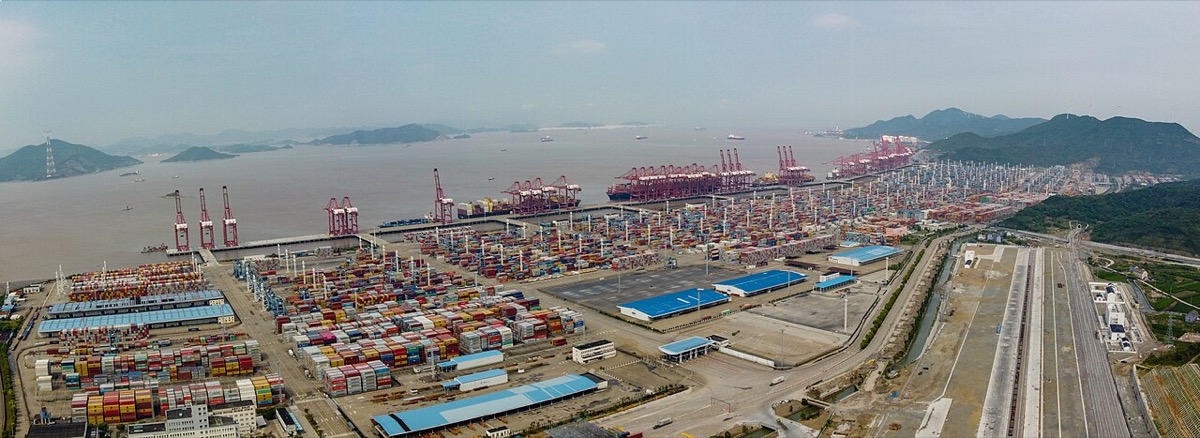
If your product can load at Ningbo or Taicang, push your supplier hard to arrange inland trucking there rather than waiting for Shanghai capacity. The extra trucking distance will cost you something, but you’ll avoid the Shanghai bottleneck entirely on the ocean side. Most Jiangsu-based producers can shift to Ningbo or Taicang loading without much friction; Shanghai-registered suppliers often can’t because their customs nomination is locked to Shanghai.
Renegotiating Delivery Windows Without Burning the Relationship
You’re about to renegotiate delivery dates with every Shanghai supplier on your book. Handled clumsily, this goes badly. Handled well, you come out of it with better relationships than you started with because you’re one of the few customers who showed up with a plan instead of panic.
The frame is straightforward: you understand the backlog is real, you’re not trying to jump the queue illegitimately, and you’re asking for clarity rather than miracles. What you need from them is an honest capacity forecast for the next 12 weeks by month, not a promise they can’t keep.
Ask for specifics. “How many MT of our product grade do you forecast producing in June, July, and August?” Not “when can you ship my PO?” The first question makes them commit to a number they can defend. The second invites them to quote a date and then miss it.
Then offer a trade. Take the backlog off your smallest or most deferrable positions in exchange for earlier allocation on your critical ones. Release the PO on your six-week-deferrable grade and ask for earlier delivery on the two-week-critical grade. Suppliers responding to eight weeks of chaos value customers who help them prioritise over customers who demand equal treatment on every line.
Also offer flexibility on packaging and shipment sizes. If you normally take 20-foot ISO tanks and the current constraint is tank container availability, take a drum shipment this round. If you normally take 20 MT per month, accept a 12 MT partial this month with a 28 MT make-up in August. Flexibility buys you priority; rigidity costs it.
The Landed Cost Picture for a Restart Shipment in June
Here’s the realistic maths on a 20-foot ISO tank of specialty intermediate loading in Shanghai, booking this week for early June pickup:
| Cost Component | Normal (Feb 2022) | Restart (June 2022 booking) |
|---|---|---|
| FOB ex-works price | $2,200/MT | $2,350/MT (restart premium) |
| Inland drayage to port | $85/MT | $210/MT (driver shortage, PCR) |
| Port handling, documentation | $55/MT | $95/MT (congestion surcharge) |
| Tank container lease surcharge | Included | $45/MT (tank shortage premium) |
| Ocean freight Shanghai-LA (20 MT basis) | $380/MT | $490/MT (blanked sailings tightened capacity) |
| Section 301 tariff (25%) | $550/MT | $590/MT |
| US port demurrage risk | Minimal | $60/MT (bunched arrivals) |
| Inland delivery to facility | $65/MT | $75/MT |
| Total landed cost estimate | ~$3,335/MT | ~$3,915/MT |
That’s roughly a 17% landed cost increase on the same product, mostly driven by the logistics stack rather than the FOB price. If your 2022 customer pricing was set in Q4 2021, you’re absorbing this unless you’ve got an escalation mechanism or unless you renegotiate.
Some of these premiums will unwind as capacity normalises. Drayage rates should soften through July as drivers return. Tank container shortages will ease as empties cycle back from US ports. Ocean freight on the Shanghai lanes will loosen once carriers restore full port rotation. Expect restart premiums to persist through at least the end of July; any longer depends on whether reopening holds.
What to Do Before the End of May
Three concrete actions before the end of this month.
Call every Shanghai supplier and ask them for a written June-July-August capacity forecast in MT for your specific product grades. Don’t accept “we’ll do our best.” Specific numbers, month by month, or you assume zero until proven otherwise.
Sit down with your internal team and rank your Q3 customer commitments by consequence. Which customers lose the contract if you miss June delivery? Which can take a July slip without commercial penalty? This ranking is what you use to sequence your supplier conversations. If you don’t have it, you can’t negotiate.
Get quotes from alternative supply in Shandong, non-Shanghai Jiangsu, and Zhejiang for your highest-consequence grades. Not because you’ll necessarily switch, but because having a live alternative quote in hand changes how a Shanghai supplier allocates their restart capacity to you. Suppliers protect customers who have options. They squeeze customers who don’t.
Shanghai is reopening. The backlog isn’t clearing for another ten to twelve weeks. Treat June and July as a different pricing and availability environment than what you planned for in Q4 2021, and sequence your orders now before everyone else finishes their own version of this exercise.