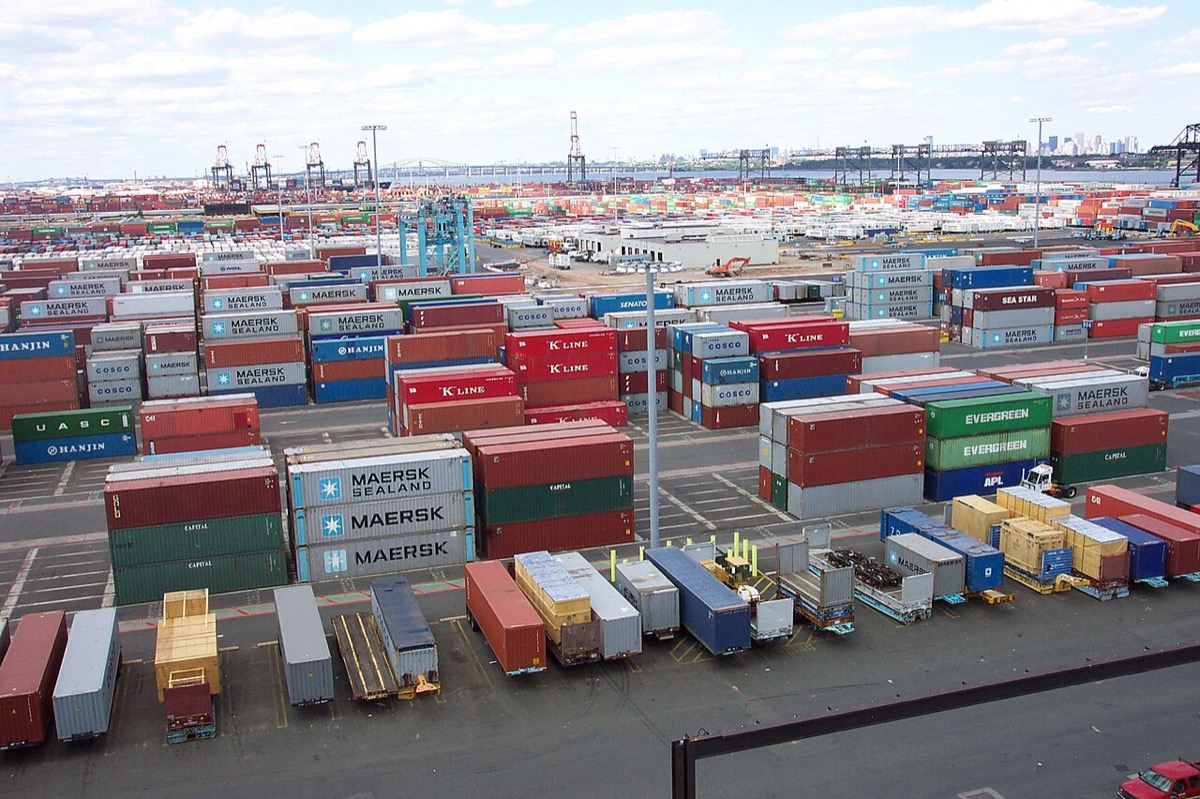
The US Commerce Department dropped the headline number on 26 February 2026, and the chemical trade desk in Australia I spoke with that afternoon did not pretend to be surprised. US imports from China closed 2025 at $308 billion. That is the lowest annual figure since 2009, and it sits 42% below the 2018 peak of $539 billion. Seven years of tariffs, entity listings, Section 301 reviews and the occasional Presidential proclamation have finally reshaped the single largest bilateral goods relationship on the planet, and if you are importing chemicals into the US you are now operating inside a sourcing map that barely resembles the one you learned.
The money did not disappear. It moved. QIMA, the inspection and compliance outfit that audits thousands of Asian factories every quarter, published its 2025 client-sourcing data the same week. Inspection and audit requests in Vietnam climbed 30% year on year. Cambodia jumped 36%. Thailand pulled ahead of both at 44%. India kept gaining, Malaysia kept gaining, and Mexico quietly posted its fourth consecutive year of double-digit growth in chemical intermediate imports across Laredo and Otay Mesa. Deloitte’s nearshoring survey, which we have been tracking since 2021, projected that 40% of US companies would have relocated at least part of their supply chain to North America by 2026. The 2026 reading came in at 38%. Close enough that no one is arguing with the thesis anymore.
Why $308 billion is the number that actually matters
Plenty of analysts will tell you the headline is misleading because some of that volume simply rerouted through third countries. They are half right. US Customs and Border Protection flagged 1,347 transshipment cases in fiscal 2025, up from 892 the year before, and the majority involved Chinese-origin goods invoiced through Vietnam, Malaysia or Cambodia. CBP seized or detained $2.1 billion in merchandise tied to origin fraud. Grey routing is real, it is expensive when you are caught, and the enforcement curve is steepening.
But the rerouted volume does not come close to accounting for a $231 billion gap from the 2018 peak. Real factories have been built. Wanhua opened its second MDI line at Fuzhou while simultaneously expanding its Louisiana JV capacity. LyondellBasell sold its Houston refinery and redirected capital into polyolefin joint ventures in India with Reliance. BASF’s Zhanjiang Verbund crossed into full production in late 2024 and is now shipping intermediates into ASEAN rather than across the Pacific. Huntsman shifted polyurethane systems house work into Thailand. Dow expanded its Seadrift, Texas ethylene oxide capacity by 15%. Every one of those moves shaved a little off the China-to-US column and added to someone else’s.
For a chemical importer, the practical consequence is that your 2018 supplier list is no longer a competitive supplier list. It is a historical document.
The destination-shift matrix you need on the wall
Here is what the data looks like when you line up US import growth rates by origin country for 2025, filtered to chemical and chemical-adjacent HS chapters (28, 29, 32, 38, 39):
| Origin country | 2025 US chemical import growth | Notable capacity additions | Landed-cost advantage vs China today |
|---|---|---|---|
| Vietnam | +30% (inspection requests, QIMA) | Long Son Petrochemicals Phase 2; Vinachem specialty expansions | 4 to 7% after tariff stack |
| Thailand | +44% | PTT Global Chemical olefins; Huntsman PU systems house; SCG specialty | 6 to 9% |
| Cambodia | +36% (low base) | Light chemical packaging, formulation, blending only | Volume-dependent; transshipment flag risk |
| India | +22% | Reliance Jamnagar Phase 4; Tata Chemicals Mithapur; SRF fluorochemicals; UPL agrochem | 8 to 12% on specialty |
| Malaysia | +18% | Petronas RAPID; PCG derivatives expansion | 3 to 6% |
| Mexico | +14% | Alpek PTA; Mexichem fluor; border-adjacent formulators | 10 to 15% on duty-paid basis under USMCA |
| China | minus 11% | Wanhua Fuzhou MDI 2; Sinopec Zhenhai ethylene; BASF Zhanjiang | Baseline (Section 301 + reciprocal tariff stack) |
Two things leap out. First, Cambodia’s 36% audit growth is on a small absolute base and concentrates in packaging, blending and formulation rather than primary synthesis. That is the textbook signature of transshipment risk, and CBP knows it. If you are sourcing anything from a Cambodian blender that arrived as a Chinese drum in Sihanoukville last week, you are renting somebody else’s problem. Second, India and Thailand have real upstream capacity. Reliance’s Jamnagar expansion alone added roughly 1.8 million tonnes of aromatics capacity between 2024 and 2025, and Tata Chemicals quietly doubled its bromine derivative output.
The landed-cost arithmetic nobody wants to do
Most of the importers who call us want a yes-or-no answer on whether to move a line out of China. The honest answer requires actual numbers. Let me walk you through one we ran last month for a mid-sized US specialty distributor sourcing a UV stabiliser, HS 2933.99, from a Yangtze Delta supplier.
China FOB Ningbo-Zhoushan sat at $4,850 per tonne. Ocean freight to LA/Long Beach, $1,420 per container all-in, roughly $71 per tonne on a 20 tonne load. Section 301 List 3 duty at 25%, plus the reciprocal tariff layer that now applies to Chapter 29 Chinese-origin goods at an additional 10% after the November 2025 adjustments. MPF, HMF, brokerage, drayage to Chicago. Landed cost worked out to $6,740 per tonne, give or take.
The Indian alternative, sourced from a Gujarat producer shipping Mundra to Savannah, came in at $5,120 FOB. Ocean freight higher at $1,780 per container, $89 per tonne. Duty under MFN, 6.5%. Same ancillaries. Landed cost $5,620 per tonne. The saving was $1,120 per tonne, or roughly 17%. For a 600 tonne annual line, that is $672,000 back in the P and L before you even negotiate. The catch? Lead time was 52 days versus 34 from China, and the Indian supplier required a 90-day qualification audit before first commercial shipment. We budgeted the qualification at $28,000 all-up, including SGS fingerprint testing against the incumbent Chinese lot.

The grey routing trap, and how CBP is spotting it
The 1,347 transshipment cases CBP flagged in 2025 did not come from random inspections. The agency has been running textile-style origin audits on chemical imports since the 2024 Uyghur Forced Labor Prevention Act enforcement expansion into solar polysilicon, and the data analytics are now good enough to catch most of the obvious schemes. If a Vietnamese shipper appears on a bill of lading for an HS 2917 product and there is no corresponding synthesis reactor anywhere in Vietnam producing that CAS number, the algorithm flags it. A visit from a CBP Import Specialist follows, usually within 60 days.
Three grey-routing patterns are getting caught consistently.
First, pure repackaging. A 200 litre drum arrives at Cai Mep from Shanghai Yangshan, gets relabelled, and moves on to LA/Long Beach as Vietnamese origin. This is the easiest to catch because the underlying CAS number does not match any Vietnamese production registry.
Second, nominal blending. Importers add 2% of a local diluent at a Vietnamese blender and claim substantial transformation. Under the tariff shift rules in Part 102 of 19 CFR, a 2% dilution does not change the HS classification, so no substantial transformation occurred. CBP’s laboratory can confirm this in 48 hours.
Third, paper-only invoicing through a Thai or Malaysian trading house. This one is harder to prosecute because the documents look clean, but CBP is now cross-referencing bills of lading against carrier manifests, and any mismatch between the load port in the invoice and the actual vessel origin triggers a Customs and Trade Partnership Against Terrorism review.
The penalty matrix is ugly. 19 USC 1592 allows penalties up to the domestic value of the merchandise for fraud, two times the loss of revenue for gross negligence, and the loss of revenue plus interest for simple negligence. Add the reputational hit of an UFLPA detention and you are looking at a supply shock you did not price in.
What a defensible 2026 sourcing programme looks like
Every importer I am working with this quarter is building or rebuilding their supplier qualification programme. The ones doing it well share four features.
They require a factory audit by a third party they choose, not the supplier. SGS, Bureau Veritas, Intertek and QIMA are the four most commonly accepted on the US side. A social audit plus a chemical process audit costs between $4,200 and $7,500 depending on country and plant complexity. Budget it.
They demand a production-origin declaration that includes the reactor site, the synthesis route and the CAS-number-level breakdown. If the supplier cannot produce that in 10 business days, move on.
They run a duplicate first-article analysis. Take a 500 gram sample from the new supplier, send it to an independent lab, and fingerprint it against your incumbent material. GC-MS, ICP-MS, moisture, residual solvents, heavy metals. If the impurity signature is identical to your Chinese baseline, you are looking at a repack.
They keep a dual-source buffer for at least 12 months. The last thing you want in 2026 is a sole-source position in a country whose tariff treatment can shift in a 6 am Truth Social post.
Your next action, by Friday
If you are running a US import book that is still more than 40% China-origin on Chapter 28, 29, 32, 38 or 39 goods, do three things this week.
Pull your 2025 import history and calculate the actual China share by HS chapter and by dollar value. Not volume, value. Volume hides the specialty lines where the margin lives.
Pick the top three China-origin lines by annual spend and commission a sourcing scan for each. India and Thailand for specialty, Malaysia and Vietnam for commodity, Mexico for anything you can move under USMCA.
Book a qualification audit with SGS, Bureau Veritas, Intertek or QIMA for your top two alternative candidates. The 60-day qualification clock does not start until you do.
The $308 billion number is not an anomaly. It is the new shape of the curve. Importers who treat it that way in Q2 2026 will be in front of the pack when the next tariff adjustment hits, and one will. The only question is which quarter, and what number is on it.