At 00:01 Eastern on October 14, the USTR Section 301 port fee regime went live and the first COSCO 13,000-TEU vessel into Los Angeles got hit with a cash charge of roughly USD 3.25 million before a single container touched the dock. That’s not a typo. At USD 50 per net tonne, applied per rotation with a cap of five rotations per calendar year, the headline fee on a standard neo-Panamax Chinese-owned and operated boxship lands squarely in the multi-million dollar range per call. For any US chemical importer whose supply chain runs through Shanghai Yangshan or Ningbo-Zhoushan, and whose freight forwarder has been booking COSCO or OOCL bottom space because the rates were cheap, the invoice math from Q4 onwards has changed fundamentally.
The fee structure is three-tiered and it matters which tier your vessel falls into. Tier one is Chinese-owned or Chinese-operated vessels, regardless of where they were built. That’s the USD 50 per net tonne rate, escalating to USD 140 per net tonne by April 2028. Tier two is Chinese-built vessels operated by non-Chinese shipping lines, which is Maersk, CMA CGM, MSC, Hapag-Lloyd and ONE on any vessel hull constructed at a Chinese yard. That’s USD 18 per net tonne or USD 120 per container, whichever is higher, also per rotation with the five-rotation annual cap. Tier three is exempt vessels, which are Korean-built, Japanese-built or US-built hulls operated by non-Chinese lines, plus a set of specific exemptions including certain auto carriers and bulk carriers on particular routes.
Why the Per-Container Math Hits Chemical Importers Disproportionately
Most trade press coverage has focused on the per-vessel fee. The number that matters for chemical freight is the per-container pass-through, because your freight forwarder is going to divide the vessel fee across the slot bookings on that rotation and hand you a line item. For a 13,000-TEU COSCO vessel at 80% utilisation carrying 10,400 revenue boxes, a USD 3.25 million fee divides to roughly USD 313 per TEU or USD 625 per FEU if you just split the cost pro rata.
That’s the optimistic pass-through. The realistic pass-through is higher, because container lines don’t pass costs through at par. They add a handling margin, a risk premium and they round up. Drewry’s early-week commentary on October 15 and 16 had major carriers signalling USD 400 to USD 550 per TEU surcharges on Chinese-owned vessels, plus USD 150 to USD 250 per TEU on non-Chinese operators of Chinese-built hulls. If you’re moving 100 TEU per month of ISO tanks, flexitanks and drummed chemicals out of Shanghai or Ningbo, that’s an incremental USD 40,000 to USD 55,000 in Q4 freight cost on the COSCO and OOCL services alone.
| Vessel category | Typical TEU | USTR fee per rotation | Cost per TEU pro rata | Surcharge passthrough per TEU |
|---|---|---|---|---|
| COSCO neo-Panamax | 13,000 | USD 3.25M | USD 313 | USD 400 to 550 |
| OOCL mega | 20,000 | USD 5.00M | USD 313 | USD 400 to 550 |
| Maersk Chinese-built | 15,000 | USD 1.44M or USD 1.44M by container | USD 120 | USD 150 to 250 |
| CMA CGM Korean-built | 15,000 | Exempt | 0 | Base rate |
| MSC Japanese-built | 14,000 | Exempt | 0 | Base rate |
The structural issue is that COSCO and OOCL hold roughly 18% of the trans-Pacific container capacity, and in the chemical trade lane the share is higher because their rates have historically undercut Maersk and CMA CGM. The importers who chose COSCO on price are now paying that discount back with interest, and the freight invoice for November bookings will show it.
The Chinese-Built Non-Chinese-Operated Loophole That Isn’t Really a Loophole
The USD 18 per net tonne tier for non-Chinese lines operating Chinese-built hulls is where most importers thought they could hide. Maersk has a substantial fleet of Chinese-built ships. So does CMA CGM. MSC has been the single biggest newbuild buyer from Chinese yards over the last five years. The initial read on October 10 was that as long as you booked Maersk or CMA CGM instead of COSCO, you’d avoid the big fee. That’s wrong.
The non-Chinese operator tier still triggers USD 18 per net tonne or USD 120 per container. On a 15,000-TEU Maersk Chinese-built vessel at 80 MT per TEU equivalent, you’re looking at roughly USD 1.4 million per rotation, which pro rates to about USD 120 per TEU. Maersk’s customer advisory on October 13 was explicit that this fee would be passed through as a Section 301 Vessel Fee, separate from the bunker adjustment factor and the usual peak season surcharges. So you moved from COSCO to Maersk, you saved maybe USD 250 per TEU on the headline fee, and you still paid USD 150 per TEU in surcharges.
The only vessels that actually escape the fee entirely are Korean-built (Hyundai Heavy Industries, Samsung Heavy, Daewoo), Japanese-built (Imabari, Japan Marine United) and a handful of US-flagged or US-built ships. Guess which tier is now fully booked through February.
The Chemical Freight Cost Impact in Real Numbers
Let me walk through a scenario that I priced out with an Australian client last week. They import 80 FEU per month of specialty chemicals, polyurethane intermediates and solvents from Ningbo-Zhoushan to Long Beach. Pre-October 14, the all-in CIF rate was roughly USD 3,200 per FEU on a mix of COSCO, OOCL and ONE services. Post-October 14, with the new fee passthrough, the same lane now quotes:
| Carrier | Vessel class | Pre-Oct 14 USD/FEU | Post-Oct 14 surcharge | New all-in USD/FEU |
|---|---|---|---|---|
| COSCO | Chinese-owned | 3,200 | 950 | 4,150 |
| OOCL | Chinese-owned | 3,250 | 950 | 4,200 |
| ONE | Chinese-built | 3,400 | 400 | 3,800 |
| Maersk | Chinese-built | 3,550 | 400 | 3,950 |
| CMA CGM | Korean-built | 3,650 | 0 | 3,650 |
| MSC | Japanese-built | 3,700 | 0 | 3,700 |
| Hapag-Lloyd | Korean-built | 3,750 | 0 | 3,750 |
The Korean-built and Japanese-built tier has moved from being a premium option to being the cheapest total landed freight. Predictably, the CMA CGM Long Beach and MSC Oakland services are now booking out 3 to 4 weeks ahead of departure, which they weren’t doing in September. The classic freight market rule applies: when a cost asymmetry emerges, capacity reallocates fast, and the importers who book late pay both the surcharge and the premium for the exempt vessels.
For our 80 FEU per month client, the blended rate shift is roughly USD 450 per FEU across the mix, which is USD 36,000 per month in incremental freight. Annualised, that’s USD 432,000. For a chemical distribution business running a 10% to 12% EBITDA margin on roughly USD 25 million in revenue, that’s a 15% hit to the margin line before any tariff pass-through or FX move.
The Pass-Through Lag That Kills You on Fixed-Price Contracts
The structural trap is pass-through timing. If you sell into formulators, chemical blenders or end-users on quarterly or semi-annual fixed-price contracts, the freight surcharge hits you immediately and your pricing doesn’t reset until the next contract cycle. I’ve seen this movie three times in the last four years. The Suez canal closure in March 2021. The Red Sea diversions starting December 2023. The reciprocal tariff rollout in April 2025. Each time, the importers who got caught were the ones whose customer contracts had no fuel or freight escalator clause.
Your contract review checklist right now should include a specific Section 301 Vessel Fee Adjustment clause. Not a generic freight escalator. A specific clause that references USTR 89 FR [X] and permits quarterly pass-through of any documented per-TEU increase tied to the vessel fee. Formulators and blenders will push back, but they have the same exposure on their own outbound and most will accept the clause if you put it in writing in November rather than discovering the cost in January.
What Actually Works for Chemical Freight in Q4 and Q1
The playbook is not rocket science but it requires execution discipline.
First, audit your current carrier allocation by vessel class. Your freight forwarder probably books on rate and reliability, not on vessel build origin. Ask for the last six months of vessel names, verify build country through MarineTraffic or Equasis, and rebalance toward Korean-built and Japanese-built hulls wherever the lane permits. For Shanghai and Ningbo to LA/Long Beach, the CMA CGM Pearl River Express and MSC Lion services are your primary exempt options. For Gulf Coast, Hapag-Lloyd’s TPI and the MSC Loop 7 are running Korean-built rotations.
Second, consider ISO tank and flexitank alternatives on Chinese-origin liquid chemicals. ISO tanks don’t escape the fee, but the per-unit volume is higher so the per-kilogram freight premium is lower than drummed or palletised shipments. If you’re running drums on COSCO bottom space, the per-kilogram pass-through can exceed 8 cents. On ISO tanks it’s closer to 2 cents.
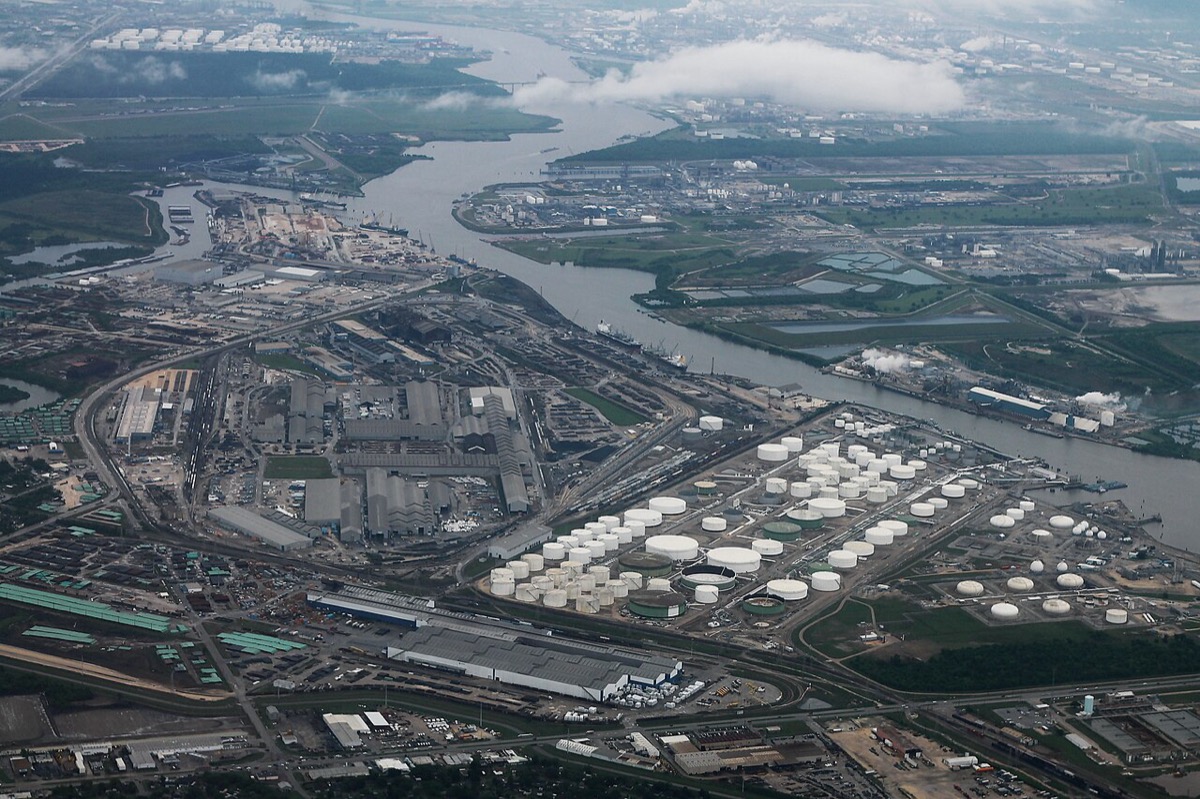
Third, price in a Houston or Savannah routing alternative for Gulf Coast and East Coast destinations. The LA/Long Beach capacity is where the fee passthrough is hitting hardest because the lane is the most COSCO-dependent. East Coast all-water services through Panama into Savannah and Houston have historically carried a different fleet mix and the exempt vessel share is higher. The transit time penalty is 8 to 12 days but the all-in freight cost spread has compressed.
Fourth, renegotiate your NVOCC or forwarder agreement to explicitly require vessel build disclosure and to allow you to specify exempt-vessel routings on at least 50% of your monthly volume. The forwarders that won’t commit to this are the ones whose bottom space is locked into COSCO contracts, and those are the forwarders you diversify away from.
Fifth, model the fee escalation path into your 2026 and 2027 budgets. The USD 50 per net tonne tier rises to USD 140 per net tonne by April 2028, and the passthrough math says the COSCO surcharge on a 13,000-TEU boxship goes from roughly USD 550 per TEU today to roughly USD 1,550 per TEU by 2028. That’s not a 2028 problem. That’s a 2026 contract negotiation problem, because if you sign a 24-month freight deal in Q1 next year you’re committing to the rising surcharge curve.
The October 14 fees are not a one-quarter event. They’re the freight-cost equivalent of the sectoral tariff playbook, and they compound over the next three years with a defined escalation schedule. The importers who rebalance their carrier mix, rewrite their customer contracts and model the 2028 end-state will ride the curve. The ones who treat it as a surcharge line item and absorb the cost will watch 2% to 3% of gross margin walk out the door between now and April.
If you want Sourzi to run a vessel-class audit on your last 12 months of ocean freight and build the Q4 carrier rebalance plus the customer contract clause language, send us your forwarder invoices and current carrier agreements this week. We’ll have the rebalancing plan, the exempt-vessel booking list and the contract clause template back inside 10 working days, and a Q1 sourcing plan that actually accounts for what just happened.